English
Order Book Model: Core Architecture for Crypto Exchange Platforms
ExchangeLiquidity
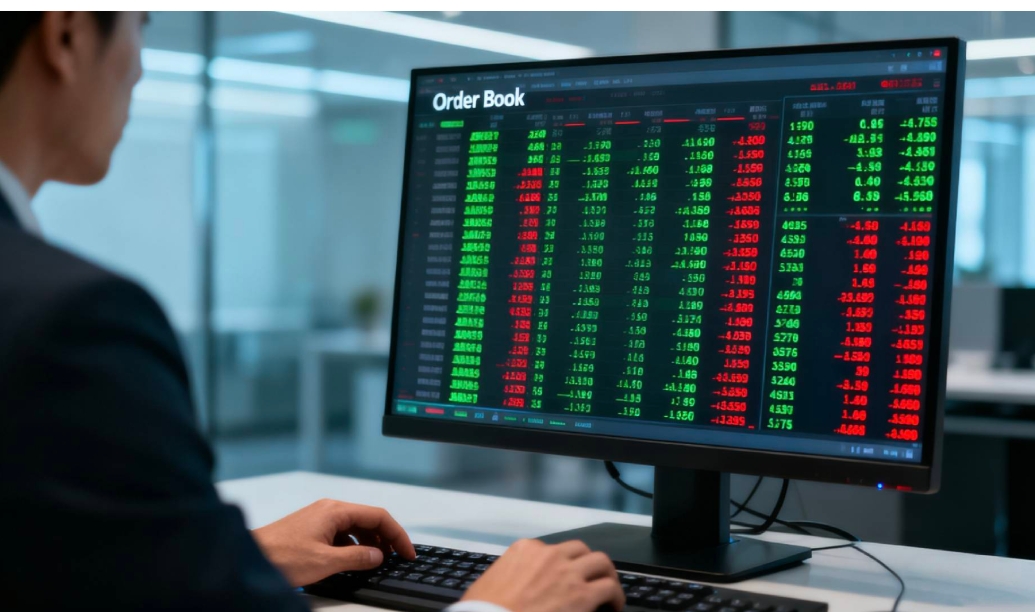
In the architecture of cryptocurrency exchanges, the order book model has long been the core matching mechanism for centralized exchanges (CEX) and enterprise-grade exchange systems. It is a key tool for building high liquidity, low-slippage trading environments.
So, what exactly is the order book model? How does it support enterprise-grade platforms? And how does it compare with liquidity aggregation? This article provides a comprehensive analysis of the order book model, covering its operational logic, key performance indicators, use cases, and best practices for teams and enterprises looking to build or optimize their exchange platforms.
What is an Order Book? A Real-Time Mirror of Market Supply and Demand
An order book is essentially a system that records all buy and sell orders. Each order is sorted by price and timestamp, waiting to be matched. Its typical components include:
- Bid: Displays the highest price buyers are willing to pay and the corresponding quantity.
- Ask: Displays the lowest price sellers are willing to accept and the available quantity.
- Depth Chart: Visualizes market supply and demand across different price levels.
For exchange platforms, the order book model signals to users that prices are determined by market participants, not the platform itself. This transparency enhances credibility and ensures precise price control, especially in active markets. For end users, it allows more predictable execution with lower slippage.
How It Works: Matching Engine, OMS, and Risk Management
A high-performance order book system typically consists of three core components:
Matching Engine: The Platform’s Heart
- Supports extremely low latency and high TPS (transactions per second).
- Ensures large orders and high-frequency trades are executed without downtime.
Order Management System (OMS): Maintaining Market Order
- Handles order lifecycle including placement, cancellation, and modification.
- Enforces strict price and time priority to avoid conflicts and inconsistencies.
Risk Management and Clearing Module: Containing Risk
- Monitors price anomalies, margin, leverage, and liquidation triggers.
- Automatically enforces liquidations or trade restrictions to protect platform assets.
Why Enterprise Platforms Require a Real Order Book
- Build Market Trust
- A genuine order book that reflects real depth and aligns with top global markets significantly boosts brand credibility and mitigates concerns of price manipulation.
- Support Advanced Trading Needs
- Professional users, including quant teams and institutional traders, rely on limit, stop-loss, iceberg, and other advanced orders—features only effective with a full order book system.
- Meet Compliance and Audit Requirements
- Regulators and internal teams require traceable transaction data. A real order book provides an immutable record of all orders, timestamps, and prices, supporting audits.
- Enhance Liquidity Efficiency
- Multiple user orders within the system naturally form liquidity depth, allowing new users to execute trades quickly without waiting for counterparties, reducing slippage and wait time.
Key Performance Metrics: Depth, Spread, and Fill Rate
Enterprise platforms should continuously optimize:
- Market Depth: Measures if large orders can be absorbed without drastic price changes.
- Bid-Ask Spread: Smaller spreads reduce transaction costs and attract high-frequency traders.
- Fill Rate: The probability of complete order execution; indicates liquidity and impacts user experience.
These metrics affect both user experience and enterprise-level operational decisions.
Order Book vs. Liquidity Aggregation: Enterprise Architecture Comparison
When designing architecture, enterprises often face the choice between a pure order book or liquidity aggregation:
- Order Book: Excels in high-frequency matching and precise price discovery. Core for CEX and professional derivatives.
- Liquidity Aggregation: Integrates liquidity from multiple sources, connecting APIs to deep markets like Binance or Coinbase for broader coverage.
Best Practice: Hybrid Architecture
Leading platforms adopt a hybrid model:
1.Internal Matching: Own order book handles in-house hedging and trading activity.
2.Aggregated Liquidity: Orders exceeding internal depth are routed automatically to external liquidity providers for optimal execution.
For more details on liquidity aggregation, see: What is Exchange-Level Crypto Liquidity Aggregation?
Conclusion: The Order Book as Technology and Trust
For enterprises building crypto exchange platforms, the order book is more than code—it embodies the platform’s credibility. It signals that the market is participant-driven and value is determined by supply and demand.
Before building a system, decision-makers should ask:
"Are we building just a trading interface, or an enterprise-grade engine capable of driving global capital flows?"
In practice, top platform builders choose experienced partners to tackle both high-performance matching and liquidity depth. SoonTech provides enterprise-grade order book and liquidity aggregation solutions, seamlessly connecting high-performance engines with global liquidity networks. This ensures efficient matching, robust risk management, and ultra-low slippage with millisecond-level execution. Choosing SoonTech is not just selecting technology—it’s powering your crypto exchange platform’s rapid entry into the institutional-grade trading arena.
Subscribe to our blog now
Be the first to get the latest updates
By submitting this form, you agree to receive marketing information via the email address you provided. Your personal data will be processed in accordance with the Privacy Statement.
Latest News

Exposing common low-cost white-label traps to help you select a truly reliable exchange SaaS.
- Exchange
- White Label Solution
June 1, 2026
- Exchange
- White Label Solution
June 1, 2026
Analyzing the 2026 global exchange SaaS reshuffle and how high-ROI solutions empower Web3 startups.
- White Label Solution
- Exchange
June 1, 2026