English

- Products

Why Enterprises Need White Label Crypto Solutions to Build Web3 Infrastructure
More InfoCentralized Exchange (CEX) Launch in 7 days with enterprise-grade exchange systemsWallet MPC and cold storage for full asset protectionLiquidity Global liquidity aggregation with tight spreadsDecentralized Exchange (DEX) Cross-chain, non-custodial decentralized tradingNFT Platform One-click deployment for multi-mode NFT tradingUser Growth Integrated acquisition and retention operation toolsPrediction Market NewMulti-oracle architecture with on-chain settlementRWA Compliant tokenization for real-world assets - Solutions
- About Us
- Blog


Information Finance: Institutional Prediction Market Industry Paradigm Shift 2026
Prediction MarketRWA
Abstract
Prediction markets have completed a core paradigm shift in 2026: they are no longer marginal speculative products dominated by retail users, but a new category of institutional financial infrastructure named "Information Finance". Traditional binary prediction platforms are trapped in homogenized traffic competition and regulatory identity disputes, while institutional prediction systems built around cross-chain RWA collateral, multi-source AI oracle consensus and full-cycle intelligent risk control have opened trillion-dollar risk pricing market space. This paper abandons scattered single platform operation cases, focuses on macro industrial logic, authoritative global transaction data, structural supply-demand changes, technical underlying reconstruction, cross-jurisdictional regulatory system iteration and long-term industrial competitive moat construction logic, systematically elaborating the essential differences between retail speculative prediction and institutional risk hedging prediction, as well as the irreversible five major industrial evolutionary trends from 2026 to 2028. The article further sorts out the core industrial pain points restricting large-scale institutional capital inflow, and puts forward standardized infrastructure construction paths for institutional prediction market operators based on global compliance and asset segregation rules.

1. Core Industrial Data: Fundamental Reversal Of Prediction Market Capital Structure (2024–2026)
1.1 Global Transaction Scale & Capital Partition Authoritative Statistics
Industry tracking data from CFTC, Messari and institutional financial research institutions shows a complete reversal of market capital composition in just two years:
- Total global prediction market trading volume surged from $27 billion in 2025 to an expected $325 billion full-year volume by the end of 2026, with a year-on-year growth rate exceeding 1100%. Among them, institutional hedging transaction volume accounted for 81.2% of the total turnover, while retail speculative volume shrank to only 18.8%.
- Capital source split change: In 2024, retail user funds occupied 76% of prediction market liquidity pool; by Q2 2026, quantitative prop funds, multi-family offices and traditional asset management institutions contributed more than 80% of locked margin capital, and retail funds only served as auxiliary thin liquidity supplement.
- Asset structure evolution indicator: Single-chain native crypto collateral accounted for 93% of margin in 2024; as of mid-2026, cross-chain tokenized treasury bonds, gold and commodity RWA assets have occupied 46% of institutional prediction margin pools, becoming the mainstream low-volatility collateral choice for professional institutions.
- Participant structural transformation: In 2024, individual retail users accounted for 94% of active trading addresses; in 2026, institutional trading accounts (quant teams, family office corporate wallets) only accounted for 12% of total addresses, but created over 80% of single-day large block order volume, and the average single order value of institutions is 147 times that of retail users.
1.2 The Essential Difference Between Retail Speculative Prediction & Institutional Information Finance
The core divergence of the two models lies in the fundamental positioning of trading behavior, which directly determines product design, asset access, compliance framework and profit logic:
- Core trading demand
- Retail binary prediction: Take short-term outcome speculation as the core motivation, focus on small-amount high-leverage short-cycle game contracts (sports, minor news, short-term crypto price fluctuations), with no real risk hedging value.
- Institutional information finance: Take event uncertainty risk pricing and portfolio hedging as core demands, trade long-cycle macro event probability curves (Fed interest rates, CPI data, geopolitical risks, commodity supply chains), use prediction contracts to offset loss risks of bond, equity and RWA asset portfolios.
- Collateral asset tolerance
- Retail platforms: Only support single-chain volatile crypto assets, refuse low-liquidity real-world asset collateral, lack unified cross-chain valuation system.
- Institutional infrastructure: Built-in multi-chain asset unified pricing layer, set differentiated margin coefficients according to asset volatility, prioritize low-risk investment-grade RWA as core margin.
- Liquidity supply logic
- Retail platforms: Rely on retail user scattered orders and manual market makers, need continuous high subsidy expenditure to maintain pool depth, prone to extreme slippage during market shocks.
- Institutional systems: AI dynamic market making engine as core liquidity provider, quantitative arbitrage funds as supplementary deep liquidity source, liquidity cost reduced by 57% compared with retail platforms, no long-term subsidy pressure.
- Regulatory attribute definition
- Retail prediction: Easy to be classified as online gambling by global regulators, face access restrictions and heavy fines in EU, UK and Southeast Asian jurisdictions.
- Institutional event trading: Positioned as standardized derivatives information pricing tools under CFTC, MiCA and MAS rules, with independent VASP licensing categories and dedicated event transaction audit archive standards.
- Long-term revenue sustainability
- Retail model: Highly dependent on short-term traffic marketing, user churn rate exceeds 89% within 90 days, revenue fluctuates violently with market sentiment, most platforms cannot achieve annual positive cash flow.
- Institutional model: Stable recurring income composed of RWA custody fees, private API subscription charges and macro contract commissions, income correlation with crypto spot bull-bear cycle is lower than 15%, with long-term sustainable profit space.
2. Five Irreversible Industrial Evolution Trends 2026–2028
2.1 Trend One: Industrial Identity Reconstructed From "Speculative Game" To "Information Financial Infrastructure"
The core narrative of the prediction market industry has undergone a qualitative change in 2026. Traditional platforms are trapped in the label of "online betting", facing continuous regulatory restrictions; while institutional prediction venues are recognized as standardized uncertainty pricing tools by mainstream financial institutions and regulatory authorities. Academic verification data provides solid theoretical support for this transformation: The Brier score of prediction market probability data for macro events is far lower than traditional expert surveys and economic model forecasts, which means the aggregated market consensus has higher predictive accuracy. Mainstream financial media including Bloomberg and Google Finance have begun to quote prediction market real-time probability curves as reference indicators for macro analysis, marking that event trading has officially stepped into the mainstream financial information system. From the perspective of traditional financial institutions, prediction markets fill the long-standing market gap: There lacks standardized tradable instruments for discrete macro events such as interest rate resolutions, geopolitical conflicts and industrial output data. Institutional prediction infrastructure can split these uncertain risks into standardized probability contracts, forming a complete hedging supplement for bond, commodity and equity portfolios. In the next two years, the industry’s core competitive focus will shift from retail traffic acquisition to the construction of credible information pricing capacity.
2.2 Trend Two: RWA Cross-Chain Collateral Becomes Standard Configuration Of Institutional Prediction Systems
The deep integration between tokenized real-world assets and prediction markets is the most important structural change of the industry in 2026. Before 2025, prediction margin was limited to native crypto assets with high volatility, which could not meet the risk control requirements of family offices and asset management institutions; low-fluctuation treasury bond, gold and real estate RWA assets perfectly solve this pain point. From the perspective of risk control logic: RWA assets are anchored to off-chain legal financial products, with daily fluctuation amplitude less than 1/10 of mainstream altcoins. Setting preferential maintenance margin ratios for institutional users can greatly reduce capital occupation rate without increasing platform forced liquidation pressure. From the capital flow perspective, the global tokenized RWA market scale will break $500 billion by the end of 2026, and trillions of low-risk institutional funds need matching hedging tools, creating a natural capital flow channel for prediction markets. Technically, institutional prediction infrastructure must equip native cross-chain relay modules and multi-chain unified valuation layers to realize one-click deposit and withdrawal of RWA assets on Ethereum, Arbitrum, BSC and other public chains, and build independent MPC cold storage vaults for real-world asset collateral to meet global asset segregation regulatory mandatory clauses. Platforms without built-in cross-chain RWA modules will be completely excluded from institutional capital access channels after 2027.
2.3 Trend Three: Multi-Source AI Oracle Consensus Replaces Single Data Feed As Security Bottom Line
Oracle data manipulation and inconsistent settlement has always been the biggest systemic hidden danger of the prediction market industry. Retail platforms mostly adopt single news or data providers as settlement basis, which leads to massive user compensation claims and regulatory penalties once data deviation or delayed transmission occurs. Institutional prediction infrastructure universally adopts distributed multi-node AI oracle consensus architecture as standard configuration: Integrate multiple independent off-chain data sources including central bank official releases, commodity exchange real-time quotations, third-party macro statistical institutions and on-chain mining data. The system sets a fixed deviation threshold; settlement operations will be automatically suspended if the data gap between different oracles exceeds the set range, until all nodes output consistent verified results to avoid wrongful liquidation losses caused by single-source data failure. AI technology further optimizes oracle operation efficiency: Intelligent data filtering algorithms automatically identify false news, manipulated information and delayed data streams, reduce manual review costs by more than 80%, and realize 5-year immutable storage of all raw event data to meet MiCA, MAS and CFTC’s transaction archive retention requirements. In the next regulatory audit wave, platforms without multi-oracle consensus mechanism will face license suspension risks.
2.4 Trend Four: Global Supervision Shifts From "Prohibitive Restrictions" To "Classified Standardized Governance"
Global regulatory frameworks for prediction markets have entered a mature and standardized stage in 2026, ending the previous state of scattered and fragmented supervision. The core regulatory logic of major jurisdictions has shifted from blanket bans to classified management of retail speculative products and institutional hedging tools:
- United States CFTC: Officially classify macro event prediction contracts as commodity derivatives, issue special operation licenses for institutional venues, formulate clear anti-manipulation and insider trading rules, and allow quantitative institutions to deploy dedicated event trading desks.
- EU MiCA: Separate retail binary prediction and institutional macro hedging trading into two different regulatory categories, impose strict access restrictions on retail event products, and set complete asset segregation and transaction archive standards for institutional prediction platforms.
- Singapore MAS & Dubai VARA: Launch exclusive institutional prediction market compliance templates, open RWA collateral trading filing channels, and formulate special audit specifications for cross-chain event transaction records. The core supervision focus of all jurisdictions converges on three dimensions: multi-source oracle data traceability, complete segregation of user collateral and platform operating funds, and full record storage of institutional beneficial owners and algorithmic trading logs. Operators with multi-jurisdiction one-click switchable compliance templates can realize synchronous business layout in Asia, Europe and the Middle East to disperse single-region policy risks, which will become an indispensable core competitive barrier of institutional platforms.
2.5 Trend Five: Full-Stack AI Infrastructure Becomes Non-Negotiable Technical Threshold
AI technology has penetrated all core links of institutional prediction market operation, forming an irreplaceable full-stack infrastructure threshold, covering liquidity supply, real-time risk control and algorithm supervision three core layers:
- AI dynamic market making layer: Replace most manual market maker work, automatically adjust order book spreads and depth according to event countdown, market volatility and institutional order scale, cut liquidity subsidy expenditure by more than half, and avoid artificial liquidity withdrawal risks during black swan events.
- Full-cycle AI risk control layer: Real-time calculate the total risk exposure of user portfolios based on cross-chain crypto + RWA collateral valuation, dynamically adjust maintenance margin ratios during violent event fluctuations, and activate position cap lock emergency mode to prevent mass forced liquidation risks.
- Algorithmic trading filing AI module: Automatically record all quantitative robot order parameters, timestamps and execution logs, regularly generate standardized regulatory filing reports to meet global algorithm trading supervision obligations, and avoid fines caused by incomplete manual records. Small and medium retail platforms relying on manual operation and fixed rule risk control systems cannot bear the R&D and iteration cost of full-stack AI modules, and will be gradually eliminated in the industry reshuffle from 2027 to 2028.
3. Four Core Systemic Pain Points Restricting Large-Scale Institutional Capital Inflow
3.1 Pain Point 1: Fragmented Cross-Chain Asset Infrastructure Leads To Collateral Access Barriers
Most early prediction platforms only support single-chain crypto assets, lack cross-chain relay and unified valuation architecture. Family offices holding multi-chain RWA and diversified crypto portfolios need to split funds across multiple chains to participate in event trading, with high transfer time cost and slippage loss, resulting in low institutional willingness to participate. Systemic solution: Build native audited cross-chain bridge module + multi-asset unified pricing layer, realize one-click cross-chain deposit and withdrawal of all mainstream crypto and investment-grade RWA assets, set differentiated risk weight coefficients according to asset volatility to optimize institutional capital utilization efficiency.
3.2 Pain Point 2: Single Oracle Mechanism Carries Irreparable Settlement Credit Risks
Single data feed mode brings uncontrollable settlement deviation risk. Once the data source is delayed, manipulated or wrong, the platform faces large-scale user compensation and regulatory punishment, which seriously damages institutional trust in event trading products. Systemic solution: Deploy distributed multi-node AI oracle consensus network with multiple independent data source access, set data deviation interlock mechanism and permanent raw data archive function, form complete settlement traceability evidence chain for regulatory inspection and user dispute handling.
3.3 Pain Point 3 Incomplete Asset Segregation Architecture Violates Global VASP Mandatory Rules
Many prediction platforms mix user margin funds, prediction reward pools and platform operating hot wallets, which is explicitly prohibited by MiCA, MAS and other regulatory frameworks. Once inspected, they will face huge fines and license revocation, making institutional users dare not deposit large amounts of RWA and crypto collateral. Systemic solution: Hard-code three mutually isolated independent fund vaults in the system: retail crypto hot pool, institutional RWA cold storage margin vault, platform independent operating account, set irreversible cross-vault transfer interlock, generate monthly third-party cold storage reconciliation audit reports automatically.
3.4 Pain Point 4 Lack Of Tiered Institutional KYC & Algorithmic Trading Filing System
Ordinary retail KYC workflows only verify individual identity documents, cannot complete full background audit of family office beneficial owners and quantitative fund controllers; there is no independent log storage channel for institutional API arbitrage robots, which cannot meet global anti-money laundering and algorithm supervision requirements, blocking qualified institutional investor access. Systemic solution: Build three-tier differentiated KYC workflow (retail / high-net-worth individuals / institutional corporate users), mandatory collection of all beneficial owner identity and asset source materials for institutional clients; deploy independent algorithm log permanent storage module to auto-generate quarterly regulatory filing documents.
4. Standardized Institutional Prediction Market Infrastructure Construction Logic
For new operators entering the institutional information finance track in 2026, the standardized full-stack infrastructure construction path is divided into four core modules, without redundant retail game function development, focusing on meeting institutional hedging, multi-asset collateral and global compliance core demands:
4.1 Core Module One: Cross-Chain RWA Unified Collateral Settlement System
Take multi-chain asset cross-chain relay + real-time unified valuation as the underlying support, support tokenized treasury bonds, precious metal commodities and mainstream Layer1/Layer2 crypto assets as margin, realize automatic monthly deduction of RWA custody recurring fees as stable anti-cyclical income source, match independent MPC multi-signature cold storage custody architecture to meet asset segregation rules.
4.2 Core Module Two: Multi-Source Distributed AI Oracle Consensus Network
Integrate 3+ independent authoritative macro data sources, equip AI false information filtering algorithm, set data deviation settlement suspension mechanism, 5-year immutable raw event data distributed storage, provide complete settlement traceability files for institutional users and regulatory authorities.
4.3 Core Module Three Full-Stack AI Liquidity & Risk Control Engine
Integrate AI dynamic market making sub-module and full-cycle pre/post-trade risk control sub-module, automatically adjust pool depth and user margin standards according to event volatility, build black swan emergency risk response function, reduce manual operation and liquidity subsidy cost to the minimum level.
4.4 Core Module Four Multi-Jurisdiction Institutional Compliance Backend
Pre-configured MiCA / MAS / VARA three sets of exclusive institutional prediction compliance templates, equipped with Tier 3 institutional full KYC workflow, independent event transaction audit archive library and automatic regulatory report generation function, realize one-click switching of regional regulatory parameters according to user registration jurisdiction.
5. Long-Term Industrial Competitive Moat Logic 2026–2028
As the industry reshuffle accelerates, three non-replicable long-term competitive barriers will determine the survival and market share of institutional prediction platforms:
- Complete multi-jurisdiction institutional compliance capacity: Possess pre-audited prediction market dedicated compliance templates and professional regulatory consulting teams, can quickly complete VASP license application and annual re-audit, avoid policy suspension risks, and become the primary screening standard for large family offices and quantitative funds when selecting trading venues.
- Cross-chain RWA full asset collateral infrastructure: Master stable docking channels with mainstream RWA issuers and multi-chain cross-chain relay security architecture, can absorb trillion-level low-risk real-world asset capital flow, form income structure independent of crypto spot market fluctuations.
- Native full-stack AI + multi-oracle technical moat: Independently developed intelligent market making, risk control and consensus oracle algorithms, without relying on third-party external tools, avoid technical outsourcing security hidden dangers, and continuously reduce long-term platform comprehensive operation costs through algorithm iteration.
Platforms that simultaneously build the above three core barriers will steadily seize the incremental market share of institutional information finance from 2026 to 2028; single-function retail prediction platforms without institutional-oriented infrastructure will face continuous user loss and cash flow pressure, and be eliminated in the industry integration wave.
6. Industry Conclusion
2026 marks the historical watershed of the prediction market industry’s transformation from retail speculation track to institutional information financial infrastructure. Driven by three core forces of institutional capital inflow, RWA tokenization wave and global regulatory standardization, the industry’s core value has completely shifted from short-term gaming speculation to long-term macro risk pricing and portfolio hedging services. The capital structure, technical architecture, regulatory identity and profit logic of the entire industry have undergone irreversible structural changes.
The core pain points restricting institutional large-scale capital inflow all converge on cross-chain asset infrastructure, oracle security, asset segregation compliance and institutional audit mechanisms. New operators targeting institutional event trading business must abandon homogeneous retail binary game function development, take cross-chain RWA collateral, multi-source AI oracle consensus, full-stack intelligent risk control and multi-jurisdiction compliance backend as four core construction modules, and build three long-term competitive moats of compliance capacity, multi-asset access and independent AI technology.
In the next two-year industry reshuffle window, institutional prediction platforms with standardized full-stack information finance infrastructure will capture most of the trillion-level incremental event trading capital; retail-only prediction venues lacking institutional-oriented technical and compliance architecture will be squeezed out of the mainstream market by regulatory tightening and capital migration, and the industry concentration will be significantly improved by 2028.
Systematic Industry FAQ (Macro Industrial Dimension, No Single Platform Operation Cases)
Q1 Industrial Structure & Capital Trend Questions
Q1 Why has institutional trading volume of prediction markets surged sharply since 2026?
A Two core driving factors: First, traditional financial markets lack standardized tradable instruments for discrete macro events such as interest rate resolutions and geopolitical risks, and prediction market probability contracts fill the hedging blank of asset management institutions; second, the maturity of RWA tokenization brings a large number of low-volatility collateral funds, solving the risk control pain point that high-volatility crypto assets cannot be used for long-term institutional hedging allocation.
Q2 Will retail prediction products completely disappear in the next two years?
A They will not disappear, but will become auxiliary thin liquidity supplements of institutional hybrid platforms. Global regulators will continuously tighten retail event trading access thresholds, the profit space of pure retail prediction platforms will be continuously compressed, and independent retail prediction platforms will be basically eliminated by 2028, only retail partition modules attached to institutional hybrid exchanges can maintain operation.
Q3 What proportion of global prediction market total volume will RWA collateral institutional trading occupy by 2028?
A Industry institutional research forecast data shows that RWA-backed institutional event trading volume will account for more than 65% of the global total turnover by the end of 2028, becoming the absolute mainstream capital composition of the prediction market industry.
Q2 Technical Infrastructure & Oracle Industry Questions
Q2 Why is single oracle mechanism eliminated by institutional platforms?
A Single data source has uncontrollable risks of delay, error and artificial manipulation, which will trigger mass settlement disputes and regulatory heavy fines. Institutional users require complete data traceability and multi-party cross-verification evidence chain, only distributed multi-node AI oracle consensus architecture can meet this rigid demand.
Q3 What core functions must full-stack AI infrastructure include for institutional prediction venues?
A Three mandatory core subsystems: AI dynamic market making liquidity engine, full-cycle pre & post-trade intelligent risk control module, automatic algorithm trading log filing storage system; any missing module will lead to incomplete institutional service capacity and regulatory compliance defects.
Q3 Global Regulatory Macro Questions
Q3 What is the unified core supervision standard of mainstream jurisdictions for institutional prediction markets?
A Three universal mandatory rules: 1. Complete physical segregation of user collateral assets and platform operating funds; 2. Multi-source event data traceable archive for no less than 5 years; 3. Full beneficial owner audit for all institutional corporate clients and permanent storage of algorithmic trading records.
Q3 Will cross-border prediction market operation face unified global regulatory rules in the future?
A From 2027 to 2028, global crypto regulatory organizations will gradually form unified standards for event trading, focusing on cross-chain asset custody and oracle data supervision; operators with multi-jurisdiction one-click compliance template switching function can adapt to rule updates synchronously without system reconstruction.
Q4 RWA & Institutional Asset Industry Questions
Q4 What types of RWA assets are recognized by global regulators as eligible prediction collateral?
A Only audited investment-grade tokenized treasury bonds, gold/silver precious metal commodities and standardized corporate bond assets; unaudited private real estate tokens and high-risk junk bond RWA are prohibited as institutional prediction margin by all mainstream regulatory templates.
Q4 What core advantages of RWA collateral compared with native crypto for institutional hedging?
A Extremely low daily price fluctuation range, can apply preferential maintenance margin ratio to reduce institutional capital occupation; asset value is linked to off-chain legal financial products, with independent credit monitoring mechanism to avoid the systemic risk of crypto market cycle collapse.
Subscribe to our blog now
Be the first to get the latest updates
By submitting this form, you agree to receive marketing information via the email address you provided. Your personal data will be processed in accordance with the Privacy Statement.
Latest News

- White Label Solution
- Regulation/Compliance
July 2, 2026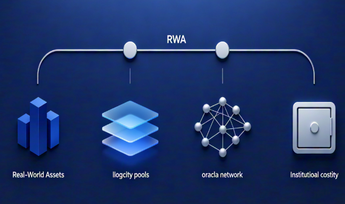
- White Label Solution
- RWA
July 2, 2026
- Exchange
- White Label Solution
July 2, 2026