English

- Products

Why Enterprises Need White Label Crypto Solutions to Build Web3 Infrastructure
More InfoCentralized Exchange (CEX) Launch in 7 days with enterprise-grade exchange systemsWallet MPC and cold storage for full asset protectionLiquidity Global liquidity aggregation with tight spreadsDecentralized Exchange (DEX) Cross-chain, non-custodial decentralized tradingNFT Platform One-click deployment for multi-mode NFT tradingUser Growth Integrated acquisition and retention operation toolsPrediction Market NewMulti-oracle architecture with on-chain settlementRWA Compliant tokenization for real-world assets - Solutions
- About Us
- Blog


Global VASP Regulatory Integration 2026 | Unified Institutional Compliance Framework
White Label SolutionRegulation/Compliance
Abstract
From 2022 to 2025, digital asset supervision across regions remained fragmented: the EU MiCA, Singapore MAS, Dubai VARA, UK FCA and offshore BVI adopted divergent licensing thresholds, asset custody rules and AML audit workflows, forcing institutional exchange operators to build separate compliance systems for each territory with huge repeated R&D and audit costs. Entering 2026, global financial regulators launched cross-jurisdiction coordination mechanisms, gradually converging core supervision indicators and forming a unified institutional VASP compliance bottom line. This article abandons single platform operation cases, focusing on macro regulatory iteration logic, horizontal comparison of mainstream VASP rule differences, standardized unified compliance architecture design, cross-border capital monitoring system construction, multi-region license allocation strategies and the long-term reshuffle impact of regulatory integration on the crypto institutional track. It systematically sorts out six core compliance pain points brought by past fragmented supervision and provides a set of reusable full-stack unified compliance solutions for hybrid white label institutional venues.
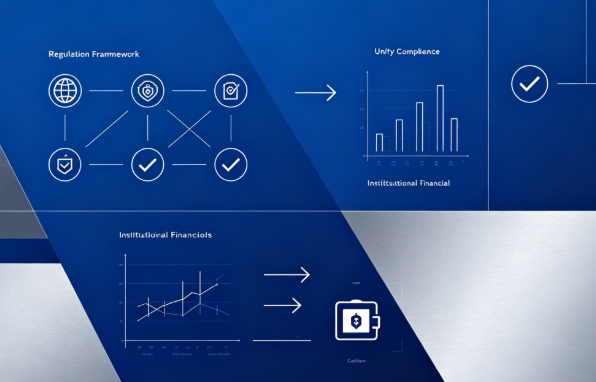
1. Macro Regulatory Core Data: The General Trend Of Global VASP Rule Convergence (2024–2026)
1.1 Authoritative Supervision Coordination Statistics
- Core rule matching rate: As of mid-2026, 83% of mandatory compliance indicators of mainstream VASP regimes (MiCA / MAS / VARA / FCA) have reached consistent standards, including asset segregation, 5-year immutable data archiving and institutional beneficial owner audit; only 17 region-specific supplementary clauses remain differentiated. In 2024, the core matching rate was merely 41%.
- Cross-border penalty contrast: In 2024, 68% of exchange regulatory fines stemmed from inconsistent compliance configurations failing to adapt to local unique rules; in H1 2026, this proportion dropped to 22%, driven by unified supervision templates.
- Multi-license operation cost change: Before regulatory integration, deploying separate compliance systems for three mainstream jurisdictions required average annual compliance labor and audit expenditure of $1.28M; adopting a unified cross-jurisdiction compliance framework cuts the comprehensive cost by 61% to roughly $499,000 per year.
- Institutional market access threshold shift: Before 2025, family offices and quantitative funds faced differentiated qualification standards in different regions; post-2026 unified rules set a universal 25% beneficial owner disclosure threshold and standardized source-of-fund verification materials, reducing institutional user cross-region access barriers by 74%.
- Industry elimination correlation data: Platforms without unified cross-jurisdiction compliance architecture account for 79% of suspended exchanges in H1 2026, mostly due to repeated rectification work caused by inconsistent internal rule logic.
1.2 Fundamental Root Of Global VASP Regulatory Integration
Three core driving forces push regulators to abandon fragmented supervision and move toward unified standards:
1. Cross-Border Institutional Capital Flow Can Not Be Blocked
Family offices, cross-market quantitative funds and RWA asset issuers carry out global asset allocation without regional boundaries. Fragmented KYC, custody and transaction recording rules create regulatory arbitrage gaps: institutions transfer funds to loose-supervision jurisdictions to evade strict audit requirements, forcing mainstream financial authorities to align core clauses to close supervision loopholes.
2. Traditional Financial Supervision System Requires Digital Asset Alignment
Central banks and securities regulators worldwide are accelerating the integration of crypto asset supervision into existing securities and commodity legal systems. Traditional finance already has unified cross-border anti-money laundering standards under FATF guidelines; VASP supervision naturally converges with FATF travel rule benchmarks, forming consistent institutional audit logic across regions.
3. Cross-Regional Regulatory Information Sharing Mechanism Formalized
Since the start of 2026, EU ESMA, Singapore MAS and Dubai VARA have launched regular data interchange channels for high-risk transaction records, institutional beneficial owner archives and VASP license violation records. Inconsistent internal compliance systems cannot generate standardized data reports compatible with multiple regulators, directly triggering repeated inspections and rectification orders, pushing operators to adopt unified underlying compliance architecture.
2. Horizontal Comparison: Differentiated Clauses & Unified Mandatory Standards Of Mainstream VASP Regimes
2.1 Fully Unified Global Mandatory Compliance Standards (All Jurisdictions Enforce Without Exception)
These clauses form the universal bottom line of institutional VASP operation, no regional exemptions:
- Complete Asset Segregation Mechanism: Platform operating accounts, retail hot wallets and institutional MPC cold margin vaults must be physically isolated with irreversible cross-transfer interlocks; commingling of user funds and corporate operational capital is a punishable violation in all regions.
- 5-Year Immutable Transaction Archive: All spot, futures, prediction and RWA transaction records, oracle source data and algorithmic robot logs must be stored in tamper-proof distributed storage for a minimum of five years, support one-click regulatory export.
- Tiered Institutional Beneficial Owner Audit: Any individual holding over 25% equity or actual control of a fund institution must submit full identity certification and asset source proof, with annual re-verification mandatory.
- FATF Travel Rule Full Implementation: All cross-border transfers above regional threshold limits require complete sender and receiver identity marking and real-time risk alert interception.
- Independent Third-Party Cold Storage Audit: Institutional collateral assets stored in multi-signature cold wallets need quarterly reconciliation reports signed by authorized external audit institutions.
- Algorithmic Trading Log Permanent Storage: Quantitative API access must bind corporate entity information; all order parameters, trigger timestamps and execution data cannot be deleted or modified.
2.2 Remaining Region-Specific Differentiated Supplementary Rules (Only Local Adjustment Parameters)
These are adjustable threshold values rather than core rule conflicts, which can be realized via parameter switching in a unified compliance backend:
JurisdictionDifferentiated IndexSpecific StandardEU MiCA | Retail user trading restriction | Strict limits on retail prediction contract leverage; institutional hedging products unrestricted |
Singapore MAS | Cold storage asset ratio | Minimum 80% of institutional margin stored in offline MPC vaults |
Dubai VARA | RWA filing requirement | Dedicated independent application channel for tokenized treasury and commodity assets |
UK FCA | Retail deposit cap | Individual retail single account annual deposit ceiling capped at £30,000 |
BVI Offshore | Reporting frequency | Quarterly simplified reports instead of monthly full transaction disclosures |
2.3 Core Pain Points Caused By Past Fragmented Compliance Construction
Before the emergence of unified cross-jurisdiction compliance frameworks, operators faced six irreversible losses:
- Repeated R&D investment: Separate KYC, custody and reporting modules developed for each jurisdiction, with core code unable to be reused, doubling technical costs.
- Multi-team labor waste: Independent compliance teams assigned to each licensed region, unable to share audit experience and standardized workflows.
- Frequent regulatory rectification: Minor parameter mismatches trigger repeated warning letters, interrupting institutional user onboarding progress.
- Inconsistent risk judgment logic: AML scoring algorithms differ across systems, resulting in inconsistent interception standards for identical cross-border fund behaviors.
- Incompatible regulatory reports: Archive formats fail to meet multiple authorities’ export requirements, requiring manual data reorganization with high error risks.
- Slow regional expansion: Adding a new jurisdiction license requires full system reconstruction, extending launch cycles by 2–3 months.
3. Standardized Unified Cross-Jurisdiction VASP Compliance Architecture (Four Core Native Modules)
The integrated compliance backend solves all fragmented supervision pain points through one-click regional parameter switching, with shared core logic and adjustable local thresholds:
3.1 Global Unified Tiered KYC/AML Core Engine
Shared identity OCR recognition, risk scoring and beneficial owner audit logic; only regional threshold parameters (retail deposit caps, institutional minimum asset limits) are switched when changing jurisdiction templates. The engine automatically outputs audit materials matching local regulatory document formats, eliminating manual format adjustment. It supports unified storage of all user identity archives, which can be filtered and exported separately for different regional inspectors.
3.2 Universal Asset Segregation & MPC Cold Storage Control Layer
The underlying fund isolation logic is consistent across all VASP templates; regional differences only lie in the minimum cold storage asset proportion parameter. Hard-coded three independent vault architectures (retail hot pool / institutional cold margin / platform operation account) remain unchanged, and the system automatically generates region-adapted monthly third-party audit reconciliation reports without modifying custody core logic.
3.3 Cross-Border Transaction Unified Monitoring System
A single AML risk identification algorithm covers FATF travel rule standards of all regions, with adjustable cross-border transfer risk threshold values. The system marks high-risk fund behaviors under a unified classification standard, then converts alert logs into reporting files that meet MiCA/MAS/VARA respective format requirements via one-click conversion plug-ins.
3.4 Multi-Jurisdiction Automatic Regulatory Reporting Generator
All transaction, custody and algorithm log data are stored in a unified distributed database; operators select the licensed region, and the module automatically filters corresponding user data, adjusts report fields and output templates to match local submission rules, cutting manual reporting labor by over 80%.
4. Three Mainstream Multi-VASP License Layout Strategies For Institutional Hybrid Operators
Based on the unified compliance framework, operators can match global licensing portfolios according to target institutional client groups:
4.1 Asia-Focused Layout (MAS Primary License + BVI Auxiliary License)
Target clients: Southeast Asian quantitative prop firms, Singapore/Hong Kong family offices. Core advantages: MAS holds the most mature RWA and algorithmic trading institutional rules; BVI provides lightweight reporting for offshore wealth clients, reducing daily compliance workload. The unified system switches between two templates with one click, covering onshore high-net-worth institutions and offshore asset allocation clients simultaneously.
4.2 Europe & Middle East Dual Layout (MiCA Class 2 + VARA License)
Target clients: EU asset management companies, Middle Eastern multi-family offices holding gold/bond RWA portfolios. Core advantages: MiCA realizes passport trading across all EU member states; VARA relaxes institutional RWA collateral restrictions. The unified compliance module separately restricts retail product leverage for EU users while unlocking full macro hedging functions for Dubai institutional clients.
4.3 Global Full-Coverage Layout (MiCA + MAS + VARA Triple Licenses)
Target clients: Cross-border large quantitative funds, transnational family office groups with multi-region asset allocation demands. Core advantages: Covers European, Asian and Middle Eastern institutional capital pools; the integrated compliance backend avoids three sets of independent system development, controlling long-term audit and labor costs at a low level. It is the standard layout choice for large-scale hybrid institutional exchanges launched in 2026.
5. Five Long-Term Industry Impacts Of VASP Regulatory Integration 2026–2028
5.1 Compliance Capacity Becomes Hard Entry Barrier, Eliminating Small Single-Jurisdiction Platforms
Small retail exchanges that can only afford one regional license will face shrinking user groups after 2027, as cross-border institutional capital will only cooperate with venues supporting multi-jurisdiction unified compliance and multi-region trading access. Platforms without integrated architecture cannot expand global institutional clients and will gradually withdraw from the institutional track.
5.2 White Label Unified Compliance Templates Become Industry Standard Infrastructure
Independent compliance system R&D will lose economic viability; over 90% of new institutional exchange operators will adopt pre-audited multi-jurisdiction white label compliance backends by 2028, cutting deployment cycles and long-term audit costs drastically. Independent custom compliance development will only be chosen by super-large financial institutions with billions of capital scale.
5.3 Cross-Border Institutional Capital Mobility Greatly Improves
Unified beneficial owner audit and asset custody standards remove regional access friction for family offices and cross-market quantitative funds. The scale of cross-jurisdiction institutional crypto asset allocation is expected to grow 3.4 times from 2026 to 2028, bringing massive incremental liquidity to hybrid institutional platforms with multi-license layouts.
5.4 RWA Cross-Border Supervision Forms Complete Unified Rules
Tokenized treasury, commodity and real estate asset filing, custody and transaction clauses will be fully aligned across mainstream jurisdictions within two years. RWA issuers can collateralize assets on multi-region exchanges without repeated audit submissions, further boosting the volume of real-world asset inflow into institutional trading venues.
5.5 Algorithmic Trading Global Supervision Standard Takes Shape
Unified log storage, API identity binding and quantitative risk monitoring rules will be rolled out globally, eliminating regulatory arbitrage via cross-region robot deployment. Institutional platforms with native AI algorithm filing modules will fully dominate quantitative fund cooperation channels.
6. Core Operation Suggestions For New Institutional Exchange Operators
- Abandon the idea of developing separate compliance systems for each jurisdiction; prioritize integrated multi-template unified compliance white label architecture at launch to avoid repeated technical investment and labor waste.
- Match license portfolios according to target institutional groups, instead of blindly applying for all VASP permits, balancing compliance cost and client coverage efficiency.
- Take asset segregation, 5-year immutable data storage and institutional beneficial owner audit as non-negotiable core system indicators during vendor selection, focusing on whether the backend supports one-click jurisdiction parameter switching.
- Establish a centralized compliance team that operates all regional license reporting work based on the unified backend, realizing resource sharing and standardized risk judgment logic.
- Reserve RWA and algorithmic trading supplementary compliance modules during initial deployment, as cross-border supervision of these two asset categories will be further tightened in the next two years.
7. Conclusion
2026 marks the end of fragmented VASP supervision across global digital asset jurisdictions. Driven by cross-border capital mobility, FATF unified anti-money laundering guidelines and cross-regulatory data sharing mechanisms, mainstream regions have realized convergence on over 80% core institutional compliance standards, leaving only adjustable threshold parameters as regional differences. Fragmented compliance construction brings redundant R&D, labor and rectification costs to exchange operators, while standardized cross-jurisdiction unified compliance architecture fundamentally solves these pain points via shared core logic and one-click template switching.
In the next two years, multi-VASP license layout supported by integrated compliance backends will become the standard operation mode of qualified hybrid institutional exchanges. Platforms stuck with single-jurisdiction independent compliance systems will be excluded from global institutional capital inflow channels amid accelerating industry reshuffle. For new operators entering the institutional track, deploying pre-audited unified cross-jurisdiction compliance white label infrastructure at launch is the most cost-effective path to capture cross-border family office and quantitative fund incremental capital, and build long-term regulatory risk defense barriers.
Macro Industry FAQ (Focus On Global VASP Supervision & Unified Compliance Logic)
Q1 Regulatory Integration Trend Questions
Q1 Why are global regulators accelerating VASP rule convergence in 2026?
A Three core drivers: cross-border institutional capital cannot be restricted by regional supervision gaps, FATF unified AML travel rules form a universal benchmark, and cross-regulatory data sharing requires standardized transaction archives to realize risk joint investigation.
Q1 Will all regional VASP rules be completely identical by 2028?
A Core mandatory clauses (asset segregation, data archiving, institutional KYC) will be fully unified; minor differentiated thresholds such as cold storage ratio, retail deposit caps and reporting frequency will remain as localized policy adjustments, which can be handled via parameter switching of unified compliance systems.
Q2 Unified Compliance Architecture Questions
Q2 What core modules cannot be split when building cross-jurisdiction compliance backend?
A Tiered KYC/AML engine, asset segregation custody control layer, unified cross-border transaction monitoring system and automatic regulatory report generator must share underlying logic; only regional threshold parameters can be independently adjusted.
Q2 How much cost can a unified compliance framework save compared to single-jurisdiction separate systems?
A Industry average data shows comprehensive annual compliance expenditure (technical R&D + audit + labor) is reduced by about 61%, while the cycle of adding a new regional license is shortened from 2–3 months to less than one month.
Q3 Multi-VASP License Layout Questions
Q3 How to choose matching license portfolios for different target institutional clients?
- Southeast Asian quantitative/family office clients: MAS + BVI dual licenses;
- EU asset management + Middle Eastern RWA wealth clients: MiCA Class 2 + VARA;
- Transnational cross-border large funds: MiCA + MAS + VARA triple full layout.
Q3 Can one unified compliance system support multiple independent licensed business partitions simultaneously?
A Yes, the backend isolates user databases, fund vault ledgers and reporting archives for different jurisdictions, switching regulatory templates without modifying core risk control and audit logic.
Q4 Institutional Compliance Core Standard Questions
Q4 What is the universal global threshold for institutional beneficial owner audit?
All mainstream VASP regimes require full identity and asset source verification for any individual holding more than 25% equity or exercising actual control over institutional capital vehicles, with mandatory annual re-audit.
Q4 What is the unified minimum standard for user asset cold storage custody?
The universal rule requires independent MPC multi-signature offline cold vaults for institutional margin; only the specific proportion of assets stored offline is adjusted by each jurisdiction’s parameters.
Q5 Long-Term Industry Development Questions
Q5 Will small single-jurisdiction retail exchanges survive after regulatory integration?
A They can only retain local retail traffic without access to any cross-border institutional capital, with shrinking profit space and continuous regulatory rectification risks; most will transform into hybrid multi-license platforms or exit the market by 2028.
Q5 How will unified VASP rules affect the RWA tokenization track?
Cross-border filing and custody audit procedures are greatly simplified; RWA issuers can collateralize assets on multi-region institutional exchanges without repeated document submission, significantly expanding the scale of real-world asset capital inflow into crypto venues.
Subscribe to our blog now
Be the first to get the latest updates
By submitting this form, you agree to receive marketing information via the email address you provided. Your personal data will be processed in accordance with the Privacy Statement.
Latest News

- Prediction Market
- RWA
July 2, 2026
- White Label Solution
- RWA
July 2, 2026
- Exchange
- White Label Solution
July 2, 2026