English
Enterprise Prediction Markets: From Trading Tools to Decision Engines | Soontech
Prediction Market
Most Enterprises Misunderstand Prediction Markets from the Start
When discussing prediction markets in an enterprise context, a common but critical mistake is to treat them as trading tools—or worse, as speculative financial products.
In reality, if prediction markets are only understood as trading platforms, most of their value is lost.
Their true role is not trading, but:
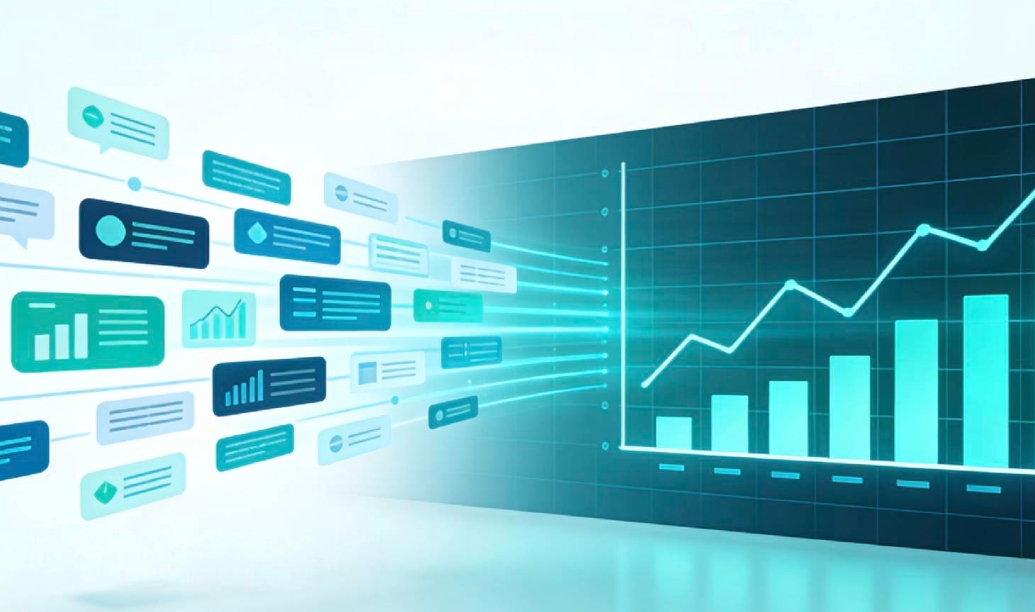
Transforming dispersed information into actionable decision signals.
In today’s data-driven environment, enterprises rely heavily on models, reports, and expert opinions. However, these systems often fail to capture fragmented, informal, yet highly valuable internal knowledge.
Prediction markets offer a mechanism to solve this problem.
What Are Enterprise Prediction Markets? Why They Are Not Trading Products
Public platforms such as Polymarket rely on open participation and real capital to enable price discovery through trading activity. Their effectiveness depends on external liquidity.
Enterprise prediction markets—especially internal ones—operate differently:
- They are not profit-driven
- Participation is limited to internal employees
- Incentives are based on information contribution rather than financial returns
- Outputs are used for decision support, not tradable assets
For example, Google has experimented with internal prediction markets where employees forecast product timelines and business outcomes. These signals were used by management to refine expectations—not for financial trading.
At their core, enterprise prediction markets are:
Information aggregation and cognitive calibration systems.
Three Core Values of Enterprise Prediction Markets
Risk Hedging: Exposing Uncertainty Early
Enterprises constantly face uncertainty—product delays, execution risks, regulatory changes.
Prediction markets make these risks visible.
When employees across functions express their expectations, market prices reflect a collective forecast. If a significant number of participants anticipate failure (e.g., a delayed product launch), this signal can trigger early intervention.
This is not financial hedging, but something more critical:
Hedging against cognitive bias.
Strategic Decision-Making: From Expert Opinion to Collective Intelligence
Traditional decision-making often relies on executives or external consultants, which can lead to information bottlenecks and echo chambers.
Prediction markets incentivize truthful forecasting, as participants are rewarded for accuracy rather than alignment.
Research and experiments by Hewlett-Packard (HP) showed that internal markets could outperform official forecasts in demand prediction, reducing error rates significantly.
This demonstrates that decentralized knowledge, when properly structured, can produce more reliable insights.
Data Aggregation: Turning Fragmented Knowledge into Signals
Organizations are full of “soft information”:
- Customer sentiment shifts
- Hidden technical constraints
- Early competitive signals
These are difficult to capture in traditional reporting systems.
Prediction markets provide a low-friction channel for expression. Through participation, individual insights are aggregated into a continuous, real-time probability signal.
In this sense, price becomes a compressed form of knowledge.
External Liquidity: Opportunities and Boundaries
Introducing external liquidity—via public markets or external participants—can bring benefits:
- Broader perspectives
- Increased activity
- Additional signal sources
However, for enterprises, it also introduces risks:
- Information leakage
- Misaligned incentives
- Signal distortion due to speculation
As a result, most enterprise prediction markets remain closed systems, selectively incorporating external data rather than external participants.
From Trading Platforms to Decision Systems
Prediction markets should not be seen as trading venues, but as dynamic information systems.
They enable enterprises to:
- Detect risks earlier
- Adapt strategies faster
- Maintain informational advantage
Future competition will not only depend on execution, but on:
Who can interpret uncertainty faster and more accurately.
Conclusion: Making Information Actionable
Prediction markets are not about “betting on the future,” but about understanding it.
They complement—not replace—existing decision processes by introducing real-time, decentralized intelligence.
At SoonTech, we help enterprises operationalize this capability. Through modular prediction market infrastructure and integrated trading systems, organizations can deploy scalable, customized solutions without building from scratch.
When information becomes structured, priced, and continuously updated, decision-making itself evolves.
Subscribe to our blog now
Be the first to get the latest updates
By submitting this form, you agree to receive marketing information via the email address you provided. Your personal data will be processed in accordance with the Privacy Statement.
Latest News

Summit ends, Web3 gains? Analyzing BTC trends and infrastructure booms post geopolitical thaw.
- News
- Crypto assets
May 16, 2026
Balkans Crypto 2026 Preview: Tapping into Southeast Europe with CEX and Prediction Markets.
- Prediction Market
- Exchange
- Insights
May 15, 2026
This article analyzes why new exchanges fail and offers a 7-day rapid deployment guide via SoonTech.
- Exchange
- Prediction Market
May 15, 2026