English
Why Do 90% of New Exchanges Fail Immediately After Launch? A Survival Guide | SoonTech
ExchangePrediction Market
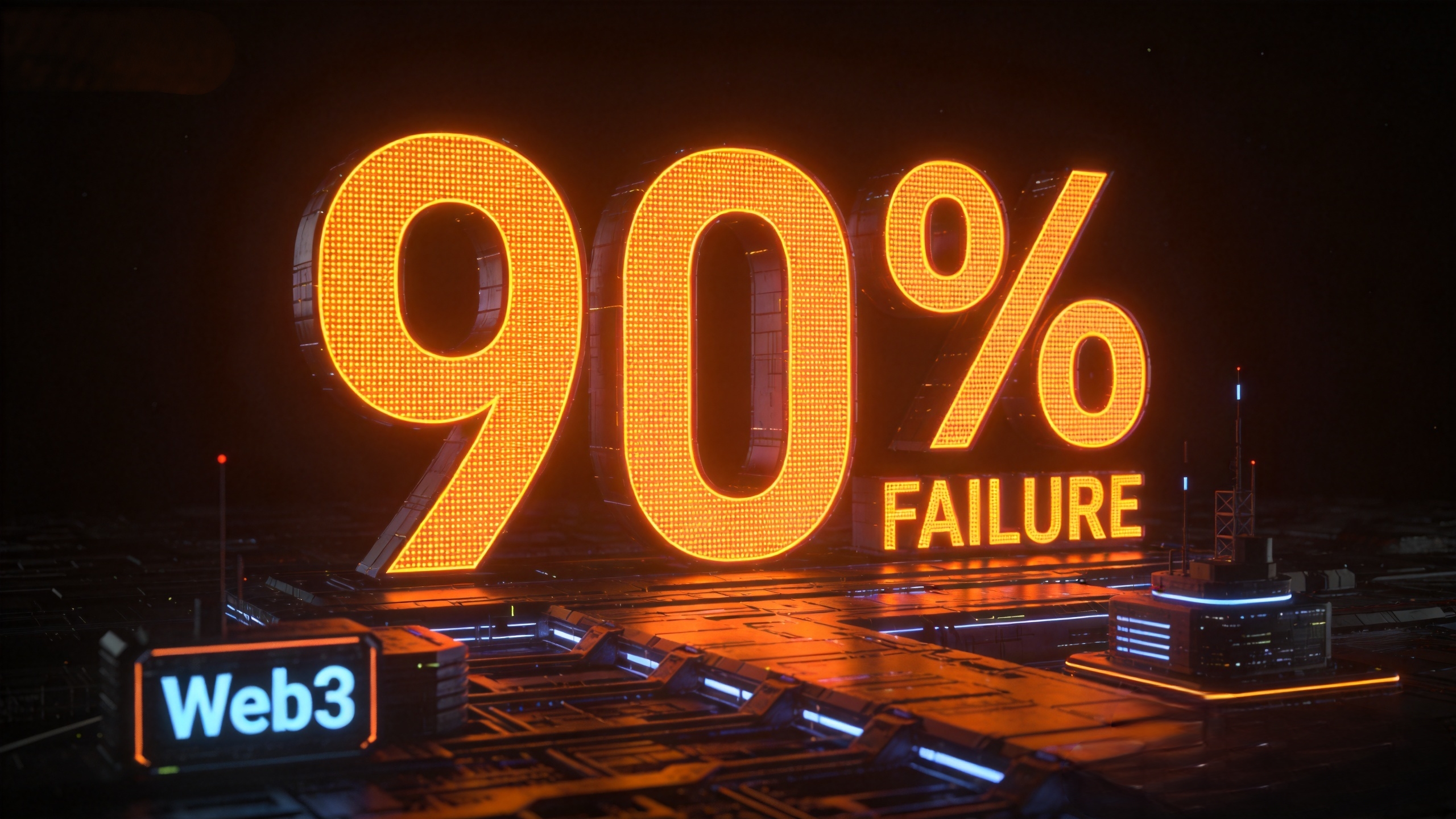
In the Web3 industry, establishing a cryptocurrency exchange was once seen as the ultimate golden ticket to the pinnacle of wealth. However, the reality is incredibly stark: according to industry data reviews, over 90% of new platforms enter a "death spiral" within six months of going live.
Especially in the AI era predicted by Jensen Huang—where demand for computational energy efficiency is surging—inefficient technical architectures are becoming shackles for startups. To survive in a highly competitive market of existing stock, developers must realize one thing: blindly building proprietary technology is no longer a moat; rapid market responsiveness is.
I. The Three Fatal Flaws: Reviewing How Exchanges "Die"
By observing thousands of cases, we've found that exchange failures are rarely accidental. They are typically caused by the intersection of the following three core issues:
- Technical Drag: The Mismatch Between Dev Cycles and Market Windows
Many teams insist on writing their core matching engines from scratch. In the Web3 realm, three months is an entire cycle. By the time you spend half a year or even a year polishing your code, market trends have already shifted from inscriptions to prediction market solutions. A lengthy development cycle not only drains investor capital but also causes the team to miss the prime window for user acquisition.
- Liquidity Drought: A Beautiful "Ghost Town" Can't Retain Users
No matter how gorgeous the interface, if a system lacks depth, it is merely a ghost town. Newly launched Centralized Exchanges (CEX) often face the dilemma of excessive bid-ask spreads. Once users realize the transaction costs are exorbitantly high, they immediately flock to top-tier platforms. The lack of professional liquidity services support is the direct trigger for the demise of most new platforms.
- Security Exposure: A One-Way Ticket for Brand Reputation
Security is the baseline for any exchange. Proprietary systems often prove fragile under stress tests and extreme market conditions. A single system outage or a minor hacker attack can reduce months of accumulated brand reputation to zero in an instant.
II. The Way Out: Shifting from "Heavy R&D" to "Modular Deployment"
In the current context of Web3 infrastructure development, smart entrepreneurs no longer try to reinvent the wheel. Instead, they opt for mature white-label exchange solutions.
The Strategic Value of Rapid Launch
SoonTech's "7-Day Professional CEX Deployment Solution" is essentially about buying "time assets" for project owners. Through a modular foundation, you can free up 90% of your energy from maintaining servers and writing underlying matching logic, allowing you to focus on the core business logic—user acquisition and operations.
III. The 2026 Growth Engine: The Fusion of DEX and Prediction Markets
With the popularization of DeFi, a standalone CEX is no longer enough to cover all user needs.
- Decentralized Exchanges (DEX): Offering greater transparency and control over assets, these are key to attracting on-chain native users.
- Prediction Markets: Widely recognized as the "traffic nuclear weapon" of 2026. Whether it's macroeconomic trends, sports events, or social hot topics, prediction markets can bring extremely high user stickiness and high-frequency interaction to a platform.
By integrating high-performance prediction market solutions, an exchange can rapidly transform from a single trading tool into a comprehensive "Information + Trading" platform.
IV. Survival Guide: How to Choose Your Technical Foundation?
If you are planning to launch a new trading platform, please evaluate it against the following checklist:
- Matching Performance: Does it possess the processing power to support tens of thousands of concurrent transactions per second? Will it go offline during periods of high volatility?
- Liquidity Depth: Does the technology provider come with liquidity aggregation services from major global exchanges?
- Compliance & Security: Has the system been audited by multiple institutions? Does it support multi-signature wallets and cold/hot wallet segregation?
- Multi-Platform Coverage: Can it simultaneously provide iOS, Android, H5, and PC clients to ensure users can trade anytime, anywhere?
V. Conclusion: Let the Professionals Handle the Professionals
SoonTech is dedicated to becoming the "power company" of the Web3 era, providing a stable, efficient, and secure foundational support for global financial innovators. We provide not just technology, but a survival logic that has been validated by the market.
In a future where computational resources and energy demands are growing exponentially, don't let tedious underlying development weigh down your business dreams.
Subscribe to our blog now
Be the first to get the latest updates
By submitting this form, you agree to receive marketing information via the email address you provided. Your personal data will be processed in accordance with the Privacy Statement.
Latest News

- Regulation/Compliance
- News
May 15, 2026
- Prediction Market
- Exchange
May 15, 2026
- FAQ
May 15, 2026