English
Why Prediction Markets Are the Ultimate Navigation System for Enterprise Decision-Making
Prediction Market
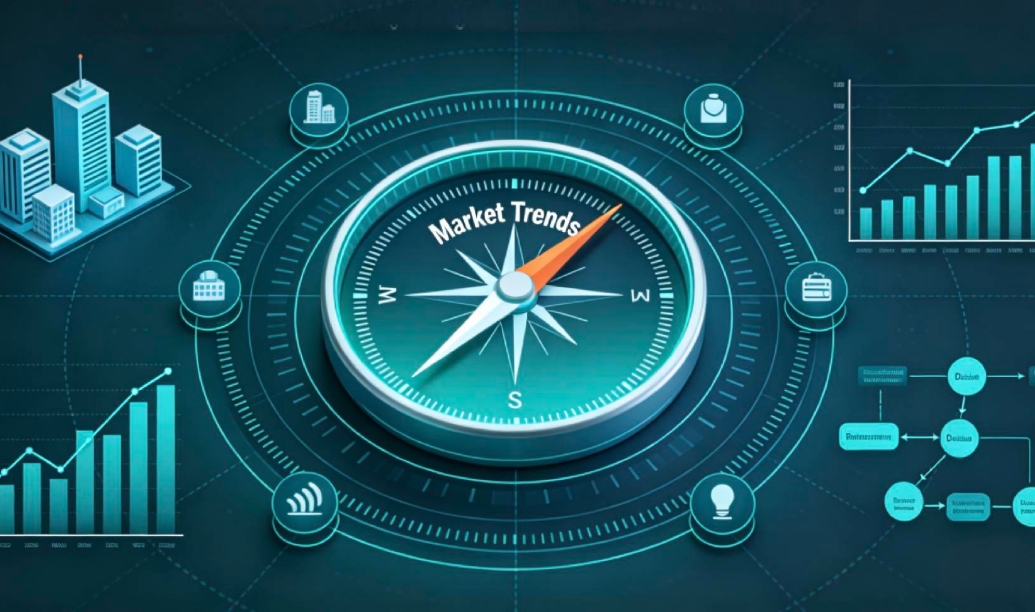
In today’s highly volatile and uncertain environment, the most expensive cost for enterprises is not capital expenditure—it is wrong decisions.
Traditional tools such as market research, expert opinions, and internal meetings are constrained by small sample sizes, bias, and hierarchical pressure, often failing to capture the true underlying reality.
The rise of prediction markets marks a new era of enterprise decision-making—one grounded in game theory, incentive-aligned information discovery, and probability-driven consensus.
Core Logic: When Information Is Given a Price
A prediction market allows participants to trade contracts tied to future events—from macro-policy shifts and industry trends to product launches or earnings outcomes.
Its fundamental principle is “price equals probability.”
Example:
If a contract predicting “The in-house chip will enter mass production in Q4” trades at $0.72, it means the market collectively estimates a 72% chance of the event occurring.
Unlike traditional expert forecasting, this consensus emerges from participants risking real capital. This incentive mechanism filters out noise, bias, and wishful thinking, producing a probability signal that is often more accurate than standalone expert judgment.
Why Enterprises Should Build Their Own Prediction Markets
A prediction market is not merely a trading platform—it is a high-precision decision intelligence system.
The advantages for enterprises include:
Eliminating Internal Silence and Groupthink
In hierarchical organizations, teams tend to align with leadership expectations or withhold pessimistic assessments.
Prediction markets—anonymous and incentive-driven—surface real information by revealing risks through trading behavior rather than verbal reporting.
A Real-Time Risk Radar
Traditional reports are outdated the moment they are published.
Prediction markets operate 24/7, immediately integrating new information—competitive moves, regulatory shifts, macro trends—into price changes.
This allows enterprises to detect emerging risks ahead of time.
A Low-Cost Long-Tail Risk Hedging Tool
Enterprises can use prediction markets to hedge exposure efficiently.
Example: a manufacturer heavily dependent on imports may participate in FX or commodity price predictions—gaining market profits to offset potential business losses.
From Polymarket to Enterprise-Grade Systems
Between 2024 and 2025, Polymarket achieved global recognition for its accuracy in political and societal event forecasting.
Enterprises can apply the same model horizontally and vertically:
- Verticalized domains: AI breakthroughs, energy transition, supply chain resilience, commodity demand, logistics reliability.
- Specialized closed markets: curated experts and industry operators produce high-value, domain-specific probability signals.
- Future trend pricing power: owning a prediction market effectively gives the enterprise a forward-looking pricing mechanism for future scenarios.
This data-driven, probability-aligned approach increases organizational agility, strategic precision, and competitive resilience in uncertain markets.
Conclusion
In the next generation of enterprise decision-making, the ability to capture precise information and manage risk probabilistically will define market leaders.
Prediction markets provide:
- real-time insight
- collective intelligence
- quantifiable future probabilities
- cost-effective hedging
- early-warning risk detection
They are not just a “tool,” but a strategic navigation system—guiding enterprises through uncertainty with clarity and measurable confidence.
Subscribe to our blog now
Be the first to get the latest updates
By submitting this form, you agree to receive marketing information via the email address you provided. Your personal data will be processed in accordance with the Privacy Statement.
Latest News

- FAQ
May 12, 2026
- FAQ
May 12, 2026
Deep dive into prediction markets in growth, social gaming, and data infra.
- FAQ
May 12, 2026