English
What is a Decentralized Prediction Market? From Principles to Participation
Prediction MarketInfrastructure
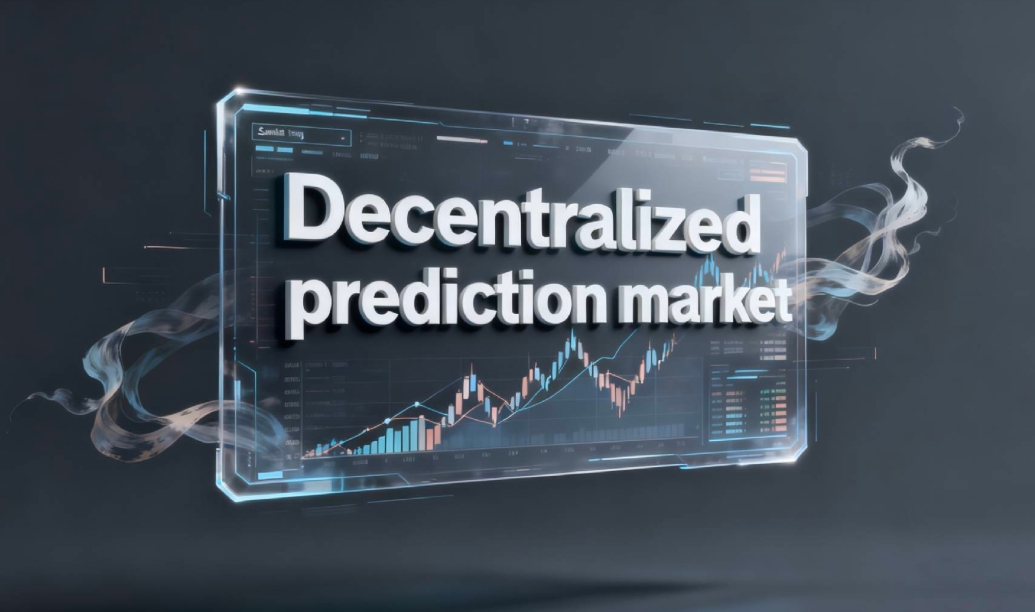
In the rapidly evolving world of Web3 and decentralized finance (DeFi), decentralized prediction markets are emerging as a powerful tool for enterprises, DAOs, and project teams to build data-driven decision-making systems. Beyond being financial derivative platforms, they are event-driven, on-chain trading systems that aggregate collective intelligence through market pricing, offering actionable insights for organizations.
This article provides a comprehensive overview of how decentralized prediction markets work, their core mechanisms, leading platforms, and the differences between these markets and traditional finance or betting markets. It sets the stage for exploring system architecture, risk management, and real-world applications in later modules.
What Are Decentralized Prediction Markets? Trading Probabilities as Prices
Prediction markets allow participants to trade on the outcome of future events, with each event represented as a tradable contract. For example:
“Will Bitcoin surpass $100,000 by the end of 2026?”
- Buying a “Yes” share signals belief that the event will occur.
- If the outcome does not materialize, the share settles to zero.
On-chain prices reflect market consensus about the probability of an event happening. A price of 0.7, for instance, indicates a 70% perceived likelihood of the event.
How Do Decentralized and Centralized Prediction Markets Differ?
FeatureCentralized MarketDecentralized MarketTrade MatchingControlled by platformAutomated via smart contractsSettlementManual or semi-automatedFully on-chain and autonomousTransparencyLimited visibilityFully auditable on-chainCensorship RiskHighLow, resistant to interferenceAccessibilityRestricted by geography/KYCGlobal, permissionless innovation
In decentralized prediction markets, trust is shifted from institutions to code and consensus, ensuring outcomes are transparent, verifiable, and accessible worldwide. A key component of this trust framework is the oracle system, which securely feeds real-world event data onto the blockchain.
Leading Platforms Compared: Polymarket, Augur, Omen, and PlotX
Several mature platforms have emerged, each targeting different user bases and use cases:
- Polymarket – Focused on consumer-friendly experiences, supports credit card funding, and covers political, economic, and cultural events.
- Augur v2 – Fully decentralized, relies on REP token incentives for reporters, emphasizes censorship resistance and on-chain settlement.
- Omen (Gnosis Chain) – Uses conditional token architecture and low transaction fees, ideal for frequent market creation and experimentation.
- PlotX – Offers automated, non-custodial short-term prediction markets with AMM-based mechanisms, supporting rapid on-chain trading.
These platforms provide valuable reference points for teams or organizations looking to build their own prediction markets, from contract design and settlement logic to incentive structures.
Why Enterprises and DAOs Should Adopt Prediction Markets
Decentralized prediction markets offer more than speculative opportunities—they serve as decision-support systems and risk information tools:
- Aggregating Collective Intelligence – Market prices quickly reflect internal or external consensus on event probabilities, providing actionable metrics for strategic planning.
- Event-Driven, On-Chain Infrastructure – Beyond trading, these markets function as information pipelines and decision execution frameworks.
- DeFi Ecosystem Composability – They can integrate with liquidity mining, options, and insurance modules to enable sophisticated on-chain financial instruments.
- Internal Organizational Applications – Private prediction markets can forecast project success rates, guide budget allocation, and validate strategic decisions more effectively than surveys or polls.
- Global Accessibility and Transparency – Unrestricted by geography or centralized authority, these markets offer resilient and verifiable systems for enterprise use.
The Future of Prediction Markets: From Decision Tools to Core Infrastructure
Decentralized prediction markets are more than “gambling platforms.” They transform dispersed individual knowledge into high-quality probabilistic signals—essentially a digital realization of Hayek’s “knowledge in society” concept.
Potential applications include:
- DAO Decision Tools – Optimizing proposal approval and budget allocation.
- Enterprise Risk Monitoring – Detecting potential project failures or market risks ahead of time.
- Scientific and Research Validation – Crowdsourcing predictions to test hypotheses or experimental results.
As on-chain architecture matures, oracle reliability improves, and regulatory frameworks clarify, decentralized prediction markets are poised to become core decision-making infrastructure for organizations and teams.
Explore More in the SoonTech Ecosystem
This article serves as a foundation for understanding decentralized prediction markets. For deeper exploration, we recommend:
- Decentralized Prediction Market System Architecture: From Event Creation to Conditional Settlement
- Oracles, Dispute Resolution, and Risk Control in Prediction Markets
- Beyond Betting: DAO Governance and Enterprise Applications
- Global Regulatory Landscape and Compliance Design for Decentralized Prediction Markets
Subscribe to our blog now
Be the first to get the latest updates
By submitting this form, you agree to receive marketing information via the email address you provided. Your personal data will be processed in accordance with the Privacy Statement.
Latest News
- White Label Solution
June 19, 2026
- White Label Solution
June 18, 2026
- White Label Solution
June 18, 2026