English
Web2 Giants Enter the Game: How NFT Platforms Shift from "Collectibles" to "Brand Loyalty Assets"
NFT Infrastructure
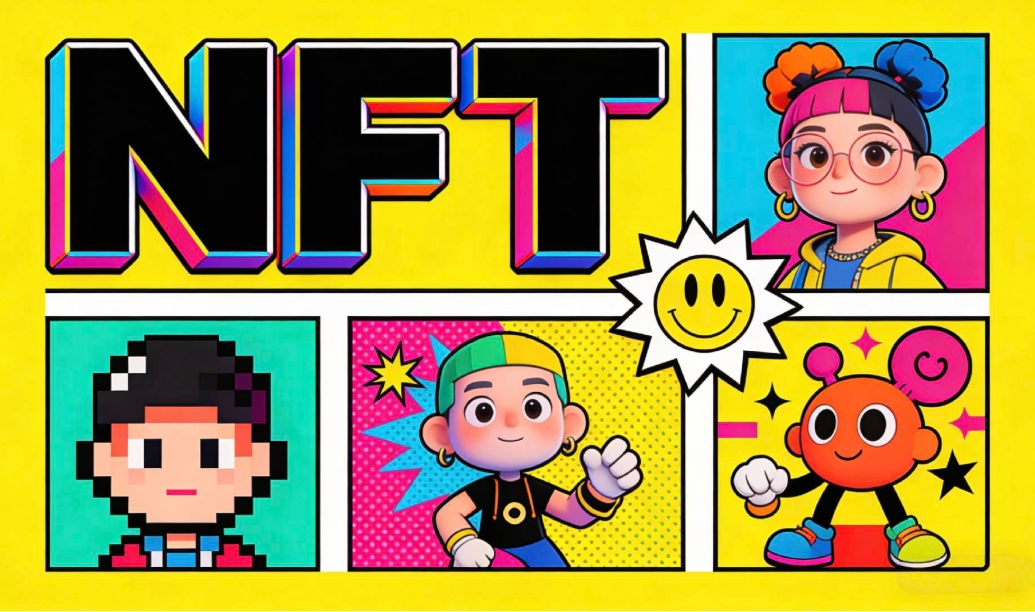
As 2024 passes the halfway mark, a significant turning point in the Web3 domain has become clear: NFTs (Non-Fungible Tokens) are shedding their early "financial speculation" aura and transitioning into a core tool for corporate digital transformation.
In the past, the NFT ecosystem was stuck in the "digital collectible craze." Today, as Web2 giants like Starbucks, Nike, and Louis Vuitton deepen their Web3 strategies, the narrative around NFTs has fundamentally changed. They are no longer just "collectibles," but rather "digital membership credentials" and "brand loyalty assets" that connect brands with their users.
Moving from Web3 communities to major Web2 corporations, this is not an art carnival—it is the reconstruction of the brand-customer relationship.
The NFT Loyalty Revolution: Turning User Engagement into Digital Assets
Unlike the celebrity-driven speculation of 2021–2022, corporate NFT deployment in 2024 is measured and pragmatic. Rather than chasing short-lived traffic spikes, brands are embedding NFTs into core loyalty programs, building long-term, value-bearing user relationships.
Recent examples paint a clear picture:
- Visa — Web3 Loyalty Engagement Solution: Provides B2B infrastructure that enables brands to deploy token-based reward systems with reduced technical complexity.
- Starbucks Korea — STAR★LIGHT NFT program: Integrates NFTs into the existing Rewards system, merging digital benefits with social impact initiatives.
- Hugo Boss — HUGO BOSS XP Loyalty Program: Customers collect tokens (NFTs) through purchases and interactions to unlock exclusive products and real-world experiences.
Across all cases, the message is consistent: NFTs are beginning to replace membership cards and traditional point systems, becoming high-value digital identity credentials for brand loyalty.
Market Shift: From "Price Discounting" to "Identity Recognition"
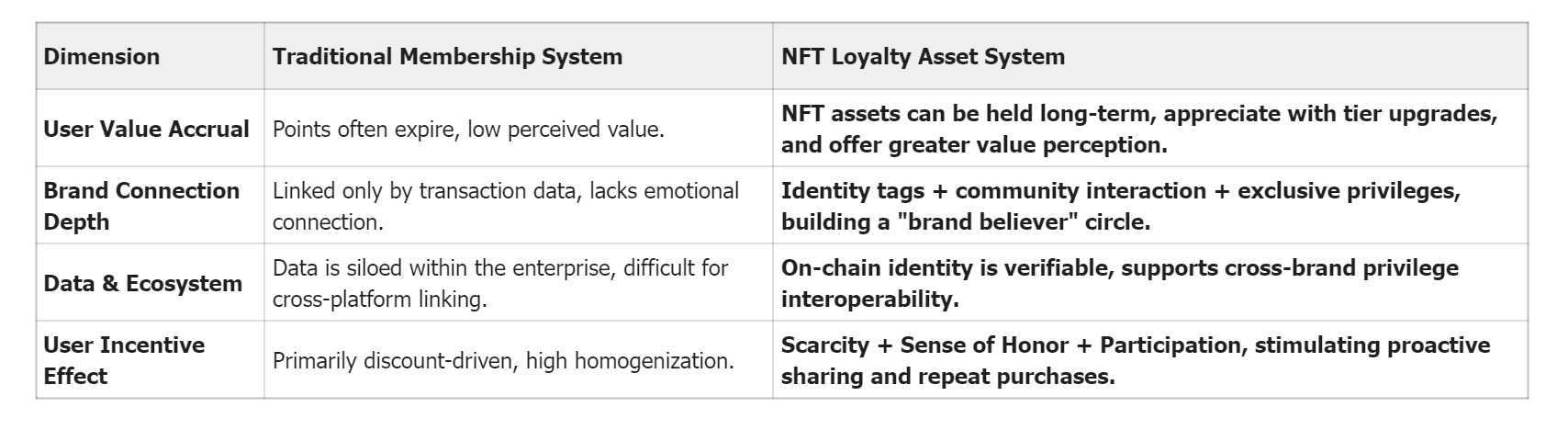
Why are major brands collectively focusing on NFTs? Because traditional loyalty systems have reached their ceiling. In a post-traffic-dividend era, retention has become the true battlefield. Traditional point systems often suffer from limited redemption scenarios, poor liquidity, and low user perceived value.
The rise of the NFT loyalty model is the inevitable breakthrough after traditional membership systems hit their ceiling. Let's compare the key differences:
The Pain Point: Not Technology — User Experience
Despite promising potential, large Web2 brands still face practical challenges when rolling out NFT-powered loyalty:
- User onboarding friction: Most mainstream users don’t understand wallets, blockchain, or private keys.
- Security risks: Losing a private key means losing assets — unacceptable for mass adoption.
- System fragmentation: CRM, points, ecommerce, and Web3 identity assets rarely interact seamlessly.
Thus, brands don’t just need “NFT technology.”
They need a way for Web2 users to enjoy Web3 benefits without feeling like they’re using Web3 at all.
SoonTech’s NFT Solution: Upgrading Loyalty into Enterprise-Grade Digital Assets
SoonTech’s enterprise NFT platform is not simply a marketplace — it is a loyalty management system powered by Web3, but experienced like Web2.
Brand-Native Integration — NFTs that belong to the brand ecosystem
We provide a full white-label NFT loyalty system matching domain, UI, and benefit structure with brand identity.
Users earn points through purchases, check-ins, referrals, and participation. When thresholds are met, they can redeem NFTs in one click. NFT levels unlock access to offline events, exclusive products, and private communities — enabling sustainable loyalty growth.
Built-in MPC Wallet — Web3 without the learning curve
No wallet installation, no seed phrase, no blockchain knowledge required.
Users log in via phone number, email, or social accounts.
The system automatically generates an enterprise-grade MPC wallet with distributed private-key management, eliminating loss and theft risks. NFT claiming and usage feel identical to a traditional app — removing all barriers to mass adoption.
Full System Integration — Web3 assets and brand operations in sync
SoonTech connects with CRM systems, point engines, ecommerce platforms, and offline retail networks to form a unified loop of:
Behavior → Points → NFT → Benefits
Example: offline purchase → points awarded in real time → NFT level upgrade → unlocks exclusive products or member events.
Rights are synchronized across all channels — no fragmentation, no duplicated investment — boosting customer acquisition, repurchase rate, and private-domain assetization.
Conclusion: 2024 — The Watershed of NFT Loyalty
If 2021 was the “NFT collectibles era,” then 2024 marks the beginning of the NFT loyalty asset era.
This shift affects not only the crypto industry but every sector built on membership and lifetime value — retail, fashion, aviation, entertainment, and beyond.
The new loyalty paradigm moves from:
“How many points did you earn?”
to
“How much value did you co-create with the brand?”
The more a user contributes to a brand ecosystem, the more exclusive and valuable their digital benefits become — improving engagement, advocacy, and lifetime value (LTV).
SoonTech helps Web2 brands cross the Web3 usability barrier by providing a customizable NFT platform with a built-in MPC wallet — empowering brands to build long-term loyalty networks based on digital assets, not discounts.
The future is already here. Is your brand ready to own its digital asset-based loyalty platform?
Subscribe to our blog now
Be the first to get the latest updates
By submitting this form, you agree to receive marketing information via the email address you provided. Your personal data will be processed in accordance with the Privacy Statement.
Latest News

A critical guide exposing hidden fees in white-label crypto exchange SaaS pricing.
- White Label Solution
- Prediction Market
- Exchange
May 31, 2026
A 2026 selection guide of budget-friendly white-label crypto exchange SaaS for startups.
- Liquidity
- Crypto assets
May 30, 2026
- FAQ
May 29, 2026