English
Why Venture Capital and Private Equity Firms Must Adopt Institutional-Grade Crypto Custody
InfrastructureCustody
The crypto market in 2024 presents a landscape that is both dynamic and contradictory.
On one hand, RWA momentum, on-chain yield assets, and Bitcoin spot ETFs have introduced substantial institutional inflows. On the other hand, a sharp drop in project-side fundraising, frequent on-chain exploits, and tightening global regulations have made venture capital (VC) and private equity (PE) firms far more risk-conscious.
Under this trend of “cautious re-entry,” the question becomes inevitable:
How can institutions reliably hold and manage digital assets amid volatility and regulatory pressure?
This is precisely where institutional crypto custody becomes indispensable—functioning as the insurance vault of Web3 investments and the foundational infrastructure every VC/PE firm must establish when managing crypto allocations.
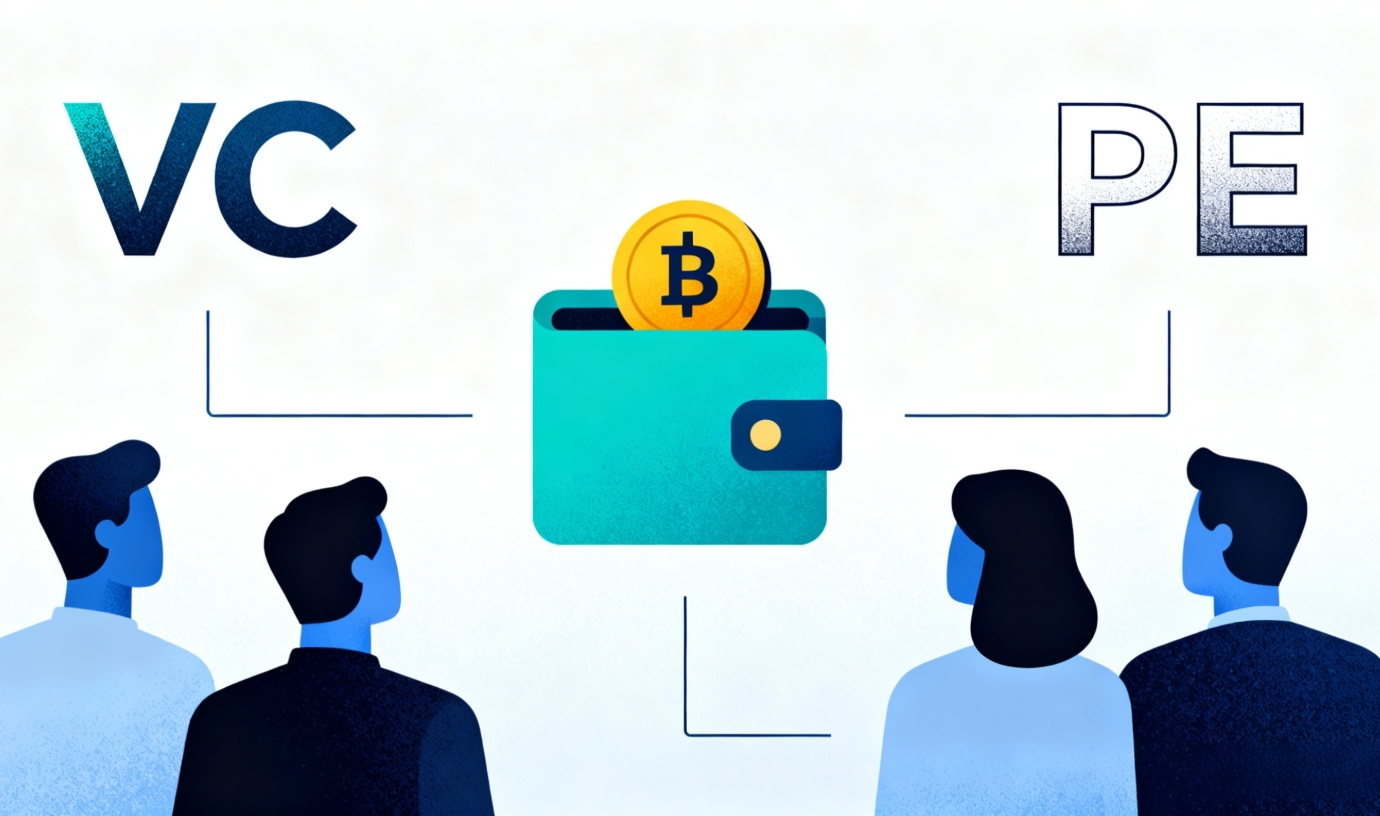
Venture Capital (VC)
Primarily invests in early-stage projects such as AI+Crypto, ZK, DePIN, L2, and GameFi.
Characteristics:
- High growth × high volatility × high failure rate
- Complex asset structures (tokens, validator rewards, vesting rights, NFTs, SAFT agreements)
Pain point:
VCs need a secure, auditable, and multi-chain crypto wallet system to manage long-cycle token holdings and locked allocations.
Private Equity (PE)
Allocates to mature Web3 enterprises, RWA providers, infrastructure, and stable-yield assets.
Characteristics:
- Large capital commitments
- Long investment horizons
- High regulatory obligations (AML, tax, transparency audits)
Pain point:
PEs need custody and wallet infrastructure that supports regulatory transparency, risk monitoring, and auditable asset workflows.
Why Institutional Crypto Custody Has Become Non-Negotiable
Below is a summary of on-chain metrics from January–November 2024 (partial dataset):
- 520+ security incidents, resulting in over USD 1.7 billion in losses. Attack vectors expanded from phishing to multi-chain bridge exploits and MPC-targeted social-engineering attacks.
- GameFi and NFT volume collapsed. 2024 blockchain gaming fundraising dropped >80% vs. 2022, causing large portions of institutional holdings to vanish, highlighting asset-management blind spots.
- Fundraising recovered but deal size shrank—200+ deals in 1H 2024, but average ticket size fell nearly 40%. Institutions became more sensitive to asset safety, lockup duration, and exit liquidity.
- Global regulation tightened across the board. The U.S., EU, Japan, and Singapore introduced frameworks requiring custody providers and wallet systems to support KYC/AML, auditability, and private-key risk isolation.
Together, these shifts have pushed crypto custody from a “nice-to-have” to a “must-have” for VC and PE firms.
SoonTech Wallet: The Custody Infrastructure VC & PE Firms Can Rely On
As a leading multi-chain MPC crypto wallet and institutional custody provider, SoonTech Wallet delivers four critical capabilities tailored to VC/PE needs.
MPC at the Core — Eliminating the Most Critical Private-Key Risk
Most institutional losses stem from two causes:
- Private key theft
- Private key loss
SoonTech replaces the traditional single private key with MPC (Multi-Party Computation), dramatically reducing leakage and internal-control risks.
Combined with multi-role approval workflows, role-based permissions, and hardware isolation, the system ensures that no single person ever holds unilateral signing authority, aligning perfectly with fund governance and simplifying audit processes.
This is essential for firms holding large volumes of tokens, vesting assets, validator rewards, and other long-tail digital positions.
Audit-Ready Security Architecture That Meets Global Regulatory Standards
As regulatory enforcement tightened throughout 2024, non-compliant asset-management workflows can result in:
- Failed investment settlements
- Rejected audits
- Blocked fund filings
- Increased litigation risk
SoonTech Wallet’s institutional-grade compliance module outputs audit reports, transaction proofs, reconciliation files, and investor-ready records, supporting annual audits, tax declarations, and LP reporting.
Unified Multi-Chain, Multi-Asset Management for Higher Operational Efficiency
2024 saw an explosion of new asset types:
- Locked tokens (cliff + vesting)
- RWA yield certificates
- NFTs and gaming assets
- Liquid staking assets (LST/LRT)
- DePIN node rewards
SoonTech Wallet consolidates all of these into a unified dashboard. Fund managers gain clear visibility into: Holdings across all chains, Vesting schedules, Unreleased allocations, Actual received assets.
This prevents operational errors and significantly improves post-investment management efficiency.
Lower Operational Costs, Allowing Funds to Focus on Investing
Building an in-house wallet system or custody infrastructure is expensive and difficult to maintain:
- Requires security, compliance, and audit teams
- Requires 24/7 monitoring and incident response
- Requires continuous updates to stay aligned with evolving standards
By using SoonTech’s institutional crypto custody service, VC/PE firms can reduce long-term technology and security staffing costs by a wide margin, while staying fully aligned with real-world deal-flow and fund operations.
Custody Is Not an Add-On — It Is a Core Institutional Capability
For VC and PE firms, 2024 marks an inflection point:
Crypto investing is no longer just about selecting high-growth sectors—it now requires mature, transparent, and secure digital-asset management as the foundation.
SoonTech Wallet provides the security architecture, compliance framework, and multi-chain crypto wallet infrastructure needed for institutions to operate confidently in a more regulated and transparency-driven environment.
Whether managing early-stage vesting assets or long-term allocations of mature tokens and RWA certificates, SoonTech delivers a reliable, MPC-powered custody environment that meets institutional standards—allowing firms to focus on investment fundamentals while keeping risk under control.
Subscribe to our blog now
Be the first to get the latest updates
By submitting this form, you agree to receive marketing information via the email address you provided. Your personal data will be processed in accordance with the Privacy Statement.
Latest News

From market types to smart contract implementation and settlement logic to compliance, this guide teaches enterprises how to build a full-featured prediction market platform.
- Prediction Market
April 2, 2026
Explore 2026 DEX development, from hybrid AMM + orderbook architectures to cross-chain support and enterprise-grade trading systems. Learn how Hyperliquid sets new standards.
- Prediction Market
April 2, 2026
In 2026, CEX platforms are entering a new iteration wave, and prediction markets are reaching a scale-up phase.
- Exchange
- Prediction Market
April 2, 2026