
Why Enterprises Need White Label Crypto Solutions to Build Web3 Infrastructure
By submitting this form, you agree to receive marketing information via the email address you provided. Your personal data will be processed in accordance with the Privacy Statement.
White-label is the preferred route for crypto businesses and startups. SoonTech offers a full suite covering trading, liquidity, wallet, and prediction markets to accelerate launch and growth.
This article breaks down the matching engine and order book of SoonTech's white-label CEX, covering price-time priority, limit and market orders, layered order-book structure, in-memory matching with persistence, market data generation and streaming, FOK/IOC/Post-Only order types, self-trade prevention, latency benchmarks, active-standby and multi-active clusters, and institutional access through FIX gateways, helping exchange operators turn low latency, high throughput, and strong consistency into quantifiable product capabilities.
This article breaks down the product architecture of SoonTech's white-label NFT marketplace, covering multi-chain minting and metadata, fixed-price listings and timed auctions, Dutch auctions and batch bidding, on-chain royalties and splits, Launchpad premieres and allow-lists, referrals and creator incentives, wallets with MPC custody, hot and cold multi-chain indexing, anti-piracy and takedowns, KYC and AML, fiat on-ramps, gas abstraction and platform fees, helping brands, IP owners, and platform operators turn an NFT venue from PFP speculation into a sustainable digital-collectibles business.
This article breaks down the user-growth system of SoonTech's white-label platform, covering invitation rebates and multi-level distribution, spot and futures fee rebates, task center and onboarding, membership tiers and VIP benefits, points and platform tokens, campaign templates, coupons and demo funds, airdrops and viral campaigns, push and email engagement, anti-fraud and sybil detection, growth dashboards, and A/B experimentation, helping exchange and Web3 platform operators turn acquisition, retention, activation, and conversion into an engineered, data-driven capability.
This article maps the compliance path for crypto assets under Malaysia's Islamic finance system, covering the Securities Commission's DAX and IEO framework, Bank Negara's anti-money-laundering rules, core Shariah principles of Riba, Gharar, Maysir, and Zakat, screening standards for halal tokens, Shariah review of smart contracts, Islamic coins and tokenized Sukuk, digital asset custody and SRO rules, coordination between religious authorities and financial regulators, and Malaysia's positioning in RWA and Islamic FinTech, helping local and international operators land crypto business without contravening religious principles.
This article maps the real-world ecosystem of P2P crypto payments in Southeast Asia's emerging markets, covering remittance corridors across Vietnam, Indonesia, the Philippines, Thailand, Cambodia, Myanmar, and Laos; USDT in OTC and informal markets; local bank and e-wallet on-ramps; stablecoin settlement; P2P matching and escrow; underground exchange and fraud risks; e-commerce and game payments; payroll; stablecoin regulation; local-bank crypto policies; and operator choices around compliance and risk, helping payments firms, exchanges, and cross-border teams understand the opportunities and limits of this fast-growing but highly fragmented market.
This article breaks down SoonTech's white-label DEX order book perpetuals and hybrid AMM architecture, covering the evolution of DEX perps, order book versus AMM trade-offs, off-chain matching with on-chain settlement, vAMM synthetic assets, LP concentrated liquidity market making, funding rates and index prices, margin and liquidation, cross and portfolio margin, MEV protection and fair ordering, cross-chain deployment and messaging, fees and rebates, and security audits and incident escalation, helping projects understand how to build on-chain derivatives that balance performance and decentralization.
This article breaks down the market making, pricing, and liquidity infrastructure of SoonTech's prediction market platform, covering why liquidity determines success, outcome probability pricing, LMSR and AMM market making, order books and professional market makers, hybrid models, spread and inventory management, maker incentives and rebates, holding costs, cold starts and long-tail markets, institutional market making APIs, manipulation prevention and position caps, and the impact of settlement uncertainty on market making, helping operators turn prediction markets from illiquid toys into deep risk-pricing markets.
This article explains Malaysia's regulatory framework for prediction markets and event contracts, covering SC classification of digital assets and event contracts, RMO DAX and CMSL licensing paths, binary option red lines, sports betting and collective investment boundaries, KYC/CDD/EDD, AML/CFT and STR, content review for political and assassination markets, stablecoins and fiat on-ramps, oracle and dispute handling, consumer protection and bet limits, tax reporting and cross-border provision, and SoonTech's compliant prediction market infrastructure.
This article breaks down the margin, risk, and liquidation engine of SoonTech's white-label CEX, covering isolated and cross margin account models, initial and maintenance margin ratios, tiered margin for large positions, mark and index prices, liquidation triggers and staged liquidation, auto-deleveraging (ADL), clawback and insurance funds, pre-trade risk and order-book checks, high-availability clearing clusters, cross-margin and portfolio margin, monitoring and emergency response, helping exchange operators understand how to engineer "no bad-debt clawbacks" as a verifiable capability.
This article surveys the rise of decentralized exchanges (DEXs) and on-chain perpetuals in Southeast Asia, covering regulatory sandboxes and licensing pilots across Singapore, Indonesia, Thailand, the Philippines, and Vietnam, local stablecoins and cross-border payments, AMM and concentrated liquidity, order book DEXs and on-chain perps, fiat on-ramps, mobile wallet entry points, market maker incentives, MEV and front-running protection, security audits, geoblocking and compliance, localized user growth, and SoonTech's DEX and on-chain derivatives stack.
This article breaks down the oracle and resolution infrastructure of SoonTech's prediction market platform, covering trusted data sources, multi-source aggregation, the optimistic oracle, disputes and challenges, economic bond tokens, arbitration councils, on-chain final settlement, long-tail market handling, and compliance design, helping operators understand how prediction markets evolve from traffic toys into institution-grade risk-pricing tools.
This article breaks down SoonTech's CEX matching engine and order book infrastructure for digital asset exchanges, covering in-memory matching, price-time priority, order types, persistence and WAL, pre-trade risk, clearing and settlement, market-making interfaces, market data, HA/DR, and capacity planning to help exchange decision-makers evaluate build-vs-buy.
This article explains crypto asset custody architecture for licensed Malaysian digital asset exchanges, covering SC requirements for client asset custody, hot/warm/cold wallet tiering, MPC and multisig, HSM and offline signing, key lifecycle governance, deposit/withdrawal approvals, insider controls, proof of reserves, third-party custody and insurance, and SoonTech's implementation.
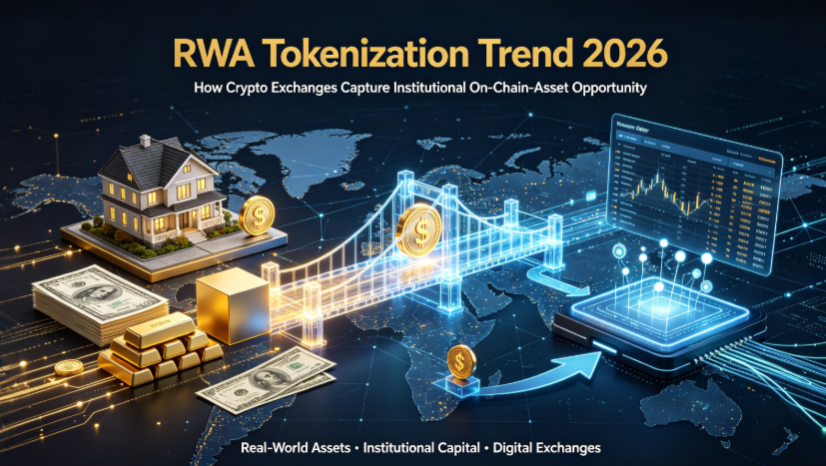
This article introduces SoonTech's RWA tokenization platform, covering the RWA market opportunity, asset classes, SPV legal structures, ERC-3643/ERC-1400 permissioned token standards, transfer controls, asset custody, NAV and distributions, KYC/AML, primary issuance, secondary trading, oracles, and typical deployment paths.
This article introduces SoonTech's MPC wallet and cold storage custody infrastructure for digital asset exchanges, financial institutions, and Web3 platforms, covering hot/warm/cold tiering, TSS threshold signatures, HSM and air-gap, key lifecycle, approval engine, deposit/withdrawal flows, proof of reserves, on-chain monitoring, HA/DR, and deployment.