English
How Much Does a White Label Crypto Exchange Cost to Deploy?
InfrastructureExchangeWhite Label Solution
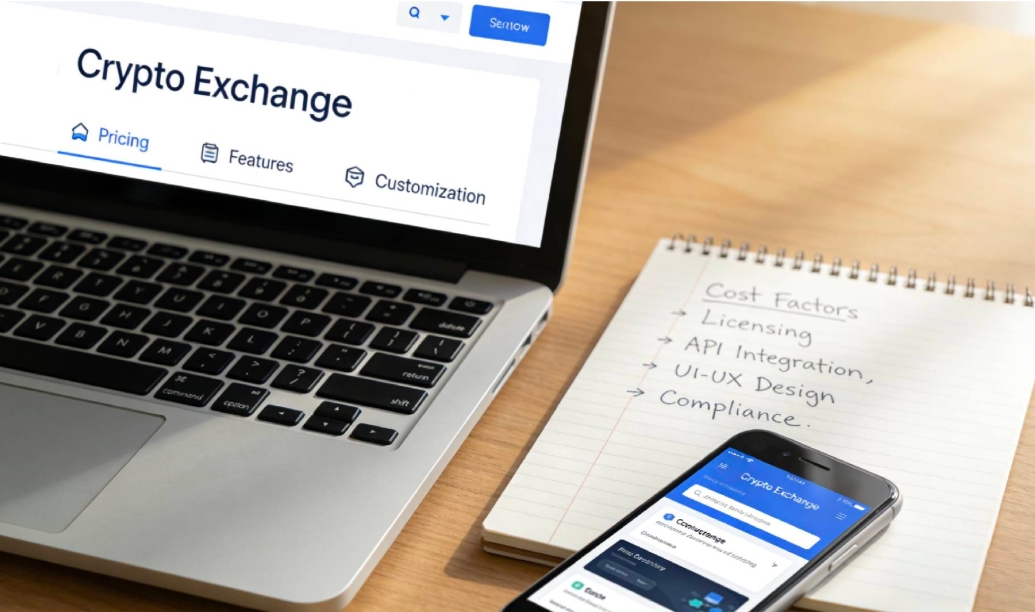
A 2026 Full-Lifecycle Budget & Capability Boundary Guide
When it comes to building a cryptocurrency exchange, cost is almost always the first concern for enterprises—and also one of the most critical factors that must be systematically planned at the project initiation stage.
In a white label exchange project, system fees typically represent only one component of the overall budget structure. To ensure alignment between resource allocation and business objectives, industry best practice is to plan liquidity, compliance, risk control, and infrastructure requirements from the outset.
Based on real-world deployments in 2026, this article provides a structured breakdown of the full cost composition of a white label centralized exchange (CEX), helping you establish a clear and executable budget model before launch.
Why Is “White Label Exchange Pricing” Hard to Explain in One Sentence?
A white label exchange is not a standardized SaaS product. It is a highly modular, configurable trading infrastructure. Final costs vary significantly depending on enterprise choices across several key dimensions:
- Business model: Spot only / Spot + derivatives / Hybrid
- Target market: Single jurisdiction vs. multi-jurisdiction deployment
- Compliance depth: Basic KYC vs. institutional-grade compliance
- Liquidity approach: Self-market-making, external liquidity, or white label liquidity
- Operating model: Self-managed vs. managed services
As a result, the correct cost evaluation question is not “How much does it cost?” but rather“What capability boundaries does this budget support?”
The 6 Core Cost Modules of a White Label Exchange (2026 Edition)
Exchange System Licensing & Implementation Costs
This is the most visible upfront investment and typically includes:
- High-performance matching engine
- Web trading frontend & admin back office
- Open API interfaces
- Core security modules
2026 Reference Ranges:
- Spot-only CEX: USD 30,000 – 80,000
- Including perpetual contracts: USD 80,000 – 150,000+
💡 Note: These figures usually cover one-time licensing and basic deployment only. They exclude annual maintenance, multilingual support, mobile apps, or deep customization. Cost differences are primarily driven by concurrency capacity, system stability, upgrade rights, and scalability, rather than sheer feature count.
Wallet System & Asset Custody Costs
No centralized exchange can operate without a secure wallet infrastructure. Typical cost components include:
- Hot / cold wallet architecture
- Multi-signature strategies
- Multi-chain asset support
- Deposit & withdrawal monitoring with risk controls
Cost Ranges:
- White label wallet integration: USD 10,000 – 30,000
- High-security custody (HSM / advanced multi-sig): priced based on asset scale and chain coverage
⚠️ For platforms targeting institutional or high-net-worth users, wallet security is a non-compressible core cost.
Compliance, KYC & Risk Control Systems
By 2026, compliance has shifted from a “value add” to a baseline requirement for survival.
Typical costs include:
- KYC / KYB integrations
- AML & transaction monitoring
- Sanctions and blacklist screening
- Configurable risk rule engines
Cost Ranges:
- Basic KYC: USD 5,000 – 15,000 / year + per-verification fees (approx. USD 0.5–2 per check)
- Institutional-grade compliance suites: priced dynamically based on user volume, jurisdictional complexity, and regulatory requirements
🔑 Important clarification: The compliance costs listed here refer only to technical systems and tools. They do not include legal entity setup, license applications (e.g., VASP, MSB), or local compliance officer hiring. In regions such as the EU, Singapore, or the U.S., these legal and regulatory expenses can range from USD 50,000 to 500,000+ and should be budgeted separately.
Liquidity & Market Making Costs(Most easily underestimated!)
A common reason why many exchanges find that “going live does not mean trading activity” is the lack of sufficient liquidity. Liquidity-related costs may include:
- Market maker onboarding fees
- White label liquidity solutions
- Initial depth and spread subsidies
- Multi-pair synchronization
Cost Ranges:
- Basic liquidity solutions: USD 10,000 – 50,000+
- Customized depth & market-making strategies: priced by trading scale
Without a dedicated liquidity budget, exchanges are highly likely to face low activity or inactive order books post-launch.
Infrastructure & Operations Costs
Even with a white label solution, a stable infrastructure layer remains essential:
- Cloud servers and nodes
- Databases and logging systems
- Security protection (DDoS, firewalls)
- 24/7 operational support
Cost Ranges:
- Core cloud resources: USD 2,000 – 5,000 / month
- Managed operations services: priced by SLA level
Ongoing Upgrades, Maintenance & Technical Support
White label does not mean “one-time delivery.”
Long-term costs typically arise from:
- New asset and blockchain support
- Feature upgrades
- Regulatory rule changes
- Security patches and performance optimization
Common models:
- Annual maintenance fees (typically 10%–20%)
- On-demand feature customization
A Realistic View on “Base Package” Pricing
A common question during early discussions is:
“Can a white label exchange be fully built with a single fixed price?”
This requires clarification of an industry reality.
In the 2026 market environment, base pricing generally corresponds to a ‘launch-ready core capability layer’, not a fully matured, self-growing business. Its primary value lies in providing a stable, extensible foundation that supports smooth capability expansion over time.
Base packages typically include:
- Proven trading system and matching engine
- Standardized trading frontend and admin backend
- Basic wallet and asset management
- An architecture designed for future compliance, liquidity, and risk modules
They solve the problem of “from zero to launch”, not “one-step operational dominance.”
Therefore, when evaluating pricing, the key question is:
Which capabilities are included—and which require additional investment?
Budget Reference by Enterprise Stage (2026)
Early-Stage Teams
- Recommended budget: USD 50,000 – 100,000
- Capability boundary: Core spot trading with external liquidity integration for immediate tradability
Growth-Stage Platforms
- Recommended budget: USD 100,000 – 200,000
- Capability boundary: Spot + derivatives trading with foundational compliance and risk control systems
Institutional-Grade Deployment
- Recommended budget: USD 200,000+
- Capability boundary: High-concurrency architecture, deep liquidity, customized risk controls, and institutional-grade system design
✅ Note: These budgets exclude legal entity setup, licensing, marketing, and internal staffing costs.
Conclusion: Define Capabilities First, Then Match the Budget
The core value of a white label exchange lies in exchanging controlled investment for mature technology and time-to-market advantages—provided you clearly understand which capabilities you are paying for.
In the regulatory and competitive environment of 2026, successful exchanges are rarely those with the lowest spend, but those with the most rational budget structure and the clearest capability boundaries.
If you are evaluating a white label exchange solution, start from your business objectives and work backward:
- Who are my target users? (Retail, institutional, high-frequency?)
- Which assets and trading types must be supported?
- Which jurisdictions will we operate in?
- Do we have long-term liquidity or ecosystem plans?
The answers will directly determine your reasonable budget range.Define the capabilities first. Match the cost second.That is the most stable way to enter the market.
Subscribe to our blog now
Be the first to get the latest updates
By submitting this form, you agree to receive marketing information via the email address you provided. Your personal data will be processed in accordance with the Privacy Statement.
Latest News

- FAQ
May 20, 2026
- FAQ
May 20, 2026
- FAQ
May 20, 2026