English
Multi-Regional Expansion for Global Enterprises: Multilingual White-Label System for Global Web3 Mar
White Label SolutionExchange
1. Overview: Localization Dilemmas in Global Web3 Business Expansion
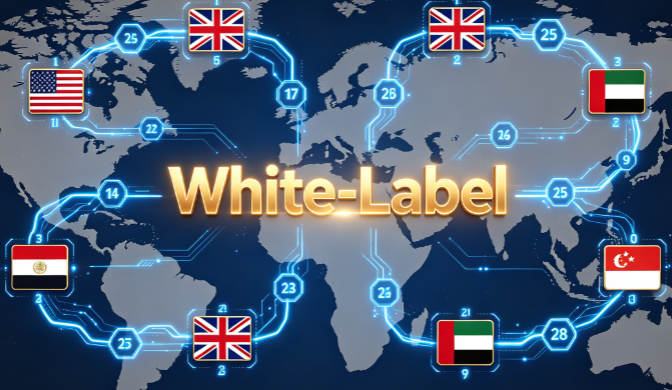
As Web3 and crypto infrastructure become globally popular, more multinational enterprises, financial groups and Web3 startups are expanding their business footprint across Southeast Asia, the Middle East, Europe and Latin America. However, global Web3 operation is far more complex than traditional internet business. Cross-border projects must overcome multiple obstacles including language barriers, regional user behavior differences, local regulatory requirements, and independent brand operation needs. Most self-developed Web3 platforms lack flexible localization modules, resulting in slow market penetration, poor user experience, and high regional adaptation costs. For global enterprises pursuing rapid multi-region layout, a standardized, customizable and multi-language supported white-label Web3 system has become the core infrastructure to solve global expansion pain points.
2. Core Barriers of Traditional Cross-Border Web3 Deployment
2.1 High cost of independent multi-language development
Building a multi-language Web3 platform from scratch requires developers to adapt front-end interfaces, transaction pages, user centers, announcement systems and customer service modules for dozens of languages. It also involves repeated testing for language compatibility, text display and regional formatting. The entire development cycle is long and requires continuous manpower investment, which greatly increases the threshold for global enterprises to enter new markets.
2.2 Inconsistent brand experience in different regions
Many cross-border Web3 projects adopt scattered regional versions, leading to inconsistent UI styles, functional logic and operation rules across different countries. Fragmented brand images reduce user trust and increase the difficulty of global unified operation and asset management.
2.3 Slow response to local regulatory and market changes
Different countries have distinct policies for crypto trading, user registration, asset deposit and withdrawal. Self-developed platforms require repeated code modification and version updates to adapt to local rules, which cannot support fast market trial and rapid iteration.
3. Advantages of Multilingual White-Label Web3 System for Global Layout
3.1 One-set architecture for global multi-language coverage
A professional multilingual white-label Web3 system integrates mainstream global languages including English, Spanish, Arabic, Vietnamese, Indonesian and Chinese by default. It supports one-click language switching, regional automatic positioning, localized time zones, currency units and data display formats. Enterprises do not need secondary development, realizing global user experience standardization in a short time.
3.2 Unified brand deployment with independent regional customization
The white-label architecture supports global unified brand control while reserving independent localized adjustment permissions for different regions. Enterprises can maintain consistent brand visual identity globally and adjust operation activities, fee rules and functional entry according to local user preferences, balancing unified management and localized fine operation.
3.3 Flexible regional compliance adaptation
The modular white-label system can independently enable or disable functional modules according to regional regulatory requirements, including KYC levels, fiat channels, prediction market functions and DeFi linkage entries. It helps enterprises avoid policy risks and quickly launch compliant services in different overseas jurisdictions.
4. Typical Application Scenarios for Global Enterprise Web3 Expansion
Multinational financial groups can deploy multi-region compliant trading platforms through multilingual white-label infrastructure to provide localized digital asset services for global users. Web3 startup teams can quickly test multiple overseas markets with low investment, verify regional traffic models and realize rapid business replication. Traditional cross-border trading enterprises can also build exclusive Web3 brand portals through customized white-label systems to complete brand upgrading and global user accumulation.
5. Conclusion: SoonTech Multilingual White-Label Empowers Global Web3 Layout
For enterprises pursuing multi-regional Web3 expansion, language barriers, high R&D costs and slow localization iteration are the key bottlenecks restricting global business growth. Traditional self-developed models can no longer adapt to the fast-paced competition of the global Web3 market. SoonTech full-stack white-label Web3 infrastructure solves global expansion pain points with built-in full multilingual adaptation, modular regional compliance configuration and unified brand privatization deployment capabilities. It helps global enterprises complete low-cost, fast and standardized overseas market layout, realize differentiated localized operation in different regions, and build independent, compliant and scalable global Web3 brand ecosystems.
Subscribe to our blog now
Be the first to get the latest updates
By submitting this form, you agree to receive marketing information via the email address you provided. Your personal data will be processed in accordance with the Privacy Statement.
Latest News

- White Label Solution
June 17, 2026
- White Label Solution
June 17, 2026
- White Label Solution
June 16, 2026