English
Putin’s Visit to China: The Strategic Rise of Web3 Infrastructure| SoonTech
Prediction MarketExchange
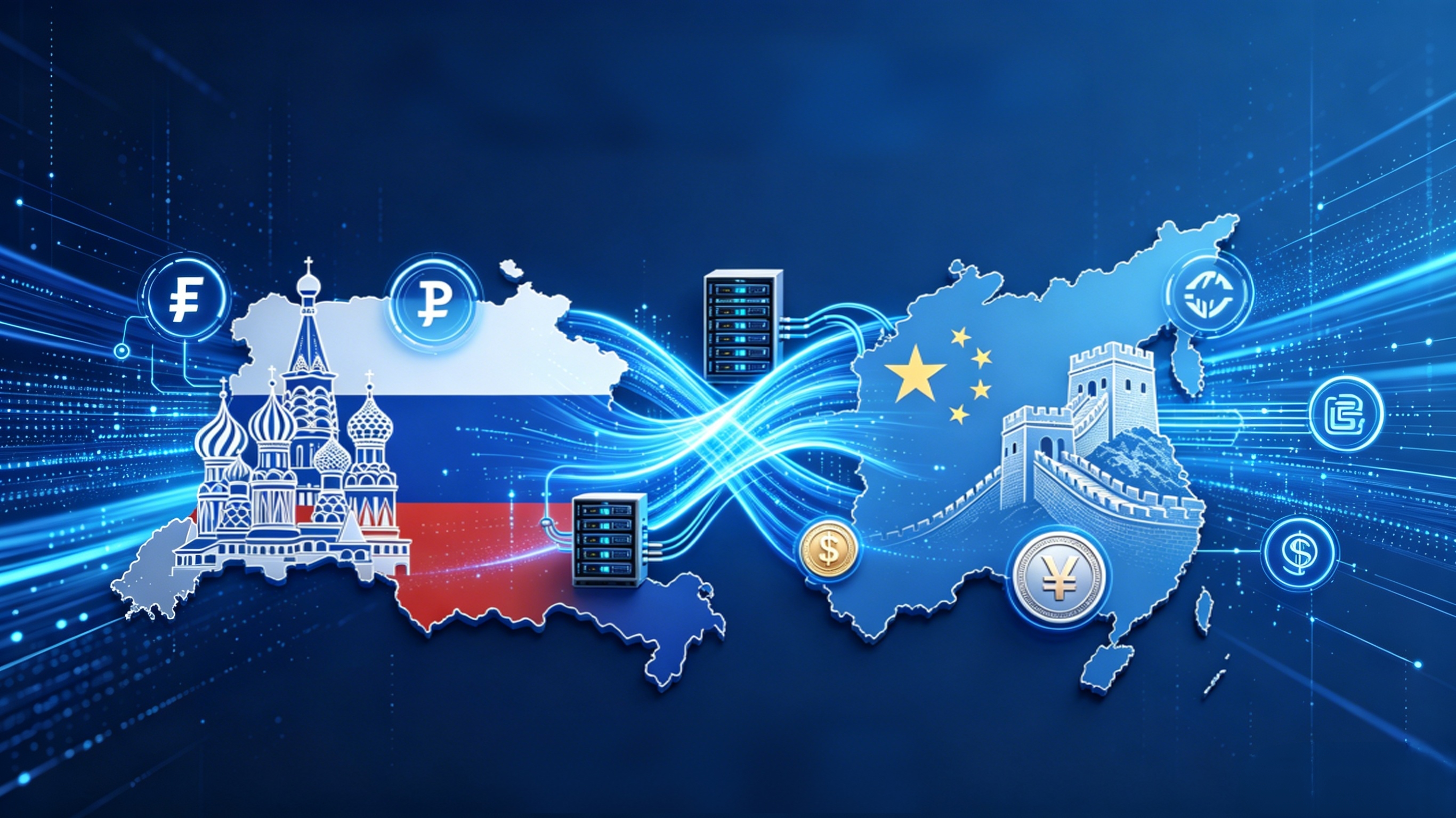
On May 19, 2026, the milestone diplomatic event of Vladimir Putin’s visit to China not only propelled the China-Russia comprehensive strategic partnership of coordination to new heights, but also triggered profound butterfly effects in the global financial sector. Caught between the normalization of Western sanctions and the global wave of "de-dollarization," cooperation between China and Russia in energy, trade, and cross-border payments urgently calls for an independent, efficient, and transparent new settlement framework.
This is no longer merely a discussion about trade surpluses; it is about the restructuring of sovereignty over financial infrastructure. As the traditional SWIFT system faces severe geopolitical challenges, blockchain and digital asset technologies are moving from peripheral innovative experiments to the center stage of global commodity trade settlement.
Macro Narrative: When Trade Settlement Meets the "Decentralization" Imperative
With bilateral trade volume between China and Russia hitting historic highs and Russia actively legalizing the use of digital assets in cross-border payments, a clear signal has been released: future international trade will highly rely on on-chain settlements. Whether it is the circulation of bulk commodities like oil and natural gas, or financial cooperation under the BRICS framework, there is an urgent need for a vehicle that can bypass traditional barriers and achieve peer-to-peer value transfer.
However, the large-scale entry of institutional and state-level funds faces two core pain points: compliance transparency and market liquidity.
As foreign media outlets like Decrypt have recently noted, global regulation is shifting from "blanket bans" to "clear specifications" (such as the advancement of the U.S. CLARITY Act). This means that the future digital financial ecosystem will belong to those Web3 infrastructure service providers who can offer the technical benefits of decentralization while perfectly aligning with compliant regulatory standards.
Deep Dive: The Dual-Engine Drive of Prediction Markets and Exchange Infrastructure
Against this macroeconomic backdrop, enterprise-grade Web3 solutions are no longer just tools; they are "strategic weapons" for hedging geopolitical risks and capturing global capital flows.
Prediction Markets: The "Risk Pricer" Amidst Geopolitical Turmoil
In a time when geopolitical hotspots flare up frequently—ranging from the Russia-Ukraine conflict and Middle East tensions to today's China-Russia summit—market volatility has risen sharply. Traditional financial derivatives often have high barriers to entry and slow settlements. Consequently, blockchain-based prediction market solutions are becoming a new favorite for institutional risk hedging.
By engaging in on-chain forecasting and betting on global political and economic events, enterprises can use oracle technology to achieve transparent, immutable outcome settlements. More importantly, they can utilize market consensus to discover asset price trends in advance. This is not just trading; it is an "information radar" and a "safe haven" in times of turbulence.
Exchange Infrastructure (CEX/DEX): Building a Self-Controlled Moat of Liquidity
For institutions wishing to capitalize on this wave of digital trade dividends, building a self-controlled trading platform is the first step.
- The Compliance Evolution of Centralized Exchanges (CEX): Traditional white-label solutions can no longer meet current demands. Next-generation white-label exchange solutions must feature built-in, institutional-grade risk control and auditing interfaces. By integrating with top-tier global Liquidity Services, platforms can obtain deep liquidity comparable to leading exchanges right from their launch. This solves the "slippage" issues common in emerging markets and ensures a seamless experience for large-scale asset settlements.
- The Technical Breakthrough of Decentralized Exchanges (DEX): In an era where asset security is increasingly sensitive, DEXs—with their non-custodial nature and "code is law" principle—have become a crucial supplement to cross-border payments. Through advanced cross-chain technologies and high-performance matching engines, DEXs can break down public chain silos, allowing digital assets to circulate freely and securely across different jurisdictions.
SoonTech: Serving as the "Water Provider" for the New Era of Digital Finance
Faced with historical opportunities brought by geopolitics, what enterprises need is not simple software outsourcing, but a Web3 Infrastructure Development partner with a global vision.
SoonTech firmly believes that technology should serve freer financial circulation. We do not provide speculative tools; instead, we dedicate ourselves to building a robust foundation for digital finance:
- Ultra-Fast Compliant Deployment: We understand that market opportunities are fleeting. Therefore, we compress the deployment cycle for both centralized and decentralized exchanges to just 7 days, allowing enterprises to rapidly test the market and seize opportunities at minimal cost.
- Deep Liquidity Aggregation: We connect liquidity resources from over 20 top-tier global exchanges, injecting a continuous stream of liquidity into new platforms.
- Forward-Looking Positioning: From prediction market betting models to enterprise-grade MPC wallet risk control systems, our technology stack consistently stays half a step ahead of the market, helping clients find the perfect balance between compliance and innovation.
Subscribe to our blog now
Be the first to get the latest updates
By submitting this form, you agree to receive marketing information via the email address you provided. Your personal data will be processed in accordance with the Privacy Statement.
Latest News

- Exchange
- White Label Solution
- Prediction Market
- Liquidity
May 19, 2026
Deep dive into the 2026 BTC liquidity game and the hedging value of DEX and prediction markets.
- Liquidity
- Prediction Market
May 19, 2026
- FAQ
May 19, 2026