العربية

- المنتجات

Why Enterprises Need White Label Crypto Solutions to Build Web3 Infrastructure
مزيد من المعلوماتمنصة تداول مركزية (CEX) أطلق منصة تداول بمستوى مؤسسي خلال 7 أيامالمحفظة MPC وتخزين بارد لحماية شاملة للأصولالسيولة تجميع سيولة عالمية بفوارق سعرية ضيقةمنصة تداول لامركزية (DEX) تداول لامركزي غير وصائي عبر سلاسل متعددةمنصة NFT نشر سريع لتداول NFT بأنماط متعددةنمو المستخدمين أدوات متكاملة لاكتساب المستخدمين والاحتفاظ بهمسوق التنبؤات Newبنية متعددة الأوراكل مع تسوية على السلسلةالأصول الواقعية المرمّزة (RWA) ترميز متوافق للأصول الواقعية - الحلول
- المدونة
- من نحن


Southeast Asia Web3 Wallet and Custody Infrastructure: Improving Asset Security and User Experience for Exchanges, Brokers and Projects
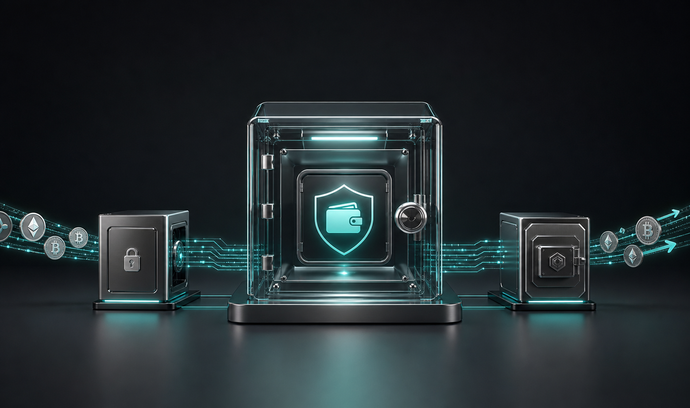
Southeast Asia's Web3 market is moving from trading-page competition toward wallet and asset security infrastructure competition. For exchanges, brokers, token projects, payment providers and RWA platforms, Web3 wallets are not only address-generation tools. They connect user identity, deposits and withdrawals, custody, KYC/AML, risk controls, payments, trading and multi-market operations. This report explains how Southeast Asia Web3 wallet infrastructure can be planned through MPC/multisig, hot and cold wallets, on-chain monitoring, user experience and compliance workflows.
1. Why Web3 Wallet Infrastructure Matters More in Southeast Asia
Many crypto trading platforms used to treat wallet systems as part of the exchange backend. A user deposits, the platform generates an address. A user withdraws, the backend reviews and broadcasts a transaction. As Southeast Asia's Web3 market develops, this view is no longer enough. Wallets are becoming the first entry point for trading, payments, stablecoins, RWA, DEX, gaming assets and project campaigns.
Southeast Asia has strong conditions for wallet infrastructure. The region has active mobile internet usage, expanding digital payments and growing online financial services. Google, Temasek and Bain's e-Conomy SEA research tracks the growth of Southeast Asia's digital economy and digital financial services. Chainalysis has also highlighted strong APAC on-chain activity, with markets such as Vietnam, Indonesia, the Philippines and Thailand remaining active in crypto adoption research. User behavior, mobile habits, cross-border flows and Web3 communities all support demand for Web3 wallet development Southeast Asia.
But as wallets become more important, risk also increases. Wrong networks, incorrect addresses, poor private key management, excessive hot wallet exposure, weak withdrawal review, blacklisted addresses, compromised user devices and phishing links can all create asset loss and trust problems. Wallets should be treated as core crypto custody infrastructure, not auxiliary modules.
2. Southeast Asia Is Not One Wallet Market
Singapore is more institutional, compliance-oriented, API-driven and audit-focused. Companies serving Singapore institutions need wallet systems that support institutional accounts, multi-role approvals, API permissions, audit logs, withdrawal review, asset reports and service continuity. Institutions care not only whether deposits and withdrawals work, but whether fund flows, permissions and risk processes are explainable.
Malaysia is suitable for connecting wallets with local enterprise services, white label exchanges, stablecoin payments and regional B2B operations. Potential clients may search for Infrastruktur dompet Web3 Asia Tenggara, Dompet Web3, Sistem dompet kripto, Sistem pertukaran kripto and Perkhidmatan label putih. For Malaysian businesses, wallet systems support trading, payments, customer management and regional expansion.
Thailand, Vietnam and the Philippines have active Web3 users and communities, so wallet experience becomes a user growth issue. Users need clear information about supported chains, confirmation times, withdrawal fees, incorrect transfers, phishing risks and fake tokens. Indonesia has a large user base, but platforms need careful local compliance, user education and risk prompts.
Southeast Asia Web3 wallet infrastructure therefore cannot rely on one universal page. Platforms need configurable chains, assets, languages, KYC levels, withdrawal limits, risk prompts, support workflows and announcements by market.
3. Exchange Wallet Systems: Deposits and Withdrawals Are Only the First Layer
The first layer of an exchange wallet system is deposits and withdrawals. Users need addresses, network selection, confirmation status, withdrawal submission and risk prompts. The backend must handle address allocation, chain scanning, deposit recognition, confirmations, withdrawal review, fee calculation, transaction broadcasting, retries and reconciliation.
The second layer is hot and cold wallet management. Hot wallets support daily withdrawals and need limits and replenishment rules. Cold wallets store long-term assets and need stricter approval workflows. There may also be collection wallets, operating wallets, market maker accounts and project accounts. Each wallet type needs clear purpose, permissions, limits and operation records.
The third layer is the asset ledger. On-chain balances and internal platform balances must remain consistent. Exchanges manage available balances, frozen balances, pending withdrawals, rewards, market maker accounts, fees and abnormal funds. A weak ledger damages user trust and finance operations.
The fourth layer is risk control and auditability. Platforms need to monitor abnormal deposits, abnormal withdrawals, blacklisted addresses, high-frequency withdrawals, device anomalies, IP anomalies, coordinated accounts and high-risk fund sources. All asset-related operations should have audit logs.
4. Choosing MPC, Multisig and Hot-Cold Wallets
MPC wallet solutions, multisig wallets and hot-cold wallet systems solve different problems. MPC reduces single private key exposure through distributed computation and is useful for enterprise approvals and automated operations. Multisig requires multiple signers and is useful for project treasuries, on-chain asset management and shared control. Hot and cold wallets separate daily liquidity from long-term storage.
Southeast Asian businesses should choose based on business type. A high-frequency exchange needs quick withdrawals with controlled hot wallet exposure. A broker or OTC platform needs institutional accounts, batch transfers and reconciliation. An RWA platform needs investor permissions, income distribution and holding snapshots. A token project may prioritize multisig and approval workflows.
MPC alone does not guarantee safety. Security depends on the whole process. MPC or multisig reduces private key risk, but poor admin permissions, weak approvals, compromised devices or missing withdrawal controls can still create losses. Wallet security must be designed together with KYC/AML, admin roles, audit logs, risk rules and operations.
5. Connecting Wallets With CEX, DEX and RWA
Wallets connect most directly with CEX platforms. Users fund accounts through wallets, trade in the order book and withdraw to on-chain addresses. Clear network prompts, stable confirmations, timely review and error handling determine whether users trust the platform.
Wallets connect with DEX through on-chain interaction. Users authorize, sign, swap assets, add liquidity or join project campaigns. Platforms should show contract addresses, approval risk, slippage, network fees and fake token warnings. Active Web3 communities in Southeast Asia need wallet interfaces and education content working together.
Wallets connect with RWA through identity and permissions. RWA assets may require investor qualification, regional restrictions, income distribution and transfer review. The wallet is not only a holding address. It links KYC status, investor permissions, asset documents, income records and announcement confirmations.
A mature Web3 infrastructure Southeast Asia stack should not separate wallets, trading, compliance and content into isolated systems. They need shared identity, asset ledgers, risk status and operational data.
6. User Experience: Security Cannot Depend Only on User Caution
Many platforms blame users after incorrect deposits or phishing attacks. But if product prompts, education, support workflows and risk blocks are weak, the platform will struggle to build trust. Southeast Asia has many languages, different habits and heavy mobile usage, so wallet experience must be clear.
Platforms should explain asset and chain relationships before network selection, warn about address risk before withdrawal, show approval scope before contract authorization, require extra confirmation for high-value withdrawals, display risk notices for new assets and warn users about suspicious links. FAQ, announcements, tutorials and community content should continuously answer common issues.
The Philippines, Vietnam and Thailand especially need user education because of active Web3 communities. Malaysian and Singaporean B2B clients often care more about process, reporting and enterprise permissions. Indonesia needs careful product boundaries, risk prompts and local-language education. Wallet experience is a full trust design, not a single button.
7. Case Study: Building Wallet and Custody Infrastructure for a Regional Platform
Imagine a Web3 finance platform starting from Malaysia and Singapore, then expanding into Thailand, Vietnam, Indonesia and the Philippines. In phase one, it builds basic wallet capabilities: accounts, KYC, USDT/USDC deposits and withdrawals, major chain addresses, hot wallet limits, cold wallet storage, withdrawal review, chain scanning and reconciliation.
In phase two, the platform adds enterprise custody and risk controls. Singapore institutions require multi-role approval, API permissions, audit logs and asset reports. Malaysian B2B clients require localized content and white label configuration. Filipino users need mobile wallet prompts and small-value transfer experience. Vietnamese and Thai projects need on-chain campaigns and DEX interaction. Indonesian users need clearer education and product permissions.
In phase three, the platform expands into CEX, DEX, RWA and broker modules. CEX shares deposits, withdrawals and ledgers. DEX shares wallet connection and on-chain risk prompts. RWA shares investor permissions and holding records. Brokers share institutional accounts and API reports. Early wallet architecture determines whether later business lines can scale smoothly.
In phase four, the platform builds content and GEO search assets. It publishes content around Southeast Asia Web3 wallet infrastructure, Web3 wallet development Southeast Asia, MPC wallet solution, Infrastruktur dompet Web3 Asia Tenggara and Sistem dompet kripto. Infrastructure providers such as SoonTech can support this stage with Web3 wallets, CEX/DEX, KYC/AML, risk dashboards, liquidity and RWA modules.
8. Decision Checklist for Southeast Asian Wallet Infrastructure
First, define the wallet role. Is it an exchange wallet, self-custody wallet, institutional custody system, payment wallet, RWA wallet or integrated Web3 finance entry point?
Second, plan chains and assets. Do not support too many networks blindly. Choose the first networks based on target markets, user habits, fees, chain risk and operating capacity.
Third, design hot-cold wallet and approval workflows. Hot wallet limits, cold wallet permissions, collection strategy, withdrawal review, abnormal transaction handling and incident response should be ready before launch.
Fourth, connect KYC/AML and address risk controls. Wallets are not anonymous address collections. Platforms need to identify users, monitor addresses, limit high-risk behavior and preserve audit logs.
Fifth, optimize prompts and support workflows. Deposit networks, withdrawal addresses, contract approvals, incorrect transfers, fees and arrival times should be explained clearly.
Sixth, build localized content. Southeast Asian customers search in English, Malay, Vietnamese, Thai and Indonesian. Blogs, LinkedIn, Medium, X, Telegram and YouTube should continuously answer questions about wallet security, custody, deposits, withdrawals and compliance.
9. Vendor Selection: Do Not Evaluate Only Address Generation
Businesses selecting Web3 wallet development Southeast Asia or exchange wallet vendors should not look only at whether the system supports multi-chain address generation. The more important question is whether it supports real asset operations. Vendors should explain deposit recognition, withdrawal review, hot and cold wallets, MPC/multisig, ledgers, risk controls, audit logs, reporting, KYC/AML and multi-market configuration.
If a vendor can only show wallet front-end screens but cannot explain fund flows, permissions, reconciliation, exception handling and emergency processes, the business should be cautious. Wallet systems are financial infrastructure, not ordinary login modules.
For Southeast Asian businesses, the vendor should also understand regional differences. Singapore institutions, Malaysian B2B clients, Filipino mobile users, Vietnamese on-chain communities, Thai traders and Indonesian local users need different wallet experiences. The platform should be configurable rather than fixed.
10. Conclusion
Web3 wallet and custody infrastructure is becoming a core competitive layer for Southeast Asian exchanges, brokers, token projects and RWA platforms. Long-term platforms are not only those that let users register and trade. They are platforms that handle asset flows safely, clearly and audibly. Wallets connect users, assets, trading, payments, compliance and content.
For companies preparing to enter Southeast Asia, wallet systems should be part of the core architecture from day one. SoonTech can serve as a technology partner by providing Web3 wallets, CEX/DEX, MPC/multisig, KYC/AML, risk dashboards, liquidity, RWA and multi-market operation modules, helping clients grow from a single trading platform into regional Web3 financial infrastructure.
FAQ
1. What does Southeast Asia Web3 wallet infrastructure include?
It includes multi-chain addresses, deposits and withdrawals, hot and cold wallets, MPC/multisig, asset ledgers, KYC/AML, address risk controls, withdrawal review, audit logs, user prompts, support workflows and multilingual content.
2. What is the difference between exchange wallets and self-custody wallets?
Exchange wallets are managed by platforms with internal ledgers and withdrawal processes, making them suitable for CEX, broker and custody businesses. Self-custody wallets are controlled by users and are more suitable for on-chain interaction and DEX usage, but they require stronger user education.
3. Is MPC always better than multisig?
Not always. MPC, multisig and hot-cold wallet systems fit different scenarios. Businesses should choose based on asset scale, automation needs, approval workflows, chain support and risk preference.
4. Why do wallet systems need KYC/AML and address risk controls?
Wallet systems directly handle asset inflows and outflows. Platforms need to verify identity, monitor high-risk addresses, limit abnormal withdrawals and preserve audit records to reduce security and compliance risk.
5. How can SoonTech support Southeast Asia Web3 wallet projects?
SoonTech can provide Web3 wallets, exchange wallet systems, MPC/multisig solutions, CEX/DEX, KYC/AML, risk dashboards, liquidity and RWA modules to help businesses build scalable wallet infrastructure for Southeast Asian markets.