العربية

- المنتجات

Why Enterprises Need White Label Crypto Solutions to Build Web3 Infrastructure
مزيد من المعلوماتمنصة تداول مركزية (CEX) أطلق منصة تداول بمستوى مؤسسي خلال 7 أيامالمحفظة MPC وتخزين بارد لحماية شاملة للأصولالسيولة تجميع سيولة عالمية بفوارق سعرية ضيقةمنصة تداول لامركزية (DEX) تداول لامركزي غير وصائي عبر سلاسل متعددةمنصة NFT نشر سريع لتداول NFT بأنماط متعددةنمو المستخدمين أدوات متكاملة لاكتساب المستخدمين والاحتفاظ بهمسوق التنبؤات Newبنية متعددة الأوراكل مع تسوية على السلسلةالأصول الواقعية المرمّزة (RWA) ترميز متوافق للأصول الواقعية - الحلول
- المدونة
- من نحن


Southeast Asia Web3 Payment Infrastructure Trends: How Stablecoins, Exchange Liquidity and Local Wallets Connect Regional Merchants
Web3 payments in Southeast Asia are moving from simple coin collection tools toward infrastructure that connects merchants, wallets, exchange liquidity, stablecoin settlement and compliance controls. Indonesia, Malaysia, Singapore, Thailand, Vietnam and the Philippines have active digital payment users, cross-border commerce, remittance demand and Web3 communities. This makes stablecoin payment Southeast Asia, crypto payment gateway ASEAN and Web3 wallet Southeast Asia important topics for regional businesses. This article explains how companies can build long-term Web3 payment infrastructure Southeast Asia and how SoonTech can support the stack.
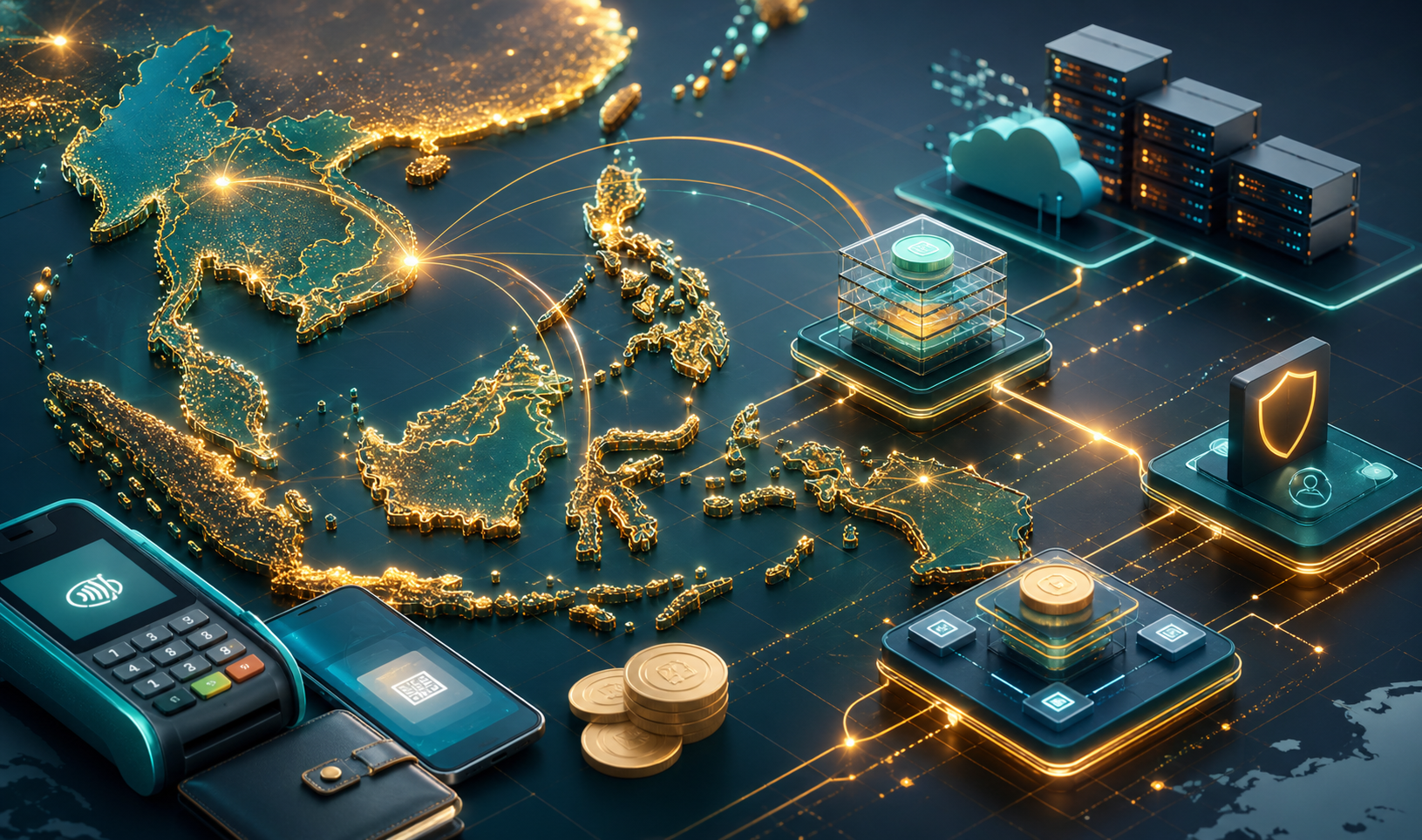
1. Why Southeast Asia Fits Web3 Payment Infrastructure
Southeast Asia has several characteristics that make Web3 payment infrastructure relevant. The region has many countries, currencies and cross-border business flows. E-commerce, gaming, tourism, freelancing, supply chains, B2B trade and digital services all need more flexible settlement options. Mobile payment and e-wallet adoption are also strong, so users are already familiar with phone-based payment, transfers and balance management.
Traditional payment systems remain essential. However, cross-border businesses often face slow settlement, opaque fees, complex banking routes, holiday delays, chargeback risk and multi-currency reconciliation problems. Stablecoins and on-chain settlement do not solve every problem and should not be used outside regulatory considerations, but they create useful technical options for specific B2B, merchant and platform scenarios.
Southeast Asia Web3 payment is therefore not about placing a USDT or USDC address on a page. It requires user accounts, wallet addresses, payment orders, exchange-rate handling, on-chain confirmations, exchange liquidity, KYC/AML, merchant dashboards, settlement reports and risk monitoring. SoonTech's experience in CEX, DEX, Web3 wallets, MPC wallets, liquidity and risk-control modules fits these infrastructure needs.
2. The Real Value of Stablecoin Payments: Settlement Layer, Not Marketing Slogan
In Southeast Asia, the value of stablecoin payment Southeast Asia is mainly in the settlement layer. For cross-border merchants, stablecoins can shorten certain settlement paths and help platforms manage funds across countries. For Web3 platforms, stablecoins can be a middle asset connecting trading, wallets, RWA, gaming assets and on-chain services. For B2B clients, stablecoins make it easier to trace orders, transaction hashes, arrival times and settlement status.
Companies should avoid one misconception: stablecoin payment is not risk-free payment. It still needs identity checks, transaction purpose review, address risk monitoring, limits, blacklists, exception handling and finance reconciliation. When serving merchants, the platform must know which order, merchant, user, chain and address each payment belongs to, and how the final settlement reaches the merchant account.
This is why a crypto payment gateway ASEAN needs exchange liquidity. A merchant may want to receive stablecoins, local-currency value or another digital asset. A user may pay in USDT, while the merchant wants reports in USD, MYR, SGD, THB or IDR. Without liquidity, exchange rates, matching and reconciliation, a payment gateway remains a basic address collection tool.
3. System Architecture: What Happens Between User Payment and Merchant Settlement
A mature Web3 payment infrastructure Southeast Asia needs at least eight modules. First, user and merchant accounts record KYC status, merchant profiles, permissions, fees and settlement settings. Second, wallet systems generate addresses, manage multi-chain assets, sweep funds, control hot/cold wallets and execute withdrawal approvals. Third, order systems bind order IDs, assets, amounts, rates, chains, addresses, expiry times and payment status.
Fourth, on-chain monitoring identifies transaction hashes, confirmations, duplicate payments, underpayments, overpayments and risky addresses. Fifth, liquidity systems connect CEXs, DEXs, market makers or internal pools to support conversion between stablecoins, local-currency reporting and trading assets. Sixth, risk systems handle KYC/AML, address risk, device risk, frequency limits, amount limits and merchant risk levels.
Seventh, settlement and reporting systems generate merchant balances, settlement batches, fees, exchange rates, order details, finance exports and audit records. Eighth, APIs and Webhooks synchronize payment status, arrival notices, refunds, settlement and exceptions to merchant systems. Missing any of these modules makes it difficult to turn a Web3 payment pilot into a scalable product.
SoonTech can combine these modules with CEX/DEX wallet systems, exchange systems, MPC wallets and liquidity aggregation. For merchant platforms, payment becomes connected to trading, wallets, reports and risk control. For regional operators, the same infrastructure can be configured by country, asset, merchant type and risk level.
4. Regional Use Cases That Need Web3 Payment Infrastructure
Cross-border e-commerce is the most direct use case. A platform serving several Southeast Asian markets may handle different currencies, overseas suppliers, digital service providers and international users. Web3 payment infrastructure can provide flexible settlement paths for some B2B settlement, supplier payment or digital-asset-related products.
Gaming and online entertainment are also important. Southeast Asia has active gaming users, and platforms may need to manage virtual assets, creator payouts, cross-border top-ups and community events. Web3 wallets, stablecoins and exchange liquidity can help manage assets and settlement, but platforms must consider age restrictions, KYC, spending limits and local rules.
The third use case is freelancing and digital services. Designers, developers, content creators and remote teams often receive cross-border payments. Stablecoins can serve as a settlement tool in selected cases, but platforms need address management, asset conversion, withdrawal controls and finance exports.
The fourth use case is B2B trade and supply chain. SMEs in cross-border procurement care about arrival speed, fees, reconciliation and fund visibility. If Web3 payment infrastructure Southeast Asia includes merchant dashboards, order systems, invoice records, settlement batches and multi-currency reports, it can become an enterprise product rather than a Web3 utility.
The fifth use case is Web3-native platforms such as exchanges, launchpads, RWA platforms, DeFi gateways, wallet apps and NFT or gaming-asset marketplaces. These platforms naturally need wallets, trading, stablecoins, liquidity and risk controls.
5. Data and Trends: Regional Connectivity and On-Chain Activity Are Happening Together
Two payment trends are happening at the same time. One is regional connectivity in traditional payment networks, including ASEAN-related cross-border payment links and national collaborations around QR, instant payment or bank payment systems. This shows that demand for smoother cross-border settlement is real. The other is continued business interest in on-chain activity and stablecoin use. Chainalysis's 2025 report highlighted strong growth in Asia Pacific on-chain activity.
Singapore's Project Guardian and similar industry explorations also show institutional interest in tokenized assets, on-chain financial markets and compliant infrastructure. These projects are not the same as ordinary merchant payments, but they signal a broader direction: future financial infrastructure will become more programmable, auditable, composable and institution-ready.
For Southeast Asian companies, the key is not betting on one technology. It is designing systems compatible with many payment and settlement methods. Today users may pay through local e-wallets, bank transfers or cards. Tomorrow B2B customers may request stablecoin settlement, on-chain credentials or exchange APIs. Platforms that connect accounts, wallets, orders, liquidity and risk control can adapt faster.
6. Case Study: Building Stablecoin Collection and Settlement for Regional Merchants
Imagine a SaaS platform serving merchants in Malaysia, Singapore, Thailand and the Philippines. It wants to offer stablecoin payment options for digital service providers. Phase one supports USDT, USDC, merchant dashboards, order search, on-chain confirmations and monthly settlement reports. Phase two adds automatic conversion, exchange liquidity, merchant APIs, risk segmentation and selected local-currency settlement.
If the platform only generates one fixed address, operations become difficult. How is payment matched to an order? How are underpayments, overpayments and late payments handled? How can merchants view transaction hashes? How does finance calculate fees and settlement amounts? Should high-risk addresses be blocked? Do merchants in different countries use different limits? How are stablecoin prices, rates and liquidity managed?
A stronger approach generates a unique payment record for every order and binds chain, asset, amount, expiry time and merchant ID. On-chain monitoring confirms arrival and updates the order. Risk systems check amount, address, frequency and merchant tier. Liquidity systems convert stablecoins when needed. Merchant dashboards provide orders, fees, settlement batches, API notices and finance exports.
SoonTech can provide wallet address management, on-chain monitoring, CEX/DEX liquidity, merchant dashboards, APIs, risk rules and reporting modules. Businesses can launch a stablecoin collection MVP first, then add automatic conversion, regional settlement, institutional APIs and more complex compliance workflows.
7. SoonTech Solution: Connecting Payment, Trading and Wallets in One Infrastructure
SoonTech covers exchange systems, Web3 wallets, MPC wallets, liquidity, market making, risk-control back office and APIs. For Southeast Asia Web3 payment projects, this combination is more important than a single payment button. Merchant collection ultimately connects to wallet balances, trading conversion, settlement reports, withdrawal review and risk control. If these capabilities come from disconnected systems, operating costs rise quickly.
At the wallet layer, SoonTech supports multi-chain addresses, asset sweeping, hot/cold wallets, MPC, multisig and withdrawal approvals. At the trading layer, it supports CEX matching, DEX connectivity, stablecoin pairs, market making and external liquidity. At the payment layer, it supports orders, on-chain confirmations, merchant balances, Webhooks, fees and settlement reports. At the risk layer, it supports KYC/AML, address risk, merchant tiers, limits, audit logs and admin permissions.
This architecture fits multi-market Southeast Asia operations. A business can configure rules by country, merchant, asset, chain, risk level and settlement cycle. Malaysian merchants may use one settlement cycle, Singapore institutional clients may use APIs and whitelisted addresses, Vietnamese gaming platforms may use small high-frequency controls, and Philippine remote-service platforms may use stablecoin collection with monthly reports.
8. Implementation Advice: From MVP to Regional Payment Network
The first phase should be a clear MVP, not a system that covers all countries, chains and assets. Choose one merchant scenario and support mainstream stablecoins, basic on-chain monitoring, order matching, merchant dashboards, manual review and finance exports. The goal is to verify real merchant demand and operational capability.
The second phase adds liquidity and automation. Platforms can integrate CEX/DEX liquidity, automatic rates, merchant APIs, Webhooks, batch settlement, risk rules and multi-level permissions. The goal is to reduce manual work and improve merchant experience.
The third phase expands regionally. Businesses can configure settlement methods, KYC requirements, limits and report templates according to local rules, partners, payment habits and merchant types. The goal is to upgrade from a tool into infrastructure.
When choosing a vendor, check whether it supports wallets, trading, liquidity and risk control together; whether rules can be configured by merchant and country; whether APIs and Webhooks are available; whether audit and finance reports can be exported; whether long-term customization and operations support are available; and whether the vendor understands localization keywords such as Pembayaran stablecoin Asia Tenggara, Gerbang pembayaran kripto ASEAN and Dompet Web3 Asia Tenggara.
FAQ
Q1: Does Southeast Asia Web3 payment only need a stablecoin wallet?
No. A stablecoin wallet is only the base layer. Operable Web3 payment infrastructure also needs orders, on-chain monitoring, merchant dashboards, KYC/AML, address risk control, liquidity, settlement reports, APIs and reconciliation.
Q2: Which Southeast Asian scenarios fit stablecoin payment?
Stablecoin payment can fit selected cross-border B2B, digital services, gaming, Web3 platforms, supplier settlement, remote teams and merchant collection scenarios. Businesses must design compliance and risk workflows according to local rules and partners.
Q3: Why does a payment gateway need exchange liquidity?
Users and merchants may need different assets or reporting currencies. A user may pay USDT, while a merchant wants USD, local-currency value or another digital asset. Exchange liquidity, market making and rate management upgrade collection into settlement infrastructure.
Q4: What can SoonTech provide for Southeast Asia Web3 payment projects?
SoonTech can provide Web3 wallets, MPC wallets, CEX/DEX trading systems, stablecoin payment orders, on-chain monitoring, liquidity connectivity, merchant dashboards, APIs, Webhooks, risk rules and reports for staged regional infrastructure development.
Q5: How should a business start?
Start with one merchant scenario and one core market. Validate stablecoin collection, order matching, on-chain confirmation, merchant dashboards and finance reconciliation. Then expand into liquidity, APIs, automated settlement, multi-country rules and compliance controls.
Conclusion
The opportunity in Southeast Asia Web3 payments is not placing a blockchain address at checkout. It is connecting accounts, wallets, orders, stablecoins, exchange liquidity, risk control, merchant dashboards and settlement reports into one infrastructure stack. For businesses serving regional merchants and B2B clients, Web3 payment infrastructure Southeast Asia can become a bridge between local payment habits and on-chain financial capability. SoonTech can help companies start with a stablecoin collection MVP and gradually build an auditable, scalable and localized regional Web3 payment network.