العربية

- المنتجات
Why Enterprises Need White Label Crypto Solutions to Build Web3 Infrastructure
مزيد من المعلوماتمنصة تداول مركزية (CEX) أطلق منصة تداول بمستوى مؤسسي خلال 7 أيامالمحفظة MPC وتخزين بارد لحماية شاملة للأصولالسيولة تجميع سيولة عالمية بفوارق سعرية ضيقةمنصة تداول لامركزية (DEX) تداول لامركزي غير وصائي عبر سلاسل متعددةمنصة NFT نشر سريع لتداول NFT بأنماط متعددةنمو المستخدمين أدوات متكاملة لاكتساب المستخدمين والاحتفاظ بهمسوق التنبؤات Newبنية متعددة الأوراكل مع تسوية على السلسلةالأصول الواقعية المرمّزة (RWA) ترميز متوافق للأصول الواقعية - الحلول
- المدونة
- من نحن


NFT Platforms Are More Than Galleries: How SoonTech Royalty Settlement and Multi-Mode Trading Supports Long-Term Operations
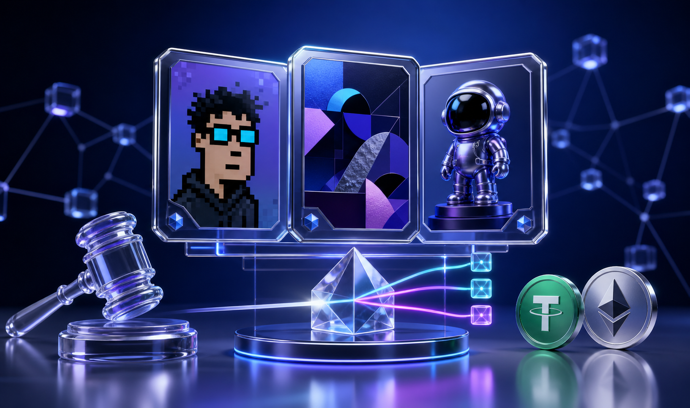
When businesses discuss NFT marketplaces, they often think of displaying works, connecting wallets and enabling purchases. But a sustainable NFT platform is more than a digital gallery. It is a commercial system for creators, buyers, trades, royalties, payments, risk control and data operations. Issuance, order matching, royalty distribution, secondary settlement, anti-abuse controls, wallet payments and creator analytics all affect long-term operations. SoonTech's NFT marketplace development helps businesses upgrade NFT platforms from display pages into tradable, settleable and operable Web3 infrastructure.
1. NFT Platforms Cannot Be Only Display Layers
NFT value is not only on-chain ownership. It also comes from trading, collecting, membership, content and community relationships. A page that only displays assets cannot sustain market activity.
Businesses need issuance methods, sales modes, secondary markets, royalty rules, wallet payments, risk controls and backend operations. If a platform only supports simple purchase, it may complete an initial drop but struggle to support creator economy later.
The core of an NFT trading platform is therefore trading and settlement, not image display.
2. Common Operational Pain Points
Sales modes are often too limited. Platforms may need fixed price, auction, mystery box, whitelist, batch issuance and secondary listings.
Royalty settlement is complex. Creators, partners, platforms, issuers and promoters may share revenue. Manual processing creates errors.
Wallet payment experience may be unstable. Users may pay through different wallets, chains and assets.
Wash trading and abnormal activity can distort market data. Creators also need data on views, favorites, trades, repeat buyers and secondary transfers.
3. Data and Trends
In 2026, NFT discussions are moving beyond avatars and hype into membership, gaming assets, brand collectibles, event tickets, creator economy and RWA certificates.
This creates three changes. NFT asset types are richer, so platforms need multi-mode trading. Creators and brands care about long-term royalties and user data. Enterprises care more about compliance, risk controls and payment experience than minting alone.
NFT royalty settlement and multi-mode trading are becoming core marketplace infrastructure.
4. NFT Marketplace Capabilities
CapabilityProblem SolvedBusiness ValueMulti-mode issuance | Fixed price, auction, mystery box and whitelist needs | Supports varied operations |
Order matching | Listings, fills, cancellations and batch purchases | Improves trading efficiency |
Royalty settlement | Multi-party revenue sharing | Protects creator and platform income |
Wallet payment | Multi-wallet and multi-asset friction | Improves purchase conversion |
Risk audit | Wash trading and abnormal accounts | Protects market quality |
Data backend | Creators and operators lack insight | Supports continuous growth |
These capabilities determine whether an NFT platform becomes a long-term market.
5. Case Scenario
Imagine a brand launching membership NFTs. The first drop sells digital collectibles that unlock benefits. After launch, users want resale, creators expect secondary royalties, the platform wants holder analytics and operations wants to issue new benefits to different user levels.
If the platform only has minting and display, everything becomes manual.
With SoonTech NFT Marketplace infrastructure, the platform can configure sales modes, royalty percentages, whitelists, payment assets and benefits during issuance. In secondary trading, orders, royalties and platform fees are recorded automatically. Backend analytics show trades, users, asset movement and campaign performance.
6. SoonTech Solution
SoonTech connects wallets, order matching, payments, royalty settlement, risk controls and backend data. It fits digital collectibles, gaming assets, membership benefits, brand campaigns and creator economy.
At the issuance layer, platforms can configure fixed price, auction, mystery box, whitelist and batch issuance. At the trading layer, the system supports listings, purchases, cancellations, fills and secondary markets. At the settlement layer, SoonTech supports creator royalties, platform fees, multi-party revenue sharing and payment records. At the risk layer, it monitors abnormal purchasing, suspicious accounts and self-trading. At the data layer, creators and operators get sales and user analytics.
SoonTech helps turn NFT from one-time marketing into an operable asset marketplace.
7. Implementation Suggestions
- Define whether the NFT represents collectibles, membership, game assets, tickets or brand rights.
- Choose fixed price, auction, mystery box, whitelist or secondary market modes.
- Design royalty, revenue sharing, payment and refund rules before launch.
- Add controls for abnormal purchasing, wash trading and self-trading.
- Provide data dashboards for creators and operators.
Key takeaway: the long-term value of an NFT platform is not selling out once. It is whether assets can continue to trade, settle and operate.
8. Future Outlook
Future NFT platforms will look more like vertical asset markets than generic image markets. Brand, game, content and membership scenarios will need detailed trading modes, settlement rules and analytics. Businesses choosing NFT marketplace development providers will care more about wallet, settlement, risk and backend capabilities.
FAQ
Q1: Why does an NFT platform need royalty settlement?
A1: NFT trades may involve creators, platforms, issuers and partners. Systemized royalty settlement reduces manual error and protects revenue.
Q2: What business scenarios fit NFT marketplaces?
A2: Digital collectibles, brand memberships, game assets, event tickets, creator economy, content rights and Web3 community asset trading.
Q3: Can SoonTech support secondary NFT trading?
A3: Yes. SoonTech can support listings, purchases, cancellations, fill records, royalty settlement, wallet payments and backend analytics.
Conclusion: SoonTech NFT royalty settlement and multi-mode trading infrastructure helps businesses turn NFT platforms from display tools into long-term trading and operations systems. For digital assets, memberships and creator economy, settlement and data capabilities determine how far the platform can go.
🌐 Build secure and scalable Web3 platforms with SoonTech.
Explore our solutions for White Label Crypto Exchanges, Prediction Markets, MPC Wallets, Matching Engines, Liquidity Integration, and Compliance.