العربية

- المنتجات
Why Enterprises Need White Label Crypto Solutions to Build Web3 Infrastructure
مزيد من المعلوماتمنصة تداول مركزية (CEX) أطلق منصة تداول بمستوى مؤسسي خلال 7 أيامالمحفظة MPC وتخزين بارد لحماية شاملة للأصولالسيولة تجميع سيولة عالمية بفوارق سعرية ضيقةمنصة تداول لامركزية (DEX) تداول لامركزي غير وصائي عبر سلاسل متعددةمنصة NFT نشر سريع لتداول NFT بأنماط متعددةنمو المستخدمين أدوات متكاملة لاكتساب المستخدمين والاحتفاظ بهمسوق التنبؤات Newبنية متعددة الأوراكل مع تسوية على السلسلةالأصول الواقعية المرمّزة (RWA) ترميز متوافق للأصول الواقعية - الحلول
- المدونة
- من نحن


DEX Is More Than Swap: How SoonTech Cross-Chain Routing Engine Optimizes Multi-Chain Trading Experience
Users Want Results, Not Complex Paths
When users trade on a DEX, they usually care about execution, expected output and risk. They do not want to decide which pool, bridge or chain should be used. Enterprise DEX infrastructure should hide path complexity and provide clear outcomes.
SoonTech's DEX cross-chain routing engine is designed for this environment. It turns decentralized exchange development from basic trading into controllable multi-chain user experience.
1. Multi-Chain Makes DEX More Complex
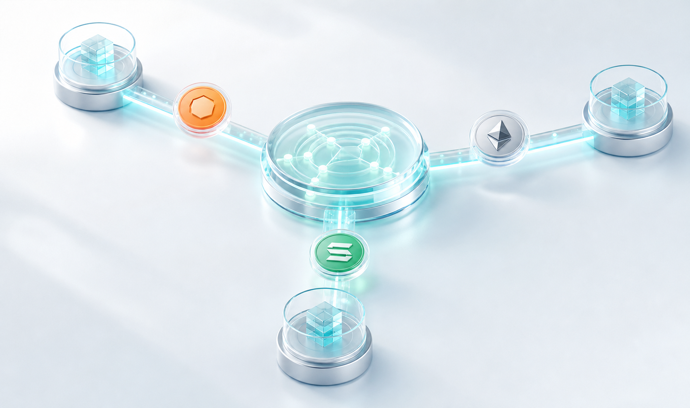
Early DEX products often traded on one chain. Today assets are spread across Ethereum, Layer2 networks, BNB Chain, Solana, TRON and other ecosystems. A DEX must understand where assets are, which route is cheaper, which pool has better depth, how long bridging takes, whether slippage is acceptable and how to handle failures.
Cross-chain DEX infrastructure connects chains, bridges, pools, wallets and front-end experience. It is also important for wallets and hybrid CEX/DEX platforms.
2. Without Routing, DEX Becomes a Tool for Advanced Users
Users struggle with path selection. Slippage differs by pool. Gas and bridge costs are often unclear. Failed transactions create confusion. Some assets also carry contract or price risks.
A routing engine should not only find a price. It should help users understand cost, risk and expected result.
3. DEX and Wallet Are Sharing the Same Routing Layer
Multi-chain users increasingly depend on wallets. They expect wallets or platforms to recommend available paths. DEX aggregators have also raised expectations around execution quality. Hybrid platforms need to connect CEX accounts with on-chain liquidity.
4. Capability Table
CapabilityProblem SolvedBusiness ValueMulti-chain asset recognition | Assets spread across chains | Reduces user decision cost |
Path discovery | Pools and bridges are complex | Recommends better routes |
Slippage control | Depth varies by pool | Improves predictability |
Gas estimation | Cost is unclear | Reduces complaints |
Failure handling | Authorization or bridge issues | Improves experience |
Risk notices | Contract and price risk | Improves safety |
Monitoring | Route quality is unclear | Supports optimization |
5. Case Study: Wallet With Built-In Routing
Imagine a Web3 wallet serving multilingual users. Users hold stablecoins, major assets and project tokens. The wallet wants built-in swap and cross-chain trading without sending users across multiple DEX and bridge websites.
With SoonTech DEX routing, the wallet can show expected output, slippage, cost and risk notices before execution. The platform also gains data on chain usage, asset demand and route failure rates.
6. SoonTech Solution
SoonTech's routing capability can combine with DEX, Wallet, CEX, liquidity and risk modules. For DEX platforms, it improves trading paths. For wallets, it powers built-in swap and cross-chain features. For CEX platforms, it connects account users to on-chain assets. For token projects, it improves asset accessibility.
7. Implementation Advice
Businesses should first define supported chains based on user and asset needs. Then they should define initial assets, liquidity sources, bridge options, slippage rules, gas estimates, failure states, risk notices and monitoring dashboards.
8. Conclusion
Future DEX competition will move from contract deployment to route quality. SoonTech's DEX cross-chain routing engine helps businesses turn complex multi-chain trading into simple user experience and reusable infrastructure.
FAQ
Q1: How is a routing engine different from basic swap?
A1: A routing engine evaluates chains, pools, bridges, slippage, gas and risk to choose better paths.
Q2: Which platforms can use SoonTech DEX routing?
A2: DEX platforms, Web3 wallets, hybrid CEX/DEX platforms, token gateways and Web3 finance products.
Q3: Does routing only optimize price?
A3: No. It also considers slippage, gas, bridge time, failure risk and user experience.
Q4: Should businesses support every chain from day one?
A4: No. Start with the core chains used by target users, then expand based on data.
Q5: Why is routing data useful?
A5: It helps platforms understand popular chains, assets, failures, slippage and user paths.