العربية

- المنتجات
Why Enterprises Need White Label Crypto Solutions to Build Web3 Infrastructure
مزيد من المعلوماتمنصة تداول مركزية (CEX) أطلق منصة تداول بمستوى مؤسسي خلال 7 أيامالمحفظة MPC وتخزين بارد لحماية شاملة للأصولالسيولة تجميع سيولة عالمية بفوارق سعرية ضيقةمنصة تداول لامركزية (DEX) تداول لامركزي غير وصائي عبر سلاسل متعددةمنصة NFT نشر سريع لتداول NFT بأنماط متعددةنمو المستخدمين أدوات متكاملة لاكتساب المستخدمين والاحتفاظ بهمسوق التنبؤات Newبنية متعددة الأوراكل مع تسوية على السلسلةالأصول الواقعية المرمّزة (RWA) ترميز متوافق للأصول الواقعية - الحلول
- المدونة
- من نحن


Malaysia Crypto Exchange Account Security and Anti-Phishing: How Web3 Platforms Protect User Assets With 2FA, Device Risk Control and Withdrawal Whitelists
Security competition among Malaysian crypto exchanges and Web3 wallet platforms is expanding from asset custody to user account protection. In real operations, many asset losses do not happen because the core exchange system is breached. They happen because users face phishing websites, fake support agents, malicious links, leaked passwords, lost 2FA devices, stolen phones, exposed API keys or changed withdrawal addresses. For a digital asset exchange Malaysia project, account security and anti-phishing protection are now essential parts of user trust.
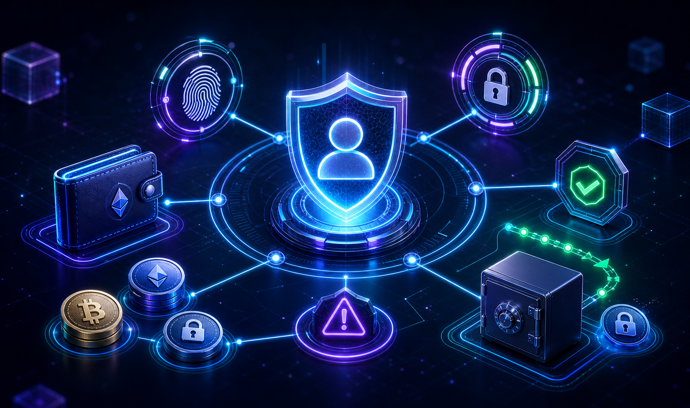
Companies planning crypto exchange account security Malaysia, anti phishing crypto exchange Malaysia or Web3 wallet security Malaysia projects cannot rely only on telling users to protect their passwords. Platforms need 2FA, device fingerprints, login notifications, withdrawal whitelists, address cooling periods, risk verification, support appeals, account freezes, operation logs and user education. SoonTech can provide CEX systems, Web3 wallets, account permissions, withdrawal risk control, audit logs, backend management and rule engines to help Malaysian Web3 businesses turn account security into a system process.
1. Why Account Security Is a Core Trust Entry
Users often begin trusting an exchange through deposits and trading, but that trust is tested when account issues occur. When users receive suspicious emails, click fake login pages, see unknown device logins, fail 2FA, notice changed withdrawal addresses, lose assets through abnormal withdrawals or wait for support appeals, the platform's response speed and security controls determine whether they continue to trust it.
Malaysia has strong mobile finance and e-wallet usage habits. Users commonly register, verify, pay and manage assets through smartphones. Mobile convenience improves conversion, but it also increases security exposure. Users may encounter phishing links through social media, messaging apps, search ads, fake support groups or copied websites. For new users, concepts such as irreversible blockchain transactions, withdrawal address risk and wrong network loss may not be intuitive.
Crypto exchange account security Malaysia is therefore not only a technical security task. It also involves product design, support workflows, operational education and risk strategies. A mature platform needs protections during registration, login, device change, password reset, 2FA modification, API key creation, withdrawal address addition and large withdrawals.
2. Common Account Risks and Phishing Paths
Crypto exchange account security risks come from multiple entry points. Platforms need to break these risks into identifiable, alertable and actionable scenarios.
First, phishing websites and copied domains. Attackers may build login pages that look similar to the exchange and ask users to enter account details, passwords and verification codes. Without anti-phishing codes, login alerts and domain education, users may not notice quickly.
Second, fake support and social engineering. Attackers may pretend to be support agents, investment advisors, project teams or group admins. They may ask users for verification codes, remote assistance, private keys or seed phrases. Platforms need to clearly state that official support will never ask for sensitive information.
Third, leaked passwords. Users may reuse passwords across platforms, or their email accounts may be compromised. Exchanges should reduce risk through abnormal login detection, password strength requirements and device verification.
Fourth, lost or manipulated 2FA. 2FA is important, but users can lose phones, change devices or enter dynamic codes into phishing pages. Platforms need review and cooling periods for 2FA resets.
Fifth, changed withdrawal addresses. After attackers gain account access, they usually add new addresses and attempt withdrawals. Withdrawal whitelists, address cooling periods, large withdrawal approval and abnormal device restrictions can reduce losses.
Sixth, exposed API keys. Professional users and institutions may use API trading. If API keys have excessive permissions or no IP whitelist, they may be abused for abnormal trading or asset movement.
Seventh, support appeal abuse. Attackers may forge identity materials and ask support teams to reset 2FA or unfreeze accounts. Support workflows must connect KYC, risk tags, device records and audit logs.
3. Data and Trends: Web3 User Security Requires Layered Protection
Research from Chainalysis and other crypto crime sources has repeatedly shown that scams, phishing, stolen keys and high-risk fund movements remain major risks in the digital asset ecosystem. For exchanges, once assets are transferred on-chain, recovery is usually difficult. The goal of account security is not to react after assets leave. It is to create risk controls before login, password changes, 2FA changes, withdrawal address additions and withdrawals.
Bank Negara Malaysia's financial consumer education materials also emphasize scam awareness, personal information protection and official channel verification. Although digital assets have unique technical features, the user protection logic is similar: platforms need to reduce the chance of users being misled and add clear verification at critical operations.
Login security
Main Function:Password, 2FA, device verification, login alerts
User Value:Reduces account takeover risk
Platform Risk-Control Value:Identifies abnormal logins and credential stuffing
Device risk control
Main Function:Device fingerprint, IP, region, browser change
User Value:Alerts users about abnormal access
Platform Risk-Control Value:Triggers verification based on risk level
Withdrawal whitelist
Main Function:Limits withdrawal addresses and applies cooling periods
User Value:Prevents attackers from fast withdrawals
Platform Risk-Control Value:Reduces abnormal withdrawal losses
Anti-phishing code
Main Function:Shows user-defined code in emails and notices
User Value:Helps users identify official messages
Platform Risk-Control Value:Reduces fake email success rate
API permissions
Main Function:Separates read, trade and withdrawal permissions
User Value:Protects professional accounts
Platform Risk-Control Value:Reduces API key exposure risk
Support appeals
Main Function:Identity review, risk tags, handling records
User Value:Helps users recover accounts
Platform Risk-Control Value:Prevents social engineering of support
Audit logs
Main Function:Records login, password, 2FA and address changes
User Value:Helps users inspect abnormal activity
Platform Risk-Control Value:Supports review and accountability
The table shows that account security is not one feature. It is a protection network across several layers.
4. Case Study: A Kuala Lumpur Platform Handles Withdrawal Address Tampering
Imagine a digital asset trading platform in Kuala Lumpur receiving a user complaint. The user notices an unknown login record and sees that someone attempted to add a new USDT withdrawal address. If the platform only depends on passwords and SMS codes, it may not stop the attacker in time.
A stronger process uses multiple layers. First, the system detects a new device login and sends email and mobile alerts. Second, when the user tries to add a withdrawal address shortly after logging in from a new device, the platform places the address into a cooling state and does not allow immediate withdrawals. Third, if the user also changes password or 2FA, the risk level increases and withdrawals are restricted for 24 to 48 hours. Fourth, if the withdrawal address is connected to high-risk on-chain activity, the case enters manual review. Fifth, support teams can view login device, IP, KYC status, address creation time, risk rules and operation logs, but they cannot bypass approval directly.
In this case, the platform does not wait until assets are gone. It creates controls before withdrawal. Users may feel the process is slightly slower, but if the platform clearly explains that new address cooling protects asset safety, normal users usually accept it.
This shows that anti phishing crypto exchange Malaysia is not only about telling users not to click suspicious links. It is about reducing attack success through system design.
5. How SoonTech Supports Account Security and Anti-Phishing
SoonTech's exchange and wallet infrastructure can help businesses build account security systems. For teams planning white label crypto exchange Malaysia or Web3 wallet security Malaysia upgrades, account security should be evaluated during system selection.
User account system
Role in Account Security:Manages registration, login, password, 2FA and user status
Value for Malaysian Platforms:Creates unified identity and security foundation
Device and login records
Role in Account Security:Records device, IP, region and login time
Value for Malaysian Platforms:Supports abnormal login detection and user alerts
Withdrawal whitelist and approval
Role in Account Security:Supports address whitelists, cooling periods, limits and review
Value for Malaysian Platforms:Reduces fast withdrawal risk after account takeover
Web3 wallet system
Role in Account Security:Manages deposit addresses, multi-chain assets and withdrawals
Value for Malaysian Platforms:Connects account security with asset security
API permission management
Role in Account Security:Supports key permissions, IP restrictions and action scopes
Value for Malaysian Platforms:Protects professional traders and institutions
Risk-control rule engine
Role in Account Security:Configures abnormal login, password, 2FA and withdrawal rules
Value for Malaysian Platforms:Improves automated blocking
Audit logs
Role in Account Security:Records critical operations and backend handling
Value for Malaysian Platforms:Supports support review, compliance checks and accountability
These capabilities allow platforms to embed security rules into the user lifecycle instead of relying on support teams after incidents. For Malaysian Web3 companies, building account security early makes future growth more stable.
6. Implementation Advice: Put Security Into the User Journey
When planning a CEX security system Malaysia project, companies can start from the user journey and place security controls at critical actions.
- Registration: password strength, email or phone verification and risk statements.
- First login: encourage 2FA and explain its purpose.
- New device login: trigger email, SMS or in-app alerts.
- Password change: restrict short-term withdrawals and remind users to check devices.
- 2FA reset: require manual review or stricter identity verification.
- Withdrawal address addition: use whitelists, address notes and cooling periods.
- Large withdrawal: trigger multi-factor verification, manual review or delay.
- API key creation: require permission separation, IP whitelist and expiry reminders.
- Support appeal: connect KYC, historical devices, risk tags and operation logs.
- After abnormal incidents: provide freeze, unfreeze and review workflows.
This design does not make every step complex. It adds protection at high-risk points. Platforms should write security prompts clearly and briefly instead of using dense legal text.
7. Risk Matrix: Common Account Security Responses
Account security needs to balance user experience and asset protection. Common risks and responses include:
New device login
Possible Impact:Account takeover risk
Suggested Response:Notify user, require second verification, restrict withdrawal
Frequent wrong passwords
Possible Impact:Credential stuffing or brute force
Suggested Response:Temporary lock, captcha and human verification
2FA reset request
Possible Impact:Social engineering of support
Suggested Response:KYC review, cooling period and manual approval
New withdrawal address
Possible Impact:Attacker attempts asset transfer
Suggested Response:Whitelist, cooling period and large withdrawal review
Abnormal API key requests
Possible Impact:Strategy account abuse
Suggested Response:Rate limit, IP whitelist and key pause
User clicks phishing link
Possible Impact:Credential leakage
Suggested Response:Anti-phishing code, official domain warning and password reset
Manual backend unfreeze
Possible Impact:Internal operation risk
Suggested Response:Multi-level permission, approval and audit logs
Every response should leave records. User complaints, support handling, risk approvals and backend operations must form a complete chain so the platform can review and improve.
8. Localization: Security Education Should Be Plain
Malaysian users may use English, Malay and Chinese. Account security education should avoid overly technical language. Platforms should turn key risks into clear actions: never share verification codes, official support will never ask for private keys or seed phrases, new withdrawal addresses require a cooling period, and users should verify the official domain in the browser.
Security prompts should appear where users need them, not only in help center articles. Login pages should remind users about official domains. Withdrawal pages should explain address irreversibility. API pages should explain permission scopes. 2FA pages should remind users to back up recovery codes. Support pages should list official communication channels.
Good security education should not make users panic. It should make them feel more in control. The more a platform turns complex risks into clear actions, the more trust it can build.
9. Future Trend: Account Security and Wallet Security Become Connected
In the future, account security for Malaysian digital asset platforms will continue to evolve. Exchange accounts, Web3 wallets, MPC signing, device risk control, on-chain address analysis, AI risk scoring, anti-phishing education and support tickets will become more connected.
For platforms, account security is no longer only part of login. It is a shared foundation for asset safety, compliant operations and user retention. Users continue using a platform not only because it can trade, but also because it can protect them when they make mistakes, lose devices or face attacks.
For Malaysian Web3 businesses, building CEX, wallet, risk-control and support collaboration early can help platforms handle real user growth more confidently.
FAQ
Q1: Why do Malaysian crypto exchanges need anti-phishing systems?
Many user asset risks come from fake websites, fake support, malicious links and credential leakage. Anti-phishing systems reduce attack success through official domain reminders, anti-phishing codes, login alerts and user education.
Q2: Is 2FA enough to protect accounts?
2FA is important, but not enough. Platforms also need device recognition, abnormal login alerts, withdrawal whitelists, address cooling periods, API permission management and support review workflows.
Q3: Does a withdrawal whitelist hurt user experience?
It adds one setup step, but it significantly reduces the risk of attackers quickly withdrawing assets from compromised accounts. Clear prompts and reasonable cooling periods can balance security and experience.
Q4: What can SoonTech provide for account security?
SoonTech can provide user account systems, Web3 wallets, 2FA support, device and login records, withdrawal whitelists, risk-control rules, API permission management, support dashboards and audit logs to help businesses build account security and anti-phishing systems.
Q5: Do early-stage exchanges need full account security design?
Yes. Early platforms may have fewer users, but security incidents can damage brand trust quickly. Building key security controls early makes growth more stable and reduces support and compliance pressure.
Conclusion
Security for Malaysian crypto exchanges cannot stop at servers, wallets and cold storage. User accounts are the first entry point of asset safety and one of the most common places for phishing, social engineering, device risk and withdrawal risk. Platforms that protect login, 2FA, devices, withdrawal addresses, API keys and support appeals can significantly reduce user asset loss.
For companies building digital asset exchange Malaysia, Web3 wallet Malaysia or white label crypto exchange Malaysia projects, account security and anti-phishing systems should be part of the platform architecture. A reliable Web3 platform does not only let users trade. It also helps users manage assets more safely.
🌐 Build secure and scalable Web3 platforms with SoonTech.
Explore our solutions for White Label Crypto Exchanges, Prediction Markets, MPC Wallets, Matching Engines, Liquidity Integration, and Compliance.