العربية

- المنتجات

Why Enterprises Need White Label Crypto Solutions to Build Web3 Infrastructure
مزيد من المعلوماتمنصة تداول مركزية (CEX) أطلق منصة تداول بمستوى مؤسسي خلال 7 أيامالمحفظة MPC وتخزين بارد لحماية شاملة للأصولالسيولة تجميع سيولة عالمية بفوارق سعرية ضيقةمنصة تداول لامركزية (DEX) تداول لامركزي غير وصائي عبر سلاسل متعددةمنصة NFT نشر سريع لتداول NFT بأنماط متعددةنمو المستخدمين أدوات متكاملة لاكتساب المستخدمين والاحتفاظ بهمسوق التنبؤات Newبنية متعددة الأوراكل مع تسوية على السلسلةالأصول الواقعية المرمّزة (RWA) ترميز متوافق للأصول الواقعية - الحلول
- المدونة
- من نحن


Reducing Crypto Exchange Cost: Why the White-Label Model Cuts Most Setup Expenses| SoonTech
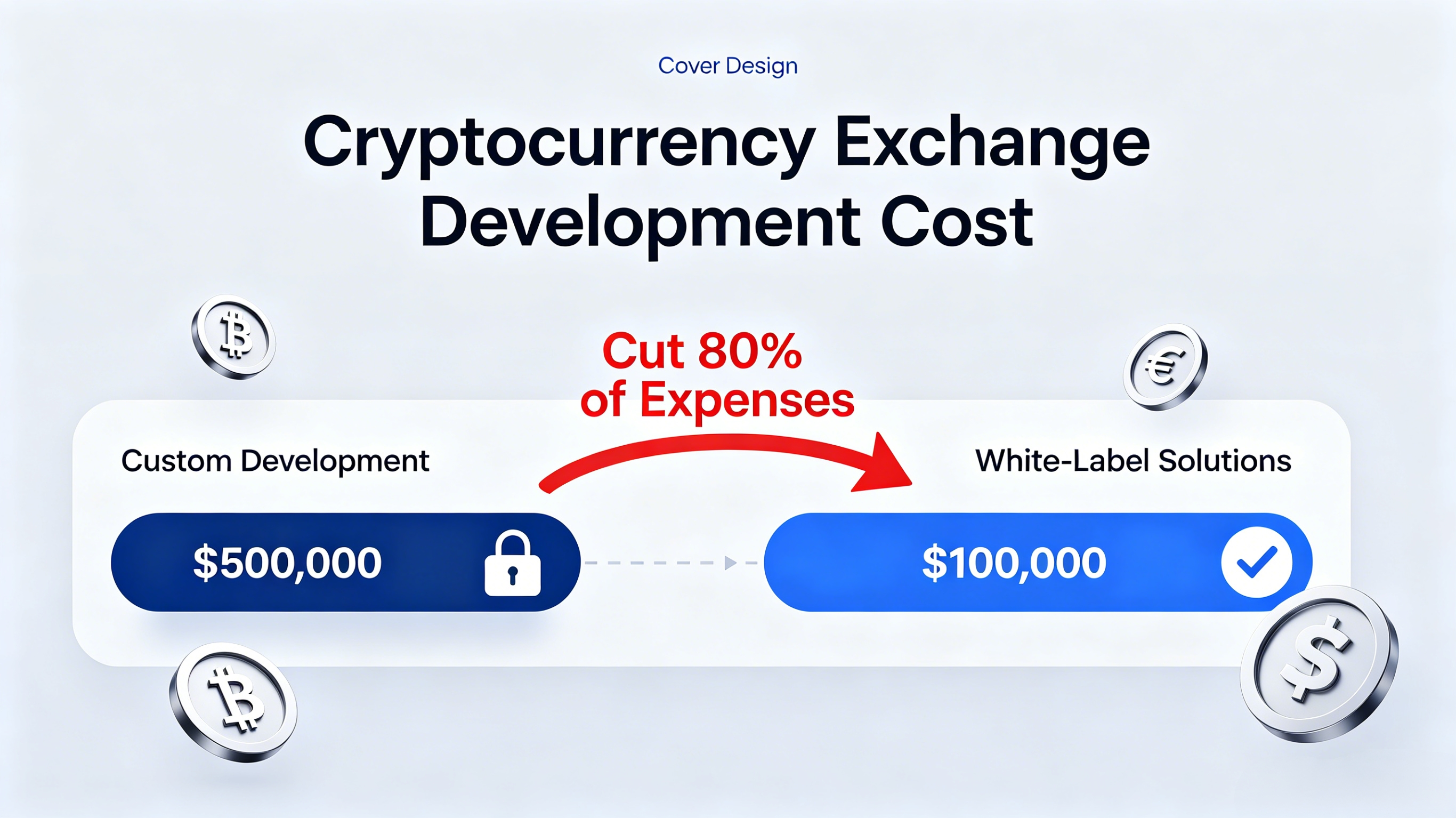
In the fast-evolving digital asset market, launching a crypto platform remains a top choice for entrepreneurs. However, the question "How much does it cost to build a crypto exchange?" often brings vague answers ranging from tens of thousands to millions of dollars.
In fact, the cost of setting up cryptocurrency exchanges is not a mystery. It is highly influenced by system architecture, feature selection, licensing, and post-launch operations. By choosing the right development model and adopting a "cut unnecessary expenses" strategy, businesses can significantly reduce their initial setup costs while maintaining top-tier security and performance.
1. Core System Selection: From-Scratch Development vs. White-Label Solutions
The first major dividing line in development costs lies in the choice of the underlying web3 infrastructure development model.
In-House Custom Development: A Costly Trap
Building a proprietary technical team to write a matching engine, design cold/hot wallet management systems, and set up security infrastructure from scratch is incredibly expensive. It requires paying high salaries to blockchain experts and security architects for months or even years. For most startups, this model often drains capital before the platform even goes live.
White-Label Exchange Solutions: The Most Cost-Effective Choice
In contrast, adopting proven white-label exchange solutions is the most lightweight and cost-effective approach for market entry.
What is a White-Label Solution?
It means a technology provider (such as SoonTech) delivers a market-tested, high-concurrency, and highly secure underlying exchange system. Businesses only need to apply their branding (Logo), customize the front-end UI, and configure an independent domain name to go live in a very short time.
By utilizing a white-label model, companies can bypass core engine R&D expenses, cutting initial setup costs by 70% to 80% while shortening the launch cycle from years to weeks.
2. Breaking Down Development Costs: Three Main Product Lines
Different product positionings require distinct technical architectures and cost structures. Currently, the three most popular directions in the market are centralized exchanges (CEX), decentralized exchanges (DEX), and prediction market solutions.
Centralized Exchanges (CEX)
The core costs of a CEX are concentrated on high-performance matching engines and secure deposit/withdrawal networks. Since it manages user asset custody (custodial wallets), its security requirements are extremely high.
- Main Expenses: High-concurrency matching systems, multi-signature cold/hot wallet systems, KYC integration, and financial auditing tools.
Decentralized Exchanges (DEX)
DEXs rely on smart contracts and offer non-custodial asset management, which eliminates centralized wallet management and heavy KYC costs.
- Main Expenses: Smart contract development, security audits, front-end Web3 wallet connectivity (e.g., MetaMask), and liquidity pool (AMM) initialization. While traditional maintenance is lower, smart contract auditing is a strict, un-skippable expense.
Prediction Market Solutions
As a booming sector in Web3, prediction markets (platforms for betting on sports, elections, or event outcomes) attract massive traffic.
- Main Expenses: Oracle integration (ensuring real-world event data is securely fed on-chain), dynamic odds calculation engines, and automated settlement contracts. Opting for ready-made prediction market solutions vastly reduces R&D barriers for data integration.
3. Cutting Waste: Precision Budget Control Through On-Demand Add-ons
After selecting a white-label system, many teams go over budget by trying to include every feature at once. Knowing how to select options based on actual demand is the key to cutting unnecessary waste.
Liquidity Services: Say Goodbye to "Ghost Exchanges"
A newly launched exchange without order book depth will suffer from high slippage, causing users to leave quickly. Using your own capital to provide liquidity is highly risky and ties up too much cash.
- Cost-Saving Strategy: Directly integrate third-party liquidity services. By connecting to the order books of top-tier exchanges via API, a new platform can instantly gain millions in trading depth at a minimal cost, allowing the team to spend capital on marketing instead.
Security Infrastructure: Focus on Essential DDoS Protection
Exchanges are prime targets for hackers. Buying premium, all-inclusive security packages right at launch can cause operational costs to skyrocket.
- Cost-Saving Strategy: Adopt a tiered defense approach. In the early stages, prioritize DDoS protection against traffic attacks and a Web Application Firewall (WAF) for API endpoints. As trading volume and Assets Under Management (AUM) grow, you can scale up your server defenses accordingly.
Licensing and Compliance: A Phased Approach
Chasing top-tier compliance licenses globally at the start can instantly cost hundreds of thousands of dollars. A more practical approach is to begin operations in offshore jurisdictions with faster, lower-barrier licensing, and then add more licenses as the business grows.
4. Conclusion: Taking the First Step Efficiently
Controlling cryptocurrency exchange development costs is not about cutting corners; it is about outsourcing technology while focusing internal energy on growth.
By choosing a lightweight path like white-label exchange solutions, businesses can hand over complex web3 infrastructure development pressures to expert teams. Whether focusing on traditional centralized exchanges (CEX), moving into decentralized exchanges (DEX), or capturing market share with prediction market solutions, allocating budgets precisely to liquidity services and fundamental DDoS protection is the golden rule for a fast launch and steady profitability.
Want a tailored, lightweight setup plan and an accurate cost quote? Visit the SoonTech . Our professional team will break down your budget to help your Web3 project launch efficiently.