العربية

- المنتجات

Why Enterprises Need White Label Crypto Solutions to Build Web3 Infrastructure
مزيد من المعلوماتمنصة تداول مركزية (CEX) أطلق منصة تداول بمستوى مؤسسي خلال 7 أيامالمحفظة MPC وتخزين بارد لحماية شاملة للأصولالسيولة تجميع سيولة عالمية بفوارق سعرية ضيقةمنصة تداول لامركزية (DEX) تداول لامركزي غير وصائي عبر سلاسل متعددةمنصة NFT نشر سريع لتداول NFT بأنماط متعددةنمو المستخدمين أدوات متكاملة لاكتساب المستخدمين والاحتفاظ بهمسوق التنبؤات Newبنية متعددة الأوراكل مع تسوية على السلسلةالأصول الواقعية المرمّزة (RWA) ترميز متوافق للأصول الواقعية - الحلول
- المدونة
- من نحن


Crypto Market Resilience: How Trading Infrastructure Empowers Web3 | SoonTech
On May 21, 2026, against a backdrop of global macroeconomic turbulence fueled by high U.S. bond yields and lingering geopolitical tensions—which left traditional stock markets under short-term pressure—the cryptocurrency market demonstrated robust intrinsic resilience. Following a period of continuous shakeouts, Bitcoin firmly held its ground at the critical $77,000 threshold. Meanwhile, leading DeFi sectors, represented by Hyperliquid and Jupiter, spearheaded the market with gains exceeding 8%, driving a localized revival of risk-on sentiment across the network.
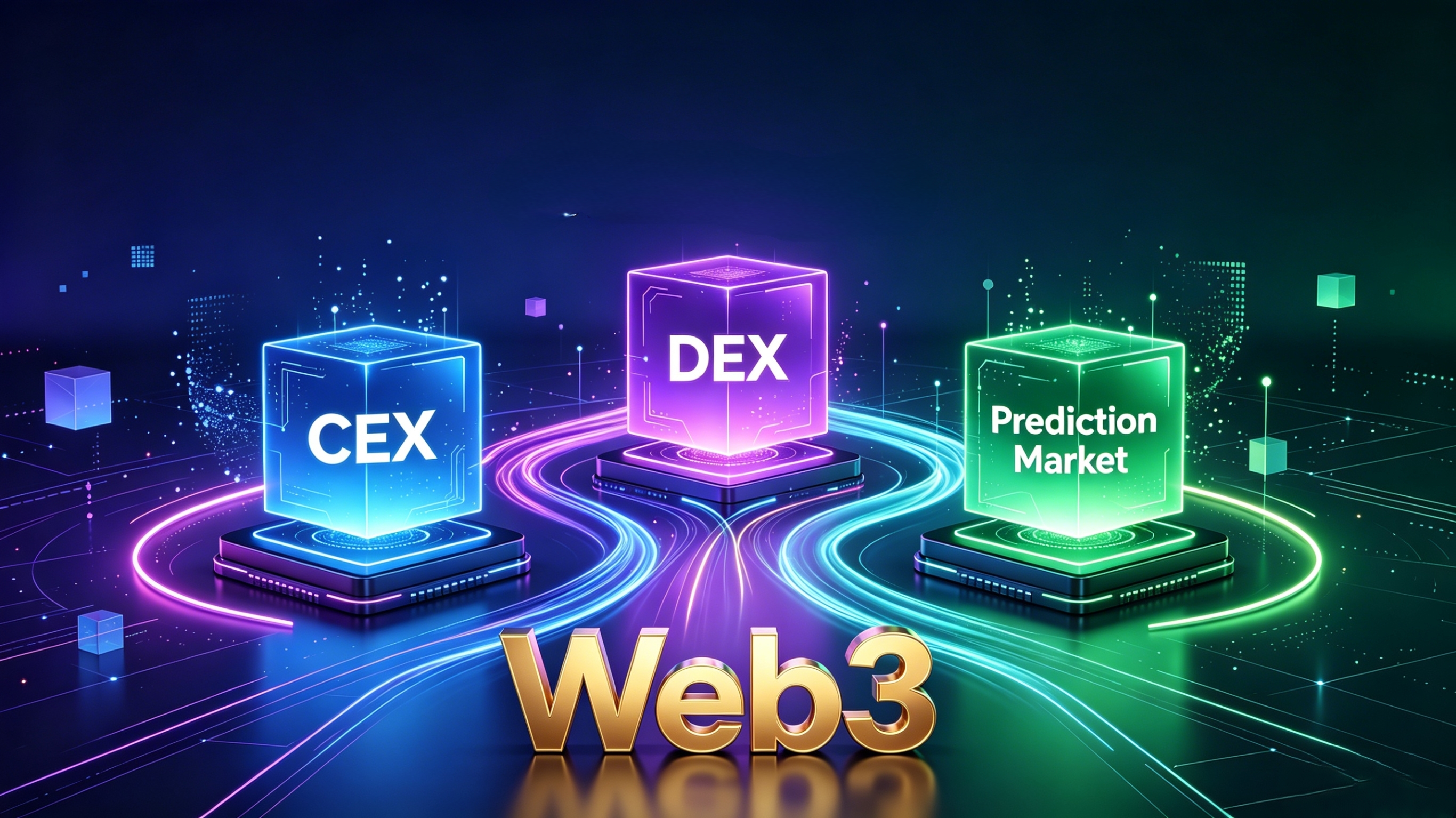
Unlike the retail-driven frenzies of the past, this current rally exhibits a clear trend toward "de-grand-narrativization" and is heavily utility-driven. The market is now propelled primarily by institutional portfolio rebalancing, robust derivatives risk management, and real-world use cases. Within this environment, centralized exchanges (CEX), decentralized exchanges (DEX), and prediction market solutions are working in synergy as the core Web3 infrastructure to absorb compliant capital and enhance trading efficiency.
Core Market Rally Logic: Macroeconomic Resilience and Institutional Rotation
This upswing is not a blind, one-sided speculative surge. Instead, it reflects the independent risk-mitigation capabilities that crypto assets have demonstrated within cross-asset allocations, bolstered by the convergence of macroeconomic resilience and technical support.
1.1 The Resilience Test of Macro Sentiment
Although uncertainties surrounding U.S.-Iran negotiations triggered short-term volatility in traditional markets and drove commodities like crude oil higher, Bitcoin’s strong consolidation within the $76,000 to $77,000 range fully demonstrated its capacity to resist risks as an independent asset class. Furthermore, as U.S. stablecoin legislation achieved breakthrough progress, the clarification of regulatory expectations prompted capital to buck the trend and flow into crypto infrastructure sectors during the market shakeout.
1.2 Driven Symbiotically by Institutionalization and Utility
The crypto market in 2026 no longer relies on the blind hype of "meme coins" or high-inflation tokens. Instead, it is sustained by the mature foundation of robust risk management in perpetual markets, Real-World Assets (RWA), and stablecoin payment ecosystems. Bitcoin stabilizing above the $77,000 psychological milestone is a direct reflection of traditional institutional capital executing continuous strategic allocations under a transparent regulatory framework.
1.3 Technical Repair and Capital Bifurcation
From a technical structure perspective, short-term bearish momentum has significantly dried up following the recent market washouts and leverage liquidations. The market structure shows clear bifurcation: highly liquid DeFi and Layer-1 sectors with genuine value capture have become the primary destinations for rotating capital. Consequently, robust trading infrastructure and unified liquidity services have become critical pillars for navigating these market fluctuations.
Centralized Exchanges (CEX): The Core Hub of Compliance and Liquidity
In a market characterized by rapid capital rotation and frequent extreme volatility, centralized exchanges (CEX) remain the primary point of entry for both institutions and retail users, thanks to their rigorous compliance systems, deep liquidity pooling, and mature risk management engines.
2.1 Core Commercial Value of CEXs
- Compliance First: To align perfectly with tightening global regulations (such as the comprehensive implementation of the EU's MiCA framework), modern CEX ecosystems are equipped with comprehensive KYC/AML modules and highly efficient fiat gateways, enabling them to securely onboard global compliant capital.
- Liquidity Guarantees: By aggregating liquidity from top-tier global venues, these platforms offer depth across more than 3,000 trading pairs, vastly minimizing slippage and meeting the instantaneous execution needs of large-scale institutional funds.
- Security Defense: Utilizing military-grade cold storage, multi-party computation (MPC) multi-signatures, and real-time intelligent risk control systems, CEXs effectively defend against hacker attacks and mitigate the risk of cascading liquidations.
2.2 Rapid Deployment via White-Label Solutions
For traditional financial institutions and entrepreneurial teams, developing a trading system from scratch involves prohibitive time and engineering costs. White-label exchange solutions solve this by enabling rapid deployment within 7 days. These solutions modularly cover spot, futures, and margin trading while supporting customized spreads and independent leverage strategies, allowing businesses to capture the dividends of the compliant trading market at a low cost.
Decentralized Exchanges (DEX): The Innovative Carrier of On-Chain Freedom and Asset Autonomy
Characterized by trustlessness, 100% transparent on-chain data, and asset self-custody, decentralized exchanges (DEX) have become the primary launchpads and trading venues for innovative Web3 assets. They have performed exceptionally well during this recent DeFi sector rebound.
3.1 Core Advantages and User Stickiness of DEXs
- Asset Autonomy: Users retain total control over their private keys, fundamentally eliminating the centralized risk of platforms misappropriating user funds—a feature that aligns perfectly with the core demands of crypto-native users and long-term holders.
- On-Chain Transparency: All orders, matching, and settlements are fully auditable on-chain. This eliminates black-box operations and insider trading, significantly enhancing the fairness of market dynamics.
- Cross-Chain Interoperability: By integrating cutting-edge cross-chain technologies, DEXs facilitate the seamless circulation of assets across multiple chains, comprehensively covering Layer-2 and emerging public blockchain ecosystems.
3.2 High-Performance Matching Technologies Empowering Non-Custodial Trading
Modern DEXs are rapidly shedding their historical reputation for slow speeds and high slippage. By introducing enterprise-grade, high-performance matching engines, optimizing Automated Market Maker (AMM) algorithms, and combining MPC with privacy computing, DEXs are delivering a smooth, low-latency trading experience comparable to CEXs—all while preserving security.
Prediction Market Solutions: Risk Hedging and Value Discovery Tools for the Web3 Ecosystem
Standing out as one of the most explosive sectors of 2026, prediction market solutions leverage multi-source oracles, community governance, and automated on-chain settlements to build transparent and trustworthy global event prediction platforms. They have emerged as indispensable tools for risk management and sentiment anchoring.
4.1 Multi-Dimensional Functions of Prediction Markets
- Risk Hedging: They offer institutions and high-net-worth individuals innovative derivative instruments to hedge against macroeconomic policy shifts, geopolitical risks, and industry black-swan events.
- Sentiment Anchoring: They provide a genuine, real-time reflection of the market's probabilistic expectations for future events. This serves as high-value data infrastructure for spot and derivatives trading decisions, optimizing capital allocation efficiency.
- Ecosystem Activation: By deeply integrating reputation systems, social gameplay, and liquidity incentives, these solutions significantly drive up user activity and platform retention rates.
4.2 Decentralized Tech Supporting Reliable Operations
By deploying decentralized oracles to guarantee the authenticity of external data and relying on smart contracts for automated execution upon maturity, prediction markets ensure that outcomes are entirely tamper-proof. Covering everything from long-tail events to standardized contracts, these platforms form a powerful functional complement to CEXs and DEXs, completing the Web3 infrastructure loop.
Liquidity Services and Web3 Infrastructure: The Underlying Support for Stable Market Operations
Whether for a CEX, a DEX, or a prediction market, liquidity services act as the "lifeblood" that determines a platform's survival. By bridging to more than 20 top-tier trading venues, these liquidity solutions grant new platforms institutional-grade depth right from launch, supporting customized order books and independent pricing to comprehensively solve the cold-start dilemmas faced by startup platforms.
Concurrently, web3 infrastructure development is permeating every single node of the ecosystem. From high-performance memory matching engines, cross-chain clearing technologies, and secure custody to automated compliance modules, this one-stop tech stack does more than just ensure system stability during extreme market conditions—it empowers trading platforms to execute rapid business iterations and compliant global expansion.
Conclusion and Outlook
The counter-trend resilience of the crypto market on May 21, 2026, indicates that the industry has entered a mature phase governed by technical capability, compliant standing, and real utility. Under the macro new normal of sustained high interest rates and geopolitical friction, the collaborative evolution of centralized exchanges, decentralized exchanges, prediction market solutions, and liquidity services has forged a robust and secure foundation for Web3 trading infrastructure. For global fintech innovators, leveraging mature white-label and modular technical solutions to enter the market swiftly represents the optimal path to ride the wave of compliance and capture the next phase of digital dividends.
Consult now to get a demo of the SoonTech Full-Stack Web3 Solution.