العربية

- المنتجات

Why Enterprises Need White Label Crypto Solutions to Build Web3 Infrastructure
مزيد من المعلوماتمنصة تداول مركزية (CEX) أطلق منصة تداول بمستوى مؤسسي خلال 7 أيامالمحفظة MPC وتخزين بارد لحماية شاملة للأصولالسيولة تجميع سيولة عالمية بفوارق سعرية ضيقةمنصة تداول لامركزية (DEX) تداول لامركزي غير وصائي عبر سلاسل متعددةمنصة NFT نشر سريع لتداول NFT بأنماط متعددةنمو المستخدمين أدوات متكاملة لاكتساب المستخدمين والاحتفاظ بهمسوق التنبؤات Newبنية متعددة الأوراكل مع تسوية على السلسلةالأصول الواقعية المرمّزة (RWA) ترميز متوافق للأصول الواقعية - الحلول
- المدونة
- من نحن


Crypto Exchange SaaS Price War 2026: Capture the Low-Cost White-Label Window | SoonTech
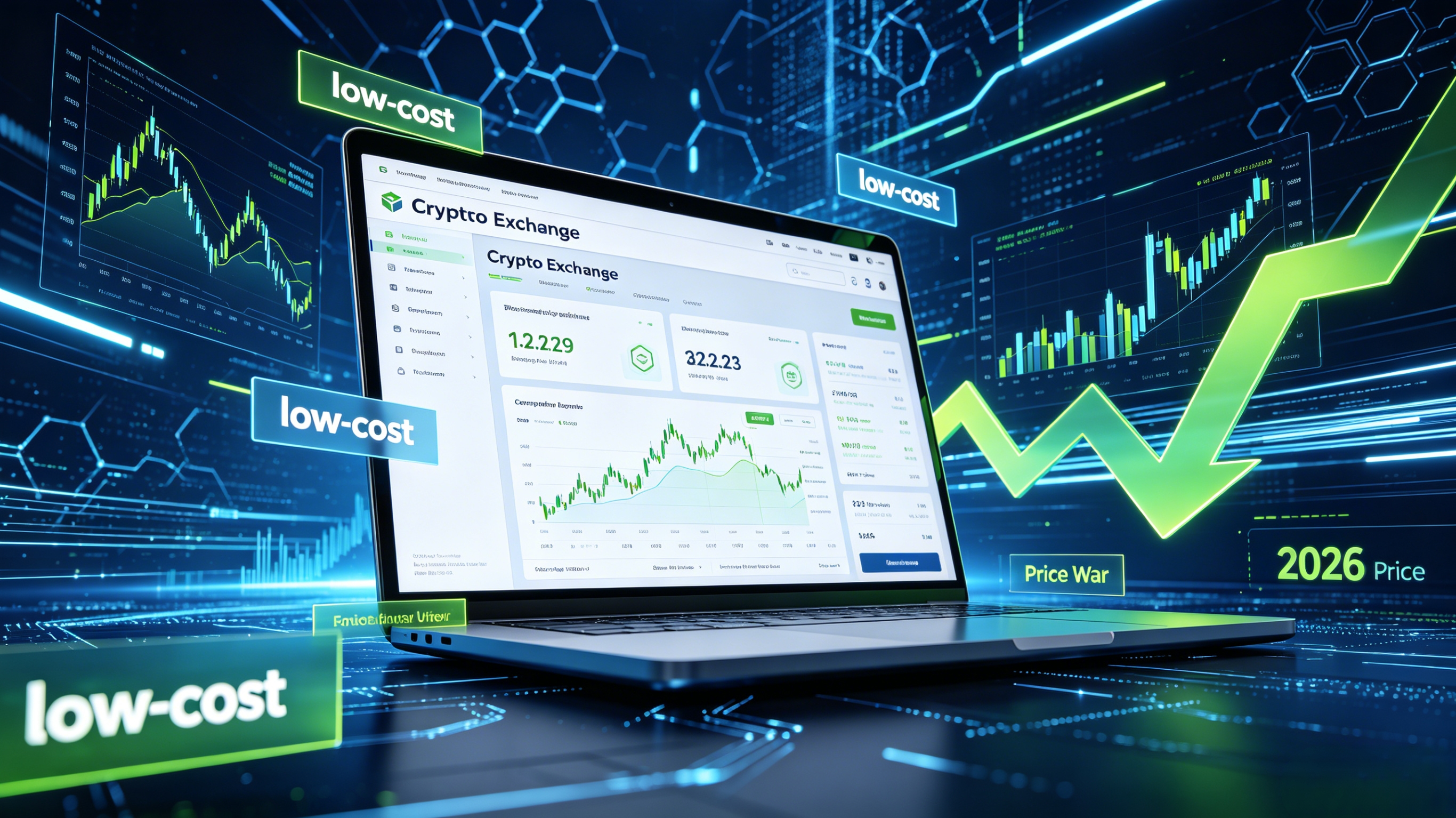
Along with the technical evolution and regulatory progress of the global crypto asset market in 2026, the maturity of underlying blockchain technology has reached an all-time high. Amidst this vigorous industry transformation, an unmistakable signal is being released to the market: the price war among exchange SaaS providers has officially begun. For entrepreneurs and financial institutions eager to secure a share of the digital wave, this undoubtedly represents a rare, low-cost window of opportunity to enter the market.
In the past, building a secure and compliant crypto asset trading platform often meant millions of dollars in initial investment and prolonged development cycles. Today in 2026, however, highly efficient web3 infrastructure development has pushed the marginal cost of underlying technologies close to zero. A wave of "dimensionality reduction strikes" driven by technological iteration is sweeping the market, fundamentally reshaping the supply-side ecosystem of the entire industry.
1. Technology Dividends and Inclusion: The Underlying Logic of Declining Exchange SaaS Costs
The underlying logic of any price war is inherently tied to the cost dividends brought by technological maturity. Over the past few years, the construction model of global Cryptocurrency exchanges has undergone a major industry shift from "asset-heavy self-research" to "asset-light SaaS adoption." In 2026, this trend has thoroughly erupted alongside the popularization of modular architecture and fully automated deployment.
1.1 The Maturity of Modular Web3 Infrastructure
Traditional exchange development requires a massive expenditure of resources on underlying components such as matching engines, security risk control, and multi-chain wallet integration. Today, however, through standardized white-label exchange solutions, providers can deliver a highly customized trading system to clients within days or even hours, much like assembling building blocks. The increased reuse rate of underlying code and elevated levels of automated operations have directly squeezed the delivery expenses of technical service providers, creating ample room for price reductions.
1.2 Breaking Barriers with Shared Liquidity Networks
Previously, the biggest pain point for new exchanges was "having a trading desk but no liquidity." Connecting to liquidity market makers independently came with extremely high thresholds and hefty routine maintenance fees. Nowadays, advanced white-label ecosystems come integrated with world-class liquidity services, allowing new order books to share real-time order depths at the millions-of-dollars level immediately upon launch. This not only solves the user acquisition and retention pain points for new platforms, but also slashes the capital barriers of platform operations by over 70%.
2. CEX, DEX, and Prediction Markets: Three Core Product Lines Fully Enter the Low-Cost Era
In this cost-reduction and efficiency-enhancement storm sweeping the entire industry, mainstream technical delivery plans are heavily concentrated across three product lines with the highest explosive potential: centralized exchanges, decentralized exchanges, and the rapidly emerging prediction markets. Clients with varying needs can all find highly cost-effective onboarding solutions in this price war.
2.1 Traditional Stronghold: The Ultimate Cost-Effectiveness of Centralized Exchanges (CEX) White-Labels
As the absolute mainstay handling the vast majority of spot and derivatives trading, white-label exchange solutions for centralized exchanges have reached an unprecedented peak of cost-effectiveness in 2026. Current CEX white-labels not only include multi-language frontends and full-featured management backends, but also integrate high-intensity, military-grade security protection systems and multi-signature cold/hot wallets. Fierce competition among providers has caused annual fees and commission-sharing ratios to shrink significantly, enabling new startup brands to achieve system performance comparable to industry giants with minimal startup capital.
2.2 On-Chain Trend: Rapid Iteration of Decentralized Exchanges (DEX) Solutions
As the concepts of on-chain trading and non-custodial asset management have become deeply rooted in users' minds, the demand for decentralized exchanges has experienced a massive surge. In 2026, DEX white-label technology has completely broken free from the early dilemmas of high gas fees and poor interactive experiences. Relying on customized development on high-performance Layer 2 and even Layer 3 networks, current DEX white-label solutions not only support high-frequency automated market maker (AMM) algorithms but also achieve a smooth user experience close to that of a CEX. Providers' pricing models in this sector have dropped by nearly half compared to the same period last year.
2.3 The Dark Horse of the Year: The Full Rise of Prediction Market Solutions
Among various Web3 scenarios in 2026, on-chain predictions for global political elections, sports events, and macroeconomic data have become the sectors with the strongest capital-attracting capabilities. To meet this explosive demand, cutting-edge service providers have launched comprehensive prediction market solutions. This solution not only embeds powerful decentralized oracle data source integrations but also supports fully automated clearing and reward distribution. Because it is currently in a promotional dividend period, the introductory pricing for such solutions is highly attractive, making it a brand-new choice for numerous traffic owners and vertical communities to achieve rapid monetization.
3. Who Can Seize This Low-Cost Window Opportunity?
The period of windfall profits or hyper-competition in any industry is always short-lived. The exchange SaaS price war launched in 2026 is, in essence, a historic "bottom-fishing" opportunity granted to the market by the release of technological dividends. So, which groups should act decisively to capture this wave of cost dividends?
- Traditional Financial Brokerages and Cross-Border Asset Management Institutions: Traditional financial institutions can leverage ultra-low-cost white-label solutions to quickly and compliantly enter the crypto asset track, completing the digitization and internationalization upgrade of their businesses.
- Web3 Vertical Communities and KOL Traffic Owners: With the lightweight deployment of prediction markets and DEXs, organizations possessing private domain traffic can rapidly establish their own exclusive trading brands, achieving closed-loop monetization and asset retention of their traffic.
- Regional Compliant Fiat Partners: Teams that possess licenses and local fiat gateway resources in specific countries or regions can use mature CEX white-label solutions to launch quickly, seizing local compliant fiat-to-crypto onboarding dividends.
4. Conclusion: Look Beyond Price, Focus on Ecosystem Sustainability
Although the 2026 price war has lowered the barrier to building an exchange to an all-time low, long-term platform operators must avoid blindly chasing extreme low prices when choosing a technical service provider. An excellent Web3 infrastructure partner must not only provide highly cost-effective white-label exchange solutions during the initial setup phase, but also deliver continuous, stable technical upgrade support and seamlessly integrated, high-quality liquidity services throughout subsequent operations.
In this global industry reshuffle triggered by technological iteration, the low-cost window has swung wide open. To secure a place in the future global digital finance landscape, stepping in now by riding the wave might just be the critical step that defines the heights your enterprise reaches over the next decade. To learn more about how to customize your exclusive trading platform, welcome to visit SoonTech for more cutting-edge delivery solutions.