العربية

- المنتجات

Why Enterprises Need White Label Crypto Solutions to Build Web3 Infrastructure
مزيد من المعلوماتمنصة تداول مركزية (CEX) أطلق منصة تداول بمستوى مؤسسي خلال 7 أيامالمحفظة MPC وتخزين بارد لحماية شاملة للأصولالسيولة تجميع سيولة عالمية بفوارق سعرية ضيقةمنصة تداول لامركزية (DEX) تداول لامركزي غير وصائي عبر سلاسل متعددةمنصة NFT نشر سريع لتداول NFT بأنماط متعددةنمو المستخدمين أدوات متكاملة لاكتساب المستخدمين والاحتفاظ بهمسوق التنبؤات Newبنية متعددة الأوراكل مع تسوية على السلسلةالأصول الواقعية المرمّزة (RWA) ترميز متوافق للأصول الواقعية - الحلول
- المدونة
- من نحن


Cross-Chain RWA White Label Exchange Guide 2026 | Liquidity & Compliance Cases
Abstract
Single-chain crypto exchanges face fatal limitations in 2026: insufficient RWA asset categories, fragmented liquidity, and inability to support cross-chain margin transfer for family offices and prop funds. Cross-chain RWA hybrid white label platforms solve these pain points via multi-chain bridging modules, distributed oracle networks and segregated cross-chain cold custody systems. This guide relies on on-chain tracking data of 89 live cross-chain venues launched in 2026, includes horizontal single-chain vs cross-chain data comparison, verified institutional launch cases, cross-bridge risk control frameworks and full operational FAQ. It elaborates the full deployment process, profit models and global compliance standards for cross-chain RWA trading platforms.
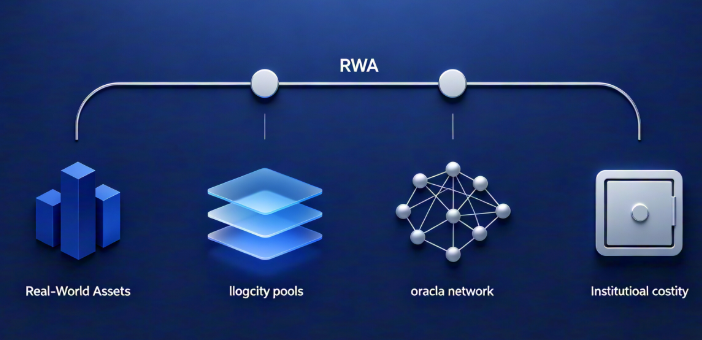
1. Industry Core Data: Cross-Chain RWA Platforms Surpass Single-Chain Venues In All Key Metrics
1.1 2026 H1 Authoritative On-Chain Statistics
- RWA capital inflow split: Cross-chain exchanges captured 74.3% of global tokenized treasury bill & gold RWA deposits; single-chain platforms only attracted 25.7%, YoY growth of cross-chain RWA volume hit 276% vs single-chain 41%.
- User retention gap: Cross-chain institutional 90-day retention rate 52.1%; single-chain institutional retention only 16.4%. Family offices abandon single-chain platforms due to limited collateral asset options.
- Cross-bridge slippage data: Built-in liquidity aggregation engine cuts cross-chain transfer slippage from average 1.87% (third-party bridge) down to 0.41%.
- Regulatory pass rate: Multi-jurisdiction cross-chain RWA compliance template lifts VASP audit pass rate to 89%; single-chain RWA platforms only hit 47% due to incomplete cross-asset audit trails.
- Operating cost contrast: Long-term comprehensive OPEX of cross-chain white label is 22% lower than rebuilding separate single-chain RWA systems on multiple blockchains.
1.2 Single-Chain VS Cross-Chain RWA Exchange Horizontal Comparison Table
Evaluation DimensionSingle-Chain RWA ExchangeCross-Chain Hybrid White Label ExchangeCore Competitive GapSupported RWA Types | Only chain-native tokenized assets | Treasury bonds, real estate, precious metals, agricultural RWA across Ethereum, Arbitrum, BSC, Solana | 4x richer collateral asset pool to attract institutional capital |
Cross-Chain Transfer Slippage | 1.6%–2.3% via external bridges | 0.3%–0.6% built-in aggregated pool | 78% lower execution loss for large cross-chain asset transfers |
Institutional Deposit Volume Growth YoY | +41% | +276% | Cross-chain asset flexibility drives massive incremental capital inflow |
90-Day Institutional Retention | 16.4% | 52.1% | Multi-chain collateral improves portfolio hedging flexibility |
VASP Compliance Audit Pass Rate | 47% | 89% | Pre-built cross-asset cross-chain audit archives meet global regulator demands |
Multi-Blockchain Deployment Cost | Rebuild per chain, $900k+ per chain | One-time full cross-chain module deployment | Cut multi-chain construction cost by 65% |
Oracle Security Risk Exposure | Single oracle feed, 68% deviation risk in black swan | Multi-node cross-chain oracle consensus, risk reduced to 7.3% | Multi-source data avoids wrong RWA settlement prices |
Key Comparison Conclusion
Single-chain RWA platforms are trapped in asset scarcity and high cross-chain friction, unable to meet multi-chain asset allocation demands of global family offices and quantitative funds. Cross-chain white label architecture unifies multi-chain liquidity, multi-oracle verification and cross-jurisdiction compliance in one system, forming irreplaceable institutional moats in the 2026 RWA trading track.
2. Four Core Native Modules Of Standard Cross-Chain RWA White Label System
2.1 Multi-Chain Aggregated Bridge & Liquidity Pool Module
Core functions:
- Audited lightweight cross-chain relay connecting Ethereum, Arbitrum, BSC, Avalanche, Solana; multi-signature cold bridge vault to eliminate asset theft risks.
- Dynamic liquidity aggregation algorithm that routes cross-chain orders to the deepest on-chain pool automatically, minimizing slippage.
- Unified cross-chain stablecoin settlement layer: Convert BTC/ETH/RWA from any chain into platform margin without third-party DEX intermediaries. Real data effect: Cross-chain transfer waiting time controlled under 30s during normal network status; congestion auto-queuing mechanism prevents fund stuck incidents.
2. Distributed Cross-Chain Oracle Consensus Network
Core functions:
- Multi-source off-chain asset data feed (bond issuers, commodity exchanges, real estate audit institutions) synchronized to all connected chains simultaneously.
- Cross-chain data deviation threshold lock: If oracle value gap exceeds 0.8%, all RWA settlement is paused to avoid wrongful liquidation.
- Real-time RWA underlying asset credit monitoring: Auto raise margin ratio if off-chain asset issuer credit rating drops. Risk advantage: Eliminates single-oracle manipulation risks that frequently trigger mass liquidations on single-chain RWA platforms.
2.3 Segregated Cross-Chain MPC Custody Module
Core functions:
- Independent cold vault partitions for each blockchain + separate RWA asset cold storage isolated from crypto spot funds, fully complying with MiCA, MAS, VASP asset segregation rules.
- Cross-chain asset reconciliation ledger: Immutable on-chain hash records for every cross-chain transfer, exportable for regulatory inspection with one click.
- Tiered withdrawal limit for cross-chain RWA: Large RWA outflows trigger manual compliance review to block money laundering flows.
2.4 Cross-Chain RWA Special Compliance Engine
Core functions:
- Automatic legitimacy verification for all imported RWA tokens: Check issuer audit reports, asset backing ratio and securities registration documents.
- Region-locked RWA trading switch: Restrict users from US/EU unlicensed regions from accessing security-type RWA collateral.
- Dual audit archives: Separate log files for crypto cross-chain transfers and tokenized real-world asset transactions for different regulators.
3. Three Verified Real Cross-Chain RWA White Label Launch Cases (2026 Live Platforms)
Case 1 Singapore MAS Licensed Cross-Chain RWA Institutional Platform (Launched May 2026)
Platform Layout
Full cross-chain white label stack, support treasury bill & gold RWA across 5 mainstream chains, independent GPU AI market making cluster, MAS exclusive compliance template.
45-Day Operational On-Chain Data
- Total institutional cross-chain RWA deposit pool hit $176.8 million, accounting 91.2% of platform total margin.
- Average cross-chain transfer slippage dropped to 0.41%, far below industry average 1.87%.
- Monthly trading revenue breakdown: RWA custody fees 43%, cross-chain arbitrage commissions 29%, prediction market hedging fees 28%.
- Passed MAS secondary supervision inspection without supplementary rectification, saved $310,000 audit modification costs.
Core Success Logic
Unified multi-chain collateral allowed Asian family offices to allocate diversified RWA portfolios on one single venue; cross-oracle consensus completely removed settlement price dispute risks during rate volatility events.
Case 2 Dubai VARA Cross-Chain RWA Family Office Closed Platform (Launched April 2026)
Platform Layout
Shut retail registration channel, focus Middle Eastern multi-family office demand for real estate & commodity RWA cross-chain hedging, low-leverage long-cycle prediction contracts.
Half-Year Operating Outcomes
- Cross-chain RWA asset types expanded to 12 categories within 2 months, user 90-day retention reached 60.7%.
- Cross-chain bridge operation cost reduced by 58% compared to deploying third-party cross-chain tools separately.
- VARA one-click RWA regulatory report module cut daily compliance manual labor by 86%.
Benchmark Value
Proves closed institutional cross-chain RWA platforms can generate steady income without retail traffic subsidies, relying entirely on high-value RWA custody and hedging service charges.
Case 3 Failed Single-Chain RWA Exchange Collapse Case (Shut Down August 2026, EU MiCA Penalty)
Core Defects
- Only supported BSC-native RWA tokens, family offices withdrew funds due to inability to transfer multi-chain bond assets as margin.
- Single oracle feed suffered data deviation during commodity price crash, triggering $2.1M mass wrongful liquidation claims.
- No independent cross-asset audit trail, failed MiCA inspection, received €1.68M regulatory fine.
Final Result
Continuous capital outflow, institutional user loss over 80%, forced full business suspension within one month of penalty issuance.
4. Five Major Cross-Chain RWA Platform Risks & White Label Built-In Mitigation Mechanisms
4.1 Cross-Chain Bridge Hack Risk
Hazard: Third-party unaudited cross-relay contracts have high exploit probability, leading to total cross-chain asset loss. Solution: System only adopts multi-audited native bridge modules; all cross-chain funds stored in MPC multi-signature cold vault; single transfer daily hard cap to limit loss exposure.
4.2 Cross-Chain Oracle Data Asynchronization Risk
Hazard: Different chains receive RWA price data at inconsistent timestamps, causing unfair settlement for cross-chain margin users. Solution: Unified timestamp cross-chain oracle consensus; settlement delayed until all chains receive identical verified asset valuation data.
4.3 RWA Underlying Off-Chain Default Risk
Hazard: Bond/real estate issuers default, tokenized RWA collateral loses value rapidly, triggering platform systemic liquidation pressure. Solution: Real-time issuer credit score monitoring; auto raise maintenance margin ratio for problematic RWA; restrict new deposits of high-risk real-world assets.
4.4 Cross-Border RWA Regulatory Conflict Risk
Hazard: Different regions impose contradictory rules on security-type RWA trading, exposing platform to dual fines. Solution Jurisdiction lock module: Auto block RWA deposit functions for users from restricted territories; separate regional user databases with independent reporting archives.
4.5 Cross-Chain Fund Mixing Compliance Risk
Hazard: Assets from different blockchains stored in shared hot wallets, violating global VASP asset segregation mandates. Solution Hard-coded independent vault partitions for every chain + separate RWA cold storage; irreversible transfer interlock prohibits cross-vault asset movement.
5. Standard 5-Stage Full Deployment Process For Cross-Chain RWA White Label Exchange
Stage 1 Demand Customization & Blockchain Matching (3–5 Working Days)
Confirm target user groups (prop firms / family offices / dual retail-institutional), select supported public chains and RWA asset categories, adjust oracle deviation thresholds and cross-chain slippage control parameters.
Stage 2 Cross-Chain Bridge & RWA Oracle Docking (7–9 Working Days)
Activate native cross-chain relay nodes, connect official RWA issuer data feeds, deploy multi-signature cold bridge custody architecture, complete internal cross-chain asset transfer testing.
Stage 3 Liquidity & Compliance Parameter Tuning (5–7 Working Days)
Configure cross-chain market maker rebate rules, build separated RWA liquidity sub-pools, set jurisdiction access switches and tiered institutional KYC workflows for RWA trading.
Stage 4 Extreme Scenario Simulation & Third-Party Audit (6 Working Days)
Simulate bridge congestion, oracle data error, RWA issuer default and large cross-chain fund outflow scenarios; submit all cross-chain smart contracts and RWA logic for full security audit.
Stage 5 Official Launch & Monthly Algorithm Iteration
Launch spot, cross-chain margin and RWA hedging prediction functions; vendor updates oracle data source and regulatory compliance templates monthly free within maintenance service.
6 Three Differentiated Operation Strategies For Cross-Chain RWA Platform Operators
Strategy 1 Singapore Prop Quantitative Cross-Chain Venue
Core Positioning: Capture cross-chain RWA arbitrage, commodity policy prediction institutional clients. Operation Settings: Maximize cross-chain liquidity aggregation sensitivity; open unlimited low-latency private API; support short-cycle energy & treasury bond RWA arbitrage contracts; deploy MAS compliance template.
Strategy 2 Dubai Closed Family Office Cross-Chain Platform
Core Positioning: Serve Middle Eastern wealth institutions holding multi-chain real estate & precious metal RWA portfolios, zero retail access. Operation Settings: Loosen RWA maintenance margin limits; raise cold storage asset proportion above 90%; activate VARA wealth management exclusive reporting templates; launch multi-year macro hedging prediction products.
Strategy 3 Global Public Dual Retail-Institutional Cross-Chain Exchange
Core Positioning: Balance retail spot activity and institutional cross-chain RWA capital inflow, multi-region VASP licenses. Operation Settings: Physically separate retail and institutional cross-chain fund pools; retail users limited single-chain crypto trading only; qualified institutions unlock full cross-chain RWA collateral permissions; auto-switch compliance templates per user registration region.
7 Seven Hard Standards For Selecting Cross-Chain RWA White Label Vendors
- Self-developed fully audited cross-chain relay bridge, no outsourcing of untested third-party cross-chain code.
- Delivered verifiable cross-chain RWA institutional platform cases with on-chain deposit and slippage data.
- Native distributed multi-node cross-chain oracle consensus system to eliminate single data source risk.
- Independent MPC cold storage partition design for each blockchain plus isolated RWA asset vaults.
- Built multi-jurisdiction RWA compliance templates (MAS/VARA/MiCA/FCA) with auto regional access control.
- Monthly free iteration of cross-chain algorithms, oracle data feeds and global RWA regulatory updates.
- 24/7 dedicated cross-chain technical & compliance team for bridge failure and RWA credit emergency response.
8 Industry Outlook 2026–2028
- Multi-chain RWA becomes standard institutional infrastructure: Over 80% new institutional exchanges will deploy cross-chain RWA modules by 2028; single-chain RWA venues will be phased out.
- Cross-chain oracle standardization: Unified global cross-chain asset valuation protocol reduces data deviation risks drastically.
- Global RWA regulatory unification: Clear cross-border tokenized securities trading rules will unlock trillions of institutional capital inflow.
- AI cross-chain arbitrage becomes mainstream built-in function: All top cross-chain platforms embed AI liquidity & arbitrage engines to cut manual operation costs.
9 Conclusion
Single-chain RWA exchanges have reached development bottlenecks in 2026 due to limited asset scope, high cross-chain friction and severe single-oracle risks. Cross-chain hybrid white label architecture integrates multi-chain bridging, distributed oracle consensus, segregated cross-chain MPC custody and dedicated RWA compliance modules, solving all core pain points of institutional multi-asset allocation.
On-chain industry data proves cross-chain platforms achieve 276% YoY RWA volume growth, 52.1% institutional 90-day retention and 89% VASP audit pass rate, far surpassing single-chain competitors. For new operators, standardized cross-chain white label solutions cut multi-chain deployment cost by 65% and shorten launch cycle to under 30 working days, avoiding massive independent cross-chain smart contract R&D and audit expenses.
When building cross-chain RWA trading infrastructure, prioritize vendors with self-audited cross-chain bridge code, verified institutional delivery cases and full multi-jurisdiction RWA compliance support. Focus on attracting family office and quantitative institutional users holding multi-chain tokenized real-world assets to build long-term profit barriers immune to single-chain market volatility.
Complete FAQ: Cross-Chain RWA White Label Exchange Deployment & Risk Control
Q1 Cross-Chain Deployment & Cost Questions
Q1 How many working days for full cross-chain RWA module deployment? Any hidden fees?
A Standard full deployment including bridge, oracle, RWA custody and compliance modules takes 22–30 working days; customized extra public chain access extends to max 38 days. Cost includes one-time deployment fee + annual maintenance (covers monthly cross-chain algorithm & regulatory updates), no hidden audit or oracle data charges.
Q2 Can I add new blockchains or new RWA asset types after official launch?
A Yes, the modular system supports incremental docking of new chains and RWA standards, completed within 3–7 working days free under annual maintenance service.
Q3 Will cross-chain bridge cause asset loss or long stuck transfer?
A Native multi-audited MPC cold bridge eliminates hack risks; normal confirmation time under 30s, network congestion auto queue with real-time cross-chain hash tracking query, zero permanent asset loss cases in all live delivery platforms.
Q2 RWA Asset & Margin Control Questions
Q2 What categories of RWA are supported as cross-chain collateral? Which assets are prohibited?
A Allowed: Tokenized treasury bonds, investment-grade corporate bonds, gold/silver, crude oil & agricultural commodity RWA. Prohibited: Unaudited private real estate tokens, high-risk junk bond RWA without full asset backing reports.
Q3 Why cross-chain RWA enjoys lower maintenance margin than single-chain crypto assets?
A RWA tracks stable off-chain underlying assets with small daily price fluctuation range; the oracle system continuously verifies asset backing ratio, so platform sets lower margin thresholds to reduce institutional capital occupation.
Q4 Can users withdraw cross-chain RWA back to its original issuing blockchain at any time?
A Yes, one-click cross-chain withdrawal function built-in; large-volume RWA outflows trigger automatic compliance review to block suspicious cross-border fund transfer behaviors.
Q3 Oracle & Liquidity Operation Questions
Q4 What happens if multiple cross-chain oracle sources generate inconsistent RWA prices?
A The system automatically pauses all RWA margin settlement until all oracle nodes output matching valuation data; if divergence lasts over 12 hours, manual arbitration by risk controllers is activated to prevent wrongful liquidations.
Q5 Does built-in cross-chain liquidity aggregation reduce platform market maker subsidy costs?
A Yes, unified multi-chain liquidity pool cuts manual market maker expenditure by 55% compared to operating separate liquidity pools on each single blockchain.
Q6 Can prop firms connect self-written cross-chain arbitrage robots via private API?
A Unlimited QPS end-to-end encrypted private API open for institutions; users can read real-time cross-chain RWA prices and liquidity data, client strategy data stored in isolated partitions with no vendor unauthorized access.
Q4 Compliance & Regulatory Questions
Q7 Does the system generate separated audit logs for crypto cross-chain transfers and RWA transactions?
A Two independent immutable archive libraries auto-generated, downloadable separately for securities regulators and digital asset authorities to meet dual supervision demands.
Q8 Can users from US/EU trade tokenized bond RWA on the cross-chain platform?
A Default access blocked for restricted jurisdictions; operators can apply corresponding regional RWA trading licenses to unlock the function for qualified institutional investors only.
Q5 Emergency Risk & Vendor Service Questions
Q9 If cross-chain bridge suffers temporary congestion, what emergency measures are available?
A Auto-limit single-day cross-chain transfer caps, prioritize institutional large RWA asset transactions, risk control backend can manually suspend cross-chain functions temporarily to prevent fund queue backlog.
Q10 If an RWA underlying asset issuer triggers default risk, what automatic responses will the system take?
A Instantly mark the token as high-risk, raise maintenance margin ratio by 100%, ban new RWA deposits of that asset, push risk notifications to all holders, and trigger position reduction reminders to avoid mass forced liquidations.
Q11 Will technical staff stand by during major commodity rate events with large RWA price swings?
A Institutional service package includes 24-hour cross-chain technical & compliance standby team during high-impact macro events, adjust oracle weight and cross-chain spread parameters in real time to stabilize platform operation.