العربية

- المنتجات

Why Enterprises Need White Label Crypto Solutions to Build Web3 Infrastructure
مزيد من المعلوماتمنصة تداول مركزية (CEX) أطلق منصة تداول بمستوى مؤسسي خلال 7 أيامالمحفظة MPC وتخزين بارد لحماية شاملة للأصولالسيولة تجميع سيولة عالمية بفوارق سعرية ضيقةمنصة تداول لامركزية (DEX) تداول لامركزي غير وصائي عبر سلاسل متعددةمنصة NFT نشر سريع لتداول NFT بأنماط متعددةنمو المستخدمين أدوات متكاملة لاكتساب المستخدمين والاحتفاظ بهمسوق التنبؤات Newبنية متعددة الأوراكل مع تسوية على السلسلةالأصول الواقعية المرمّزة (RWA) ترميز متوافق للأصول الواقعية - الحلول
- المدونة
- من نحن


2026 CEX vs DEX Full Comparison: Architecture, Trading Model and Asset Custody | SoonTech
1. CEX and DEX Form Two Core Tracks of Web3 Trading
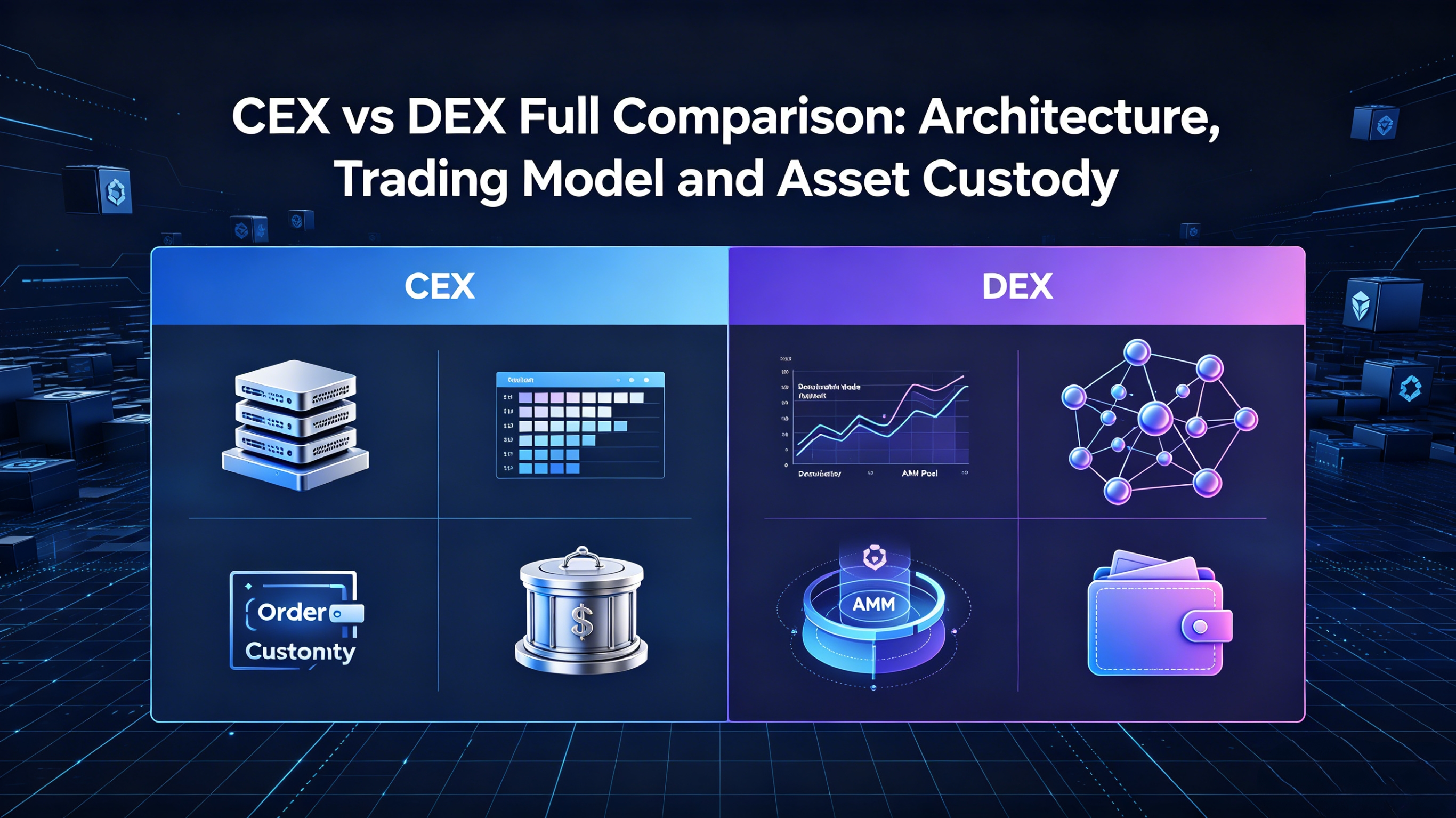
The Web3 trading ecosystem consists of centralized CEX and decentralized DEX with totally different structure, custody and trading logic. Many project teams choose blindly without understanding differences, leading to high operation barriers and compliance risks. Comparing architecture, custody, matching, fees and risk control helps select the right track or dual-layout strategy.
2. Core Q&A
Q1: Fundamental difference between CEX and DEX?
A: Asset custody model: CEX holds user private keys and funds; DEX users control private keys with assets always in their own wallets.
Q2: Difference in trading matching?
A: CEX uses off-chain high-performance matching engines with high TPS and no Gas fees; DEX executes trades via on-chain smart contracts with transaction fees per order.
Q3: Which has lower user threshold?
A: CEX is beginner-friendly with simple registration and deposit; DEX requires wallet creation, chain switching and contract authorization.
Q4: Privacy and compliance features?
A: CEX supports KYC, real-name compliance and traceable risk control under regulation; DEX offers anonymous on-chain trading with higher regulatory uncertainty.
Q5: Difference in liquidity sources?
A: CEX relies on professional market makers and platform pools; DEX adopts AMM algorithm with liquidity provided by user staking and mining.
Q6: Better choice for small team cold start?
A: Prioritize CEX private white-label deployment for low threshold and easy operation; expand to DEX after accumulating resources.
Q7: Can teams deploy CEX and DEX simultaneously?
A: Yes, build dual-track trading based on Web3 infrastructure, sharing liquidity and community traffic to expand ecosystem scale.
3. Conclusion
CEX features low entry barrier, high performance, easy operation and compliance, ideal for global cold start. DEX highlights self-custody, anonymity and decentralization for native DeFi users. Teams can start with CEX white-label for fast growth, then add DEX to complete dual-track layout, sharing liquidity and node infrastructure for a full trading ecosystem.