العربية

- المنتجات

Why Enterprises Need White Label Crypto Solutions to Build Web3 Infrastructure
مزيد من المعلوماتمنصة تداول مركزية (CEX) أطلق منصة تداول بمستوى مؤسسي خلال 7 أيامالمحفظة MPC وتخزين بارد لحماية شاملة للأصولالسيولة تجميع سيولة عالمية بفوارق سعرية ضيقةمنصة تداول لامركزية (DEX) تداول لامركزي غير وصائي عبر سلاسل متعددةمنصة NFT نشر سريع لتداول NFT بأنماط متعددةنمو المستخدمين أدوات متكاملة لاكتساب المستخدمين والاحتفاظ بهمسوق التنبؤات Newبنية متعددة الأوراكل مع تسوية على السلسلةالأصول الواقعية المرمّزة (RWA) ترميز متوافق للأصول الواقعية - الحلول
- المدونة
- من نحن


AMM (Automated Market Maker) Explained: Liquidity Pools and DeFi Trading Mechanism|Soontech
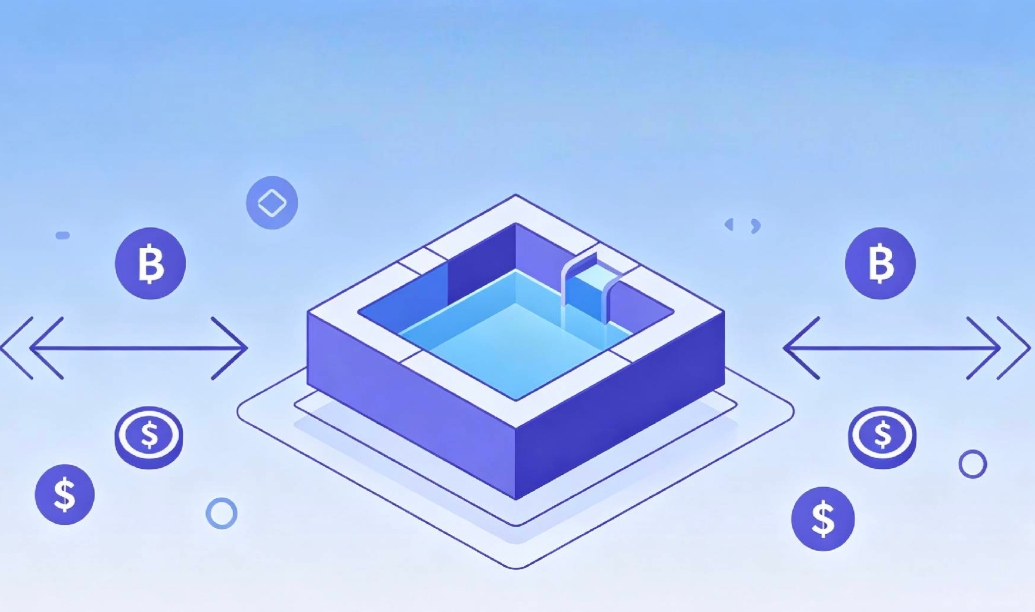
What Is AMM (Automated Market Maker)? A Detailed Explanation of Its Working Principles
In the decentralized finance (DeFi) ecosystem, AMM (Automated Market Maker) is one of the most disruptive innovations. It fundamentally changes how assets are traded, shifting from the traditional “order book” model to an algorithm-driven “liquidity pool” model.
For fintech developers and B-end enterprises, understanding the underlying mechanics of AMMs is essential for building decentralized exchange (DEX) systems.
1. What Is an AMM (Automated Market Maker)?
In traditional finance (e.g., Nasdaq or Binance), trading relies on an order book. Buyers and sellers place orders, and the system matches those with overlapping prices. This model depends on professional market makers to continuously provide liquidity.
AMMs, by contrast, use a decentralized approach: they eliminate order matching and replace it with liquidity pools. Traders no longer transact with another counterparty—instead, they trade directly with a smart contract.
Core components of an AMM:
- Liquidity Providers (LPs): Users who deposit digital assets (e.g., ETH and USDT) into smart contracts
- Liquidity Pools: Smart contracts that hold these assets
- Algorithmic Formula: The mathematical model that determines asset pricing
2. How AMMs Work: The Constant Product Formula
The most widely used model in AMMs (e.g., Uniswap V2) is the Constant Product Market Maker, defined as:
x * y = k
Where:
- x represents the quantity of asset A in the pool
- y represents the quantity of asset B in the pool
- k is a constant representing the pool invariant
How is price determined?
When a trader swaps asset A for asset B, they add A into the pool and remove some amount of B. To maintain the invariant k, an increase in x must result in a decrease in y.
Price dynamics:
As x increases and y decreases, the relative price of asset B rises.
Implicit pricing:
Prices are entirely determined by the ratio of assets in the pool—no external price feed is required.
3. Core Advantages of AMMs (Enterprise Perspective)
Compared to traditional order book systems, AMMs offer several advantages for institutions and platform developers:
- Instant Liquidity: As long as assets exist in the pool, trades can be executed 24/7 without waiting for counterparties
- Low Barrier to Market Making: Any asset holder can become an LP and earn fees, removing reliance on large financial institutions
- On-Chain Transparency and Security: All transactions and pricing logic are executed via smart contracts, reducing the risk of order book manipulation
- Simplified Architecture: AMM logic is more lightweight compared to building high-performance matching engines for order book systems
4. Key Technical Challenges: Slippage and Impermanent Loss
When building AMM-based systems, two critical financial risks must be addressed:
1) Slippage
Due to the curvature of the x · y = k function, the larger a trade is relative to the pool size, the more significant the price impact.
- Impact: Large trades result in execution prices deviating from expected prices
- Mitigation: Use liquidity aggregation or concentrated liquidity models (e.g., Uniswap V3)
2) Impermanent Loss
When external market prices fluctuate, the asset ratio in the pool changes, potentially making LP positions less valuable than simply holding the assets.
- Mitigation Strategies:
- Fee distribution mechanisms
- Liquidity mining incentives
- Stablecoin-focused AMMs (e.g., Curve)
Conclusion
AMMs are a foundational component of Web3 financial infrastructure. By replacing human intermediaries and traditional order matching with mathematical formulas, they enable automated and decentralized asset trading.
For enterprises building next-generation DEXs or integrating liquidity solutions, selecting the appropriate AMM model (e.g., constant product vs. concentrated liquidity) directly impacts trading depth and user experience.
SoonTech Professional Insight:
When developing high-performance trading engines, combining AI-driven risk control with intelligent liquidity management can effectively reduce impermanent loss and improve capital efficiency.